
- Europe, like you've never read before -
Wednesday, 6 May 2026
No Result
View All Result
  • it ITA
  • en ENG
Eunews
  • Politics
  • World
  • Business
  • News
  • Defence
  • Health
  • Agrifood
  • Other sections
    • Culture
    • Diritti
    • Energy
    • Green Economy
    • Finance & Insurance
    • Industry & Markets
    • Media
    • Mobility & Logistics
    • Net & Tech
    • Sports
  • Newsletter
  • European 2024
    Eunews
    • Politics
    • World
    • Business
    • News
    • Defence
    • Health
    • Agrifood
    • Other sections
      • Culture
      • Diritti
      • Energy
      • Green Economy
      • Finance & Insurance
      • Industry & Markets
      • Media
      • Mobility & Logistics
      • Net & Tech
      • Sports
    No Result
    View All Result
    Eunews
    No Result
    View All Result

    Home » World politics » EU Parliament study: 2028–2034 budget insufficient for Ukraine’s reconstruction

    EU Parliament study: 2028–2034 budget insufficient for Ukraine’s reconstruction

    A study commissioned by the Budget Committee highlights a host of shortcomings: insufficient funding and too many loans that are difficult to repay. The recommendation is for guarantees and more resources

    Emanuele Bonini</a> <a class="social twitter" href="https://twitter.com/emanuelebonini" target="_blank">emanuelebonini</a> by Emanuele Bonini emanuelebonini
    6 May 2026
    in World politics
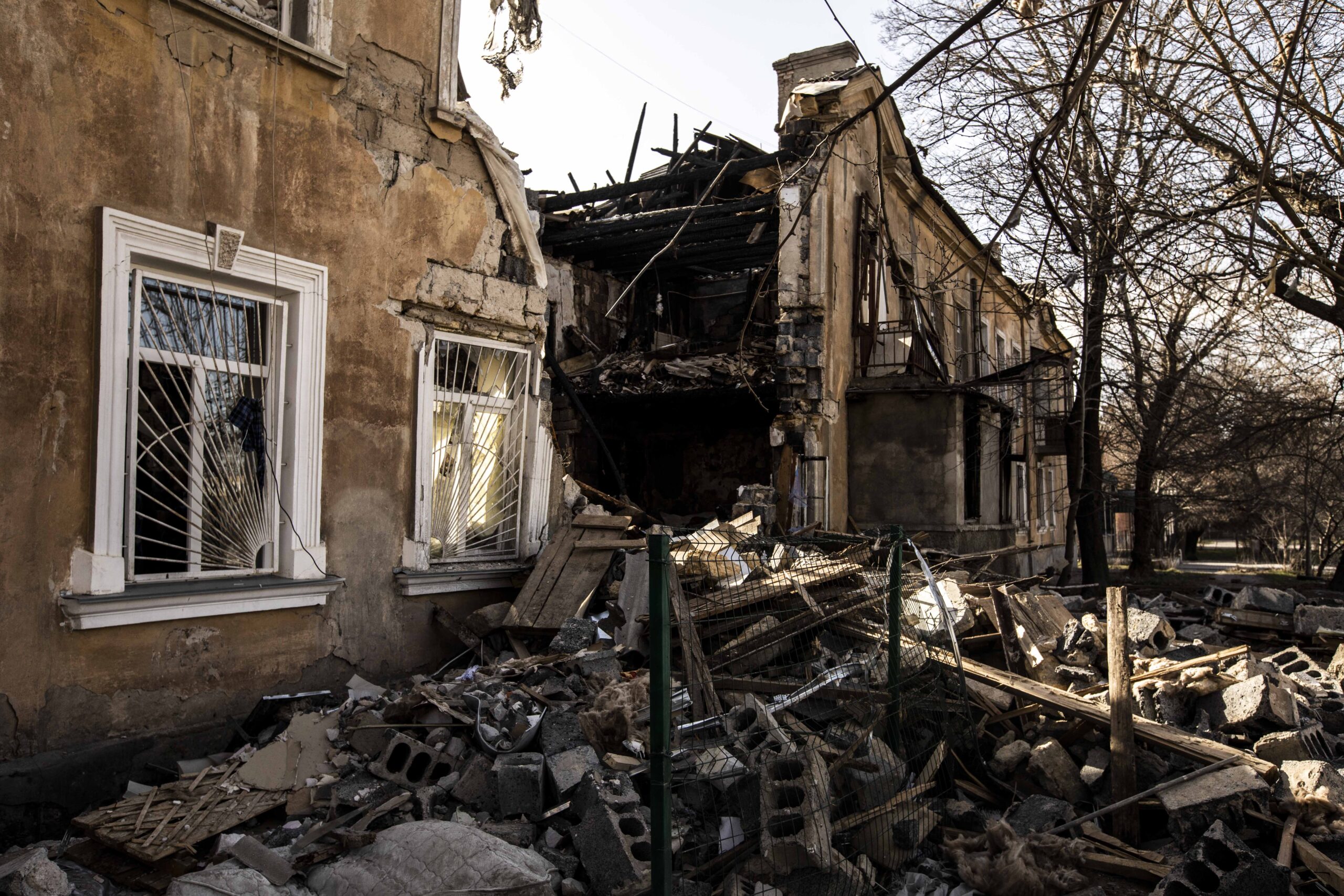
    GUERRA IN UCRAINA CITTA DI MYKOLAIV ABITAZIONE CIVILE BOMBARDATA DAI RUSSI
CASA DISTRUTTA CASE DISTRUTTE DISTRUZIONE BOMBARDAMENTO BOMBARDAMENTI

    GUERRA IN UCRAINA CITTA DI MYKOLAIV ABITAZIONE CIVILE BOMBARDATA DAI RUSSI CASA DISTRUTTA CASE DISTRUTTE DISTRUZIONE BOMBARDAMENTO BOMBARDAMENTI

    Brussels – Financial support for Ukraine: the European Union is showing plenty of goodwill, but even more of a lack of precision. This is because the commitments made do not match what Kyiv will actually need. The European Parliament’s think tank has crunched the numbers and sounded the alarm in a working document commissioned by the European Parliament’s Committee on Budgets. It makes it clear, first and foremost, that “the estimate of the public funding requirement for ten years of post-war recovery and reconstruction amounts to €196.5 billion, or €19.7 billion per year.” In response, the proposed budgetary allocations (€88.9 billion for the period 2028–2034, equivalent to €13.5 billion per year, both at 2025 prices) “are insufficient, given the key role of EU aid in supporting Ukraine.” 

    Here, then, lies the European Union’s first major miscalculation, to which at least one other—and by no means insignificant—one must be added. The data shows that the proposed allocation for Ukraine in the EU’s next multiannual financial framework (MFF 2028–2034) “is lower than the EU aid disbursed in the period 2022–2025 (€193 billion, ed.) and declared for the two-year period 2026–2027 (the 90-billion-euro aid package).” Furthermore, the EU Parliament’s working document notes that the European Union’s economic and financial decision “does not take into account all the consequences of a reduction in U.S. aid under the second Trump administration and the limited role of other official donors.”


    In their support for Kyiv, therefore, the European Commission and the EU Member States seem to be counting their chickens before they hatch. What is more, the approach is overly focused on austerity, with a lending strategy that is considered difficult to implement. “The predominant role of loans ignores the current high level of Ukrainian sovereign debt, which exceeds 100 per cent of Ukraine’s GDP.” There is a real risk of stifling the country’s economy, which is already grappling with a massive debt-to-GDP ratio and the associated difficulties in reducing it. That is why “grants should play a greater role,” the document suggests. In other words: non-repayable loans, a strategy that is hard to swallow for those in the EU who want to avoid wasting money. However, it is emphasised that “fiscal guarantees can encourage private sector involvement in the recovery and reconstruction process.” 

    In short, financing Ukraine’s recovery and reconstruction through the 2028–2034 multiannual financial framework appears unlikely and even unsustainable. The main recommendation is to “increase the size of the reserve allocation for Ukraine, prioritising grants over loans from the planning stage onwards.” According to European Parliament experts, this “will help reduce the likelihood of a revision of the Multiannual Financial Framework, given all the intra-EU institutional constraints, including the unanimity requirements for the adoption and revision of the common budget.”

    English version by the Translation Service of Withub

    Tags: aiuti all’ucrainafinancial supportparlamento-europeoricostruzioneueukraine

    Related Posts

    [foto:
    World politics

    Ukraine needs 3 billion euros a month; Parliament renews call to unlock 90 billion euros in aid

    30 March 2026
    Zelensky Costa
    World politics

    EU will continue to support Ukraine, but much will depend on Washington

    19 December 2024
    Business

    Ukraine, $86.1 billion reconstruction spending on agriculture alone

    16 April 2024
    map visualization
    ALESSANDRA TODDE POLITICA

    Todde (Sardinia): Defending territorial continuity and autonomy in renewable energy

    by Caterina Mazzantini
    6 May 2026

    Brussels - From defending territorial continuity to calling for regional autonomy over European funds: the President of the Sardinia Region,...

    Fonte: Imagoeconomica

    Belgium, Israel, and the US clash over a court case concerning circumcision practices

    by Iolanda Cuomo
    6 May 2026

    According to Israeli Foreign Minister Gideon Sa’ar, the European country, “along with Ireland, joins a short and shameful list of...

    Milano - Installazione Riabita Agriparchiurbani per il Fuori Salone del Mobile alla Fabbrica del Vapore in Via Procaccini, nella foto Stand di Prodotti fatti con la canapa e Campo con piante di  Canapa

    CAP funding for hemp: the European Parliament gives its first approval

    by Valeria Schröter
    6 May 2026

    The committee has approved the report amending the EU School Programme regulation, which opens up the possibility of using CAP...

    Recovery: The Commission and the EU Court of Auditors clash—again—over fund transparency

    by Giorgio Dell'Omodarme
    6 May 2026

    According to the latest report by the Court of Auditors, the system of allocating funds without reference to actual costs...

    • Director’s Point of View
    • Opinions
    • About us
    • Contacts
    • Privacy Policy
    • Cookie policy

    Eunews is a registered newspaper
    Press Register of the Court of Turin n° 27


    Copyright © 2025 - WITHUB S.p.a., Via Rubens 19 - 20148 Milan
    VAT number: 10067080969 - ROC registration number n.30628
    Fully paid-up share capital 50.000,00€


    No Result
    View All Result
    • it ITA
    • en ENG
    • Politics
    • Newsletter
    • World politics
    • Business
    • General News
    • Defence & Security
    • Health
    • Agrifood
    • Altre sezioni
      • Culture
      • Diritti
      • Energy
      • Green Economy
      • Gallery
      • Finance & Insurance
      • Industry & Markets
      • Media
      • Mobility & Logistics
      • Net & Tech
      • News
      • Opinions
      • Sports
    • Director’s Point of View
    • Draghi Report
    • Eunews Newsletter

    No Result
    View All Result
    • it ITA
    • en ENG
    • Politics
    • Newsletter
    • World politics
    • Business
    • General News
    • Defence & Security
    • Health
    • Agrifood
    • Altre sezioni
      • Culture
      • Diritti
      • Energy
      • Green Economy
      • Gallery
      • Finance & Insurance
      • Industry & Markets
      • Media
      • Mobility & Logistics
      • Net & Tech
      • News
      • Opinions
      • Sports
    • Director’s Point of View
    • Draghi Report
    • Eunews Newsletter

    Attention