Brussels – While, on the one hand, Italy continues to forge its extra-European relationships for the supply of fossil fuels, on the other hand, it needs to align with the objectives that drive the European Union towards a net-zero emissions economy and the achievement of the renewable energy targets set for 2030. Against the backdrop of the energy transition, the European Commission approved today (8 June) an important Italian state aid scheme worth €23 billion designed to support electricity generation from clean sources. “With this €23 billion scheme, Italy will support the production of electricity from renewable sources using various technologies, such as onshore wind, solar power or hydropower, to achieve the objectives of the Clean Industry Pact,” commented Teresa Ribera, Executive Vice-President of the European Commission for a Clean, Fair and Competitive Transition. “The scheme will also help Italy reduce its dependence on fossil fuel imports and increase the share of renewable energy,” she added.
These state subsidies have been authorised under the
Clean Industrial Deal State Aid Framework
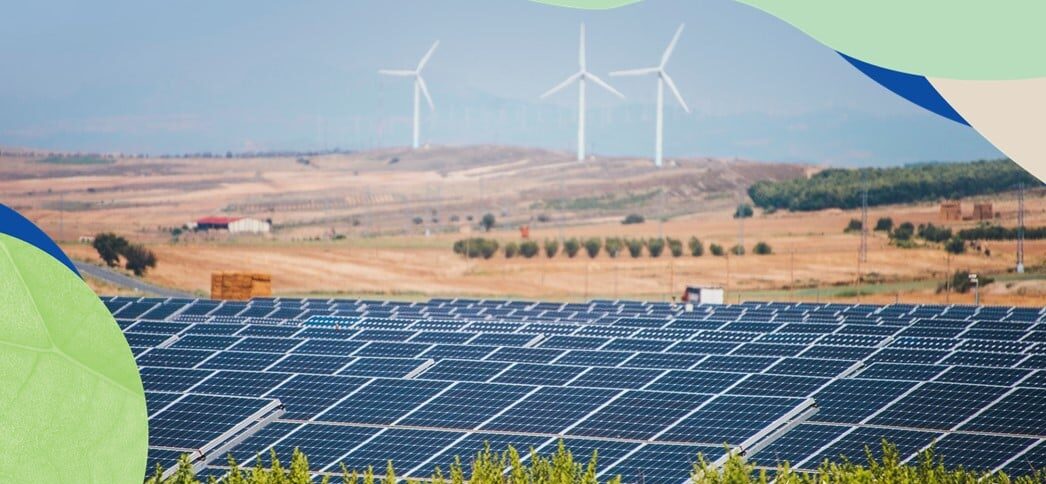
(CISAF), a European regulatory framework designed to assist Member States in developing renewable energy, decarbonising industrial processes, and promoting low-environmental-impact technologies. Specifically, the financial aid will support the construction and commissioning of new plants that generate electricity using onshore wind, solar, hydroelectric power and gas derived from the treatment of sewage sludge.
Expectations for this measure are particularly high, as the new plants are expected to add a total of 37.15 GW of renewable electricity capacity, a figure which alone is equivalent to approximately 48 per cent of the current installed renewable capacity across the country. An increase of this magnitude will contribute significantly to Italy’s decarbonisation pathway, whose strategic plan aims to cover 39.4 per cent of gross final electricity consumption through clean sources by 2030.
In addition to the environmental benefits, the implementation of this programme will lead to a gradual reduction in electricity prices for the benefit of businesses and consumers, while reducing the European Union’s dependence on foreign energy imports, in full alignment with the objectives of the
Clean Industrial Deal
and the
REPowerEU
plan.
The aid will be granted on the basis of a “transparent and non-discriminatory” tender procedure, in which beneficiaries will submit a bid for the operating price required to carry out each individual project, explains the Berlaymont Building. As regards the operational aspect, the financial incentive will be paid in the form of a premium for every kilowatt-hour (kWh) produced and fed into the national electricity grid, calculated on the basis of the operating price mechanism, commonly known as strike price. Under this system, if the market price of electricity falls below the established strike price, the State pays the shortfall to the producer to ensure the investment’s sustainability, whereas if the market price exceeds this threshold, the producer must return the surplus to the State.
Access to these funds will ultimately follow two distinct routes depending on the size of the facility: wind and solar power plants with a capacity exceeding 1 MW will have to secure support by participating in competitive procedures and separate auctions, while plants smaller than 1 MW will be able to access the benefits of the scheme directly without the need for any tender process.
English version by the Translation Service of Withub![INAUGURAZIONE A2A POWER HUB
COLONNINE PER AUTO ELETTRICHE
DISTRIBUTORI ENERGIA [Foto: imago economica]](https://www.eunews.it/wp-content/uploads/2026/06/Imagoeconomica_2619972-350x250.jpg)