- Europe, like you've never read before -
Wednesday, 23 September 2026
No Result
View All Result
  • it ITA
  • en ENG
Eunews
  • Politics
  • World
  • Business
  • News
  • Defence
  • Health
  • Agrifood
  • Other sections
    • Culture
    • Rights
    • Energy
    • Green Economy
    • Finance & Insurance
    • Industry & Markets
    • Media
    • Mobility & Logistics
    • Net & Tech
    • Sports
  • European 2024
    Eunews
    • Politics
    • World
    • Business
    • News
    • Defence
    • Health
    • Agrifood
    • Other sections
      • Culture
      • Rights
      • Energy
      • Green Economy
      • Finance & Insurance
      • Industry & Markets
      • Media
      • Mobility & Logistics
      • Net & Tech
      • Sports
    No Result
    View All Result
    Eunews
    No Result
    View All Result

    Home » Green Economy » Agreement among EU countries on strengthening the carbon border adjustment mechanism (CBAM)

    Agreement among EU countries on strengthening the carbon border adjustment mechanism (CBAM)

    The position adopted by the Council, ahead of negotiations with the Parliament, aims to make the system more robust: the focus is on derivative products and misleading practices. Giorgetti: "We hope to see a further expansion of the products to be included in the CBAM"

    Caterina Mazzantini by Caterina Mazzantini
    12 June 2026
    in Green Economy
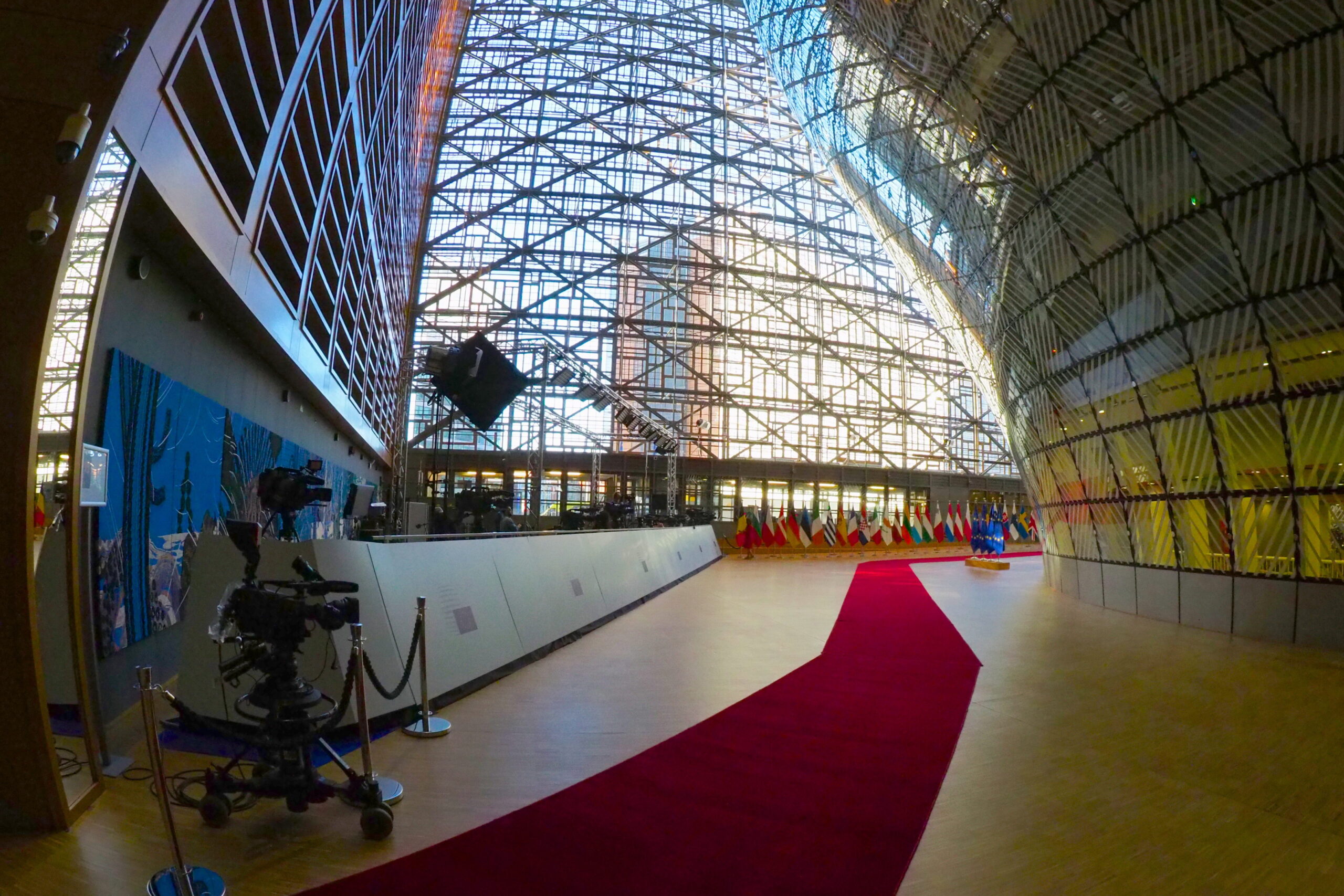
    CONSIGLIO EUROPEO UE EUPALAZZO EUROPA BRUXELLES

    CONSIGLIO EUROPEO UE EUPALAZZO EUROPA BRUXELLES

    Powered by powered by evolution group

    Brussels – The Council of the European Union has adopted its official position on strengthening the Carbon Border Adjustment Mechanism (CBAM), the EU’s instrument for combating carbon leakage and promoting global decarbonisation, ahead of negotiations with the European Parliament. The Council’s move—ahead of negotiations with the European Parliament—aims to combat “carbon leakage” more effectively and promote decarbonisation on a global scale. 

    Effective from 1 January 2026, the CBAM places a price on carbon emissions generated by the production of imported goods in the most carbon-intensive sectors: iron and steel, cement, fertilisers, aluminium, electricity, and hydrogen, and encourages cleaner industrial production in non-EU countries. The new regulatory framework aims to address some critical shortcomings of the current system. Until now, the CBAM has focused almost exclusively on raw materials, but this approach risked favouring the import of finished products manufactured outside the EU using high-emission materials. To address this issue, the updated legislation extends its scope to a selection of downstream products, particularly those that use significant quantities of iron, steel and aluminium. 

    The Council has also tasked the Commission with conducting an annual review to assess the inclusion of additional derivative products, as well as monitoring and taking action against misleading practices. The strengthening of the mechanism introduces measures described as “stringent” to prevent circumvention of the rules. And it has also defined more precisely how to deal with serious and unforeseen circumstances that could harm the internal market. The proposal provides for temporary exemptions from CBAM duties, but only on the basis of objective and rigorous criteria, such as the Union’s exposure to severe price increases.  

    It is now the turn of the negotiations between the EU Council Presidency and the European Parliament, which will begin as soon as the latter has adopted its position, with the aim of reaching a final agreement by the end of the year. 

    The outcome was welcomed by the Minister for the Economy, Giancarlo Giorgetti, who also hopes that improvements can be made to the text during negotiations with the European Parliament. “We welcome the Commission’s initiative aimed at extending the scope of the CBAM and strengthening its anti-circumvention safeguards,” he said during the public session of the Ecofin meeting in Luxembourg. “Our industries are, in fact, committed to decarbonising production and face competition from third countries which, conversely, have not yet embarked on the same path,” he added. With this in mind, “we have from the outset supported a mechanism applicable at all levels of production, both upstream and downstream of the supply chain, as well as the need to protect the most export-oriented companies. Although we would have preferred a more ambitious text, we appreciate the progress made during the negotiations and can support the Presidency’s compromise. We therefore hope, with a view to continuing negotiations with the European Parliament, that a further extension of the list of downstream products to be included within the scope of the CBAM will be considered,” he emphasised. For Italy, it is also “important to monitor, as part of the review process, the risks of distortions and circumvention of the Mechanism, so as to be able to intervene swiftly with further proposals that ensure the competitiveness of industrial sectors and consistency with environmental objectives.” Furthermore, “we consider it essential that the Mechanism be sufficiently flexible to be adapted, or even suspended, in the face of unforeseen circumstances affecting specific products that are strategic for European industry and agriculture.” In this regard, “the provision of an emergency clause is welcome, although we would have preferred a faster and more streamlined procedure than that set out in the text.”

    English version by the Translation Service of Withub

    Tags: cbamclimaemissioni carbonioetseu councilStandard climaticiue

    Eunews Newsletter

    Related Posts

    ETS2 - emissioni - bollette
    Energy

    EU shield against rising CO2 costs to stabilise future energy bills: Council and Parliament reach agreement

    11 June 2026
    Fertilizzanti PAC
    Agrifood

    Fertiliser crisis: Brussels proposes a special €500 million package for the CAP reserve

    10 June 2026
    MASCHIO GASPARDO AZIENDA INDUSTRIA AGRICOLA SETTORE AGRICOLTURA PRODUZIONE ATTREZZATURA ATTREZZATURE AGRICOLA AGRICOLE MACCHINARI AGRICOLI TREBBIATRICE TREBBIATRICI. Ferilizzanti. Fonte: Imago economica
    Agrifood

    EU to suspend tariffs on nitrogen-based fertilisers for one year

    22 May 2026
    MARGARET THATCHER
    Business

    The EU 2028–2034 budget: an opportunity not to be missed

    11 May 2026
    map visualization
    Il presidente russo Vladimir Putin e l'oligarca Aliser Usmano, ex presidente della Federazione di scherma. Source: Imagoeconomica

    EU countries reach an agreement on sanctions against Russia: a three-year extension, but the oligarchs Usmanov and Fridman remain excluded

    by Giulia Torbidoni
    22 September 2026

    The Irish Presidency of the Council commented: "To maintain the scheme, we have reached a difficult compromise"

    Pieno di benzina. Crediti: Erik Mclean via Unsplash

    Eurostat: fuel prices in the EU up 23.8 per cent in August 2026 compared with the previous year

    by Iolanda Cuomo
    22 September 2026

    Brussels – Fuel prices are soaring. According to Eurostat, the European Union’s statistical office, in August 2026, the price of...

    Emmanuel Macron

    Macron writes to von der Leyen: exemptions from EU rules are needed to tackle high fuel prices

    by Annachiara Magenta annacmag
    22 September 2026

    Paris aims to “strengthen” its import and production capacity in the short term, thereby curbing price rises. But it makes...

    Banchi di scuola. Crediti: Haseeb Modi via Unsplash

    Education: less than 30 per cent of EU teachers receive training in artificial intelligence

    by Iolanda Cuomo
    22 September 2026

    Today, the European Commission published two reports on the implications of AI and digital technologies in schools across Europe. Mînzatu...

    • Director’s Point of View
    • Opinions
    • About us
    • Contacts
    • Privacy Policy
    • Cookie policy

    Eunews is a registered newspaper
    Press Register of the Court of Turin n° 27

    Copyright © 2025 - WITHUB S.p.a., Via Savona 127/B, 20144 Milano
    VAT number: 10067080969 - ROC registration number n.30628
    Fully paid-up share capital 50.000,00€


    No Result
    View All Result
    • it ITA
    • en ENG
    • Politics
    • Newsletter
    • World politics
    • Business
    • General News
    • Defence & Security
    • Health
    • Agrifood
    • Altre sezioni
      • Culture
      • Rights
      • Energy
      • Green Economy
      • Gallery
      • Finance & Insurance
      • Industry & Markets
      • Media
      • Mobility & Logistics
      • Net & Tech
      • News
      • Opinions
      • Sports
    • Director’s Point of View
    • Draghi Report
    • Eunews Newsletter

    No Result
    View All Result
    • it ITA
    • en ENG
    • Politics
    • Newsletter
    • World politics
    • Business
    • General News
    • Defence & Security
    • Health
    • Agrifood
    • Altre sezioni
      • Culture
      • Rights
      • Energy
      • Green Economy
      • Gallery
      • Finance & Insurance
      • Industry & Markets
      • Media
      • Mobility & Logistics
      • Net & Tech
      • News
      • Opinions
      • Sports
    • Director’s Point of View
    • Draghi Report
    • Eunews Newsletter

    Attention