Brussels – The second heatwave of the year, which is gripping parts of Europe, “is causing dangerous spikes in tropospheric ozone pollution with devastating consequences for human and environmental health.” The warning comes from the European Environment Agency (EEB), Europe’s largest network of environmental NGOs that points out that “extreme temperatures have serious repercussions on health,” “the impact of photochemical smog, which forms as a result of tropospheric ozone pollution, remains poorly understood,” and that, “in 2022, exposure to ozone pollution, caused largely by methane from industrial agricultural practices, led to around 70,000 premature deaths and crop losses amounting to €2 billion across the EU.”
In particular, the EEB warns that ozone levels are already exceeding EU air quality standards (any value above 120 mg/m³), putting human lives at risk. Heatwaves exacerbate the problem, causing levels to exceed the alert threshold (over 240 mg/m³), while current health protection measures set a maximum daily average over eight hours of 120 micrograms per cubic metre (µg/m³), which must not be exceeded more than 18 times a year. The consequences are already evident. In 2025, 85.4 per cent of European monitoring stations exceeded the safety limits for ozone, up from 77.4 per cent in 2024. Among the worst-affected areas is the Po Valley, where Legambiente Lombardia recorded six instances of the alert threshold being exceeded by June 2025 alone. And 2026 shows no signs of improvement: as early as May, new critical episodes were reported in the same region, confirming a worrying trend.
Furthermore, this worrying situation is unfolding against the backdrop of warnings from scientists about the arrival this summer of a “super El Niño”, the anomalous warm current that affects global temperatures and raises them by a few degrees every few years.
“Once again, dangerous spikes in tropospheric ozone pollution, fuelled by heatwaves, are sweeping across the continent. The resulting photochemical smog is choking the air we breathe, damaging crops and putting further pressure on ecosystems already under stress,” said Luc Powell, senior policy officer for air quality and agriculture at the EEB.
Methane is one of the main contributors to the formation of tropospheric ozone. When this gas reacts with nitrogen oxides (NOx) under the influence of sunlight, chemical processes are triggered that lead to the formation of photochemical smog, a toxic mixture that compromises air quality, damages crops and puts pressure on already fragile ecosystems. According to the latest report by Ricardo, methane is responsible for 35–37 per cent of harmful ground-level ozone, making it one of the most urgent targets for action.
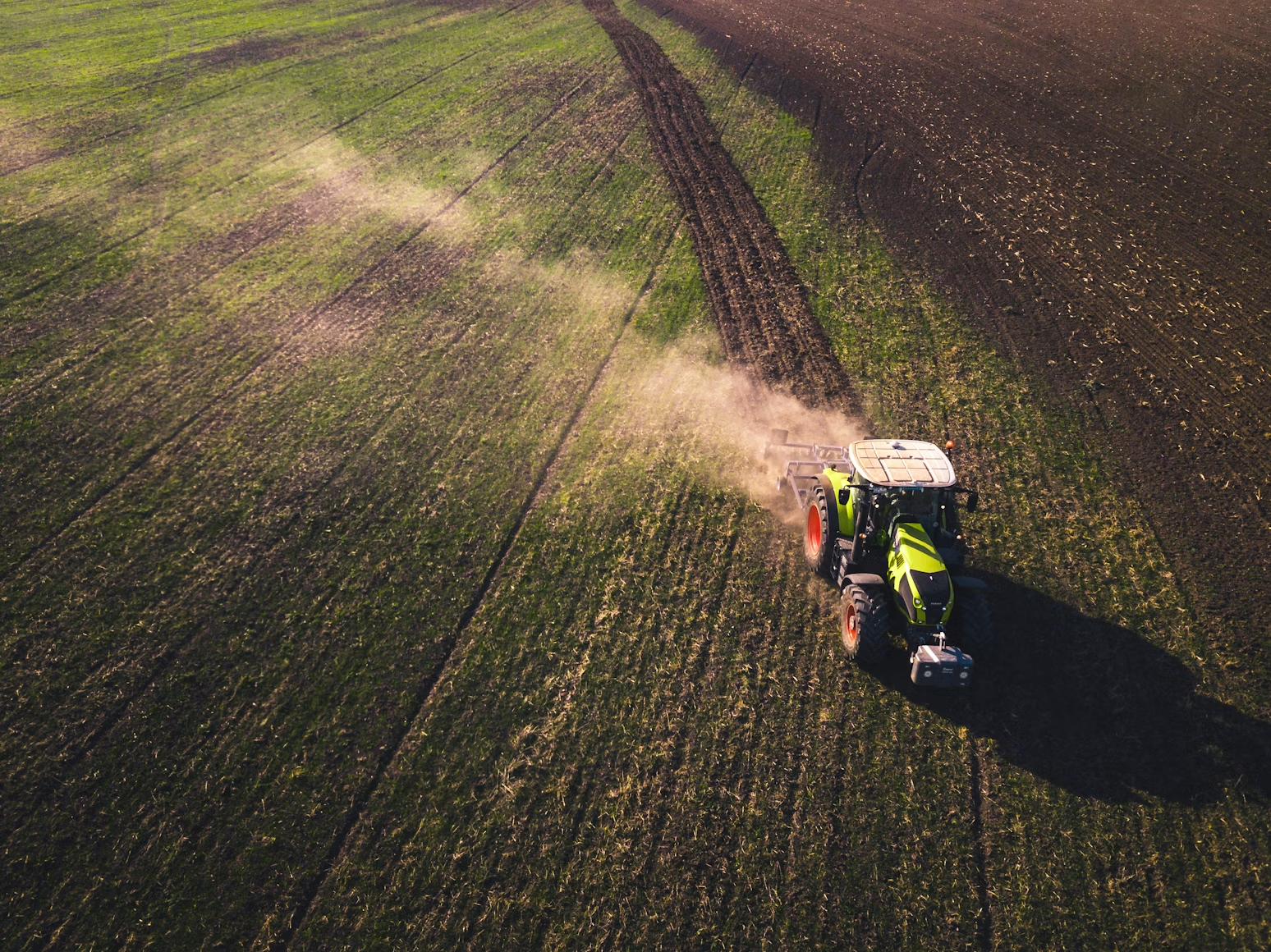
Yet, despite its impact, methane remains largely off the radar of European policy-makers. Currently, there are no binding targets to reduce methane emissions from agriculture, a sector that alone accounts for 57 per cent of total emissions. This regulatory gap undermines both the EU’s climate ambitions and efforts to improve air quality.
“As one of the main factors contributing to ozone formation, reducing methane emissions is one of the quickest and most cost-effective ways to cut pollution and cool the planet. “Yet intensive agriculture, the main source of methane emissions, is still allowed to pollute with impunity,” Powell pointed out. “The EU currently has a crucial opportunity to tackle methane and clean up our air, protect health, and slow down climate collapse,” he continued.
Civil society organisations are now calling for a decisive change of course. Methane is currently excluded from both the NEC Directive (National Emission Reduction Commitments) and the Gothenburg Protocol, thereby missing a crucial opportunity to tackle the problem at its root. With negotiations underway, the European Union now has the opportunity to fill this regulatory gap and effectively protect public health. The proposals are clear: to introduce binding targets for methane reduction and support farmers in the transition to agroecological practices. This includes reducing livestock stocking densities, more efficient management of manure and feed, and improved irrigation techniques for rice paddies. These are concrete measures capable of rapidly reducing emissions and delivering immediate benefits for both the climate and air quality.
English version by the Translation Service of Withub