
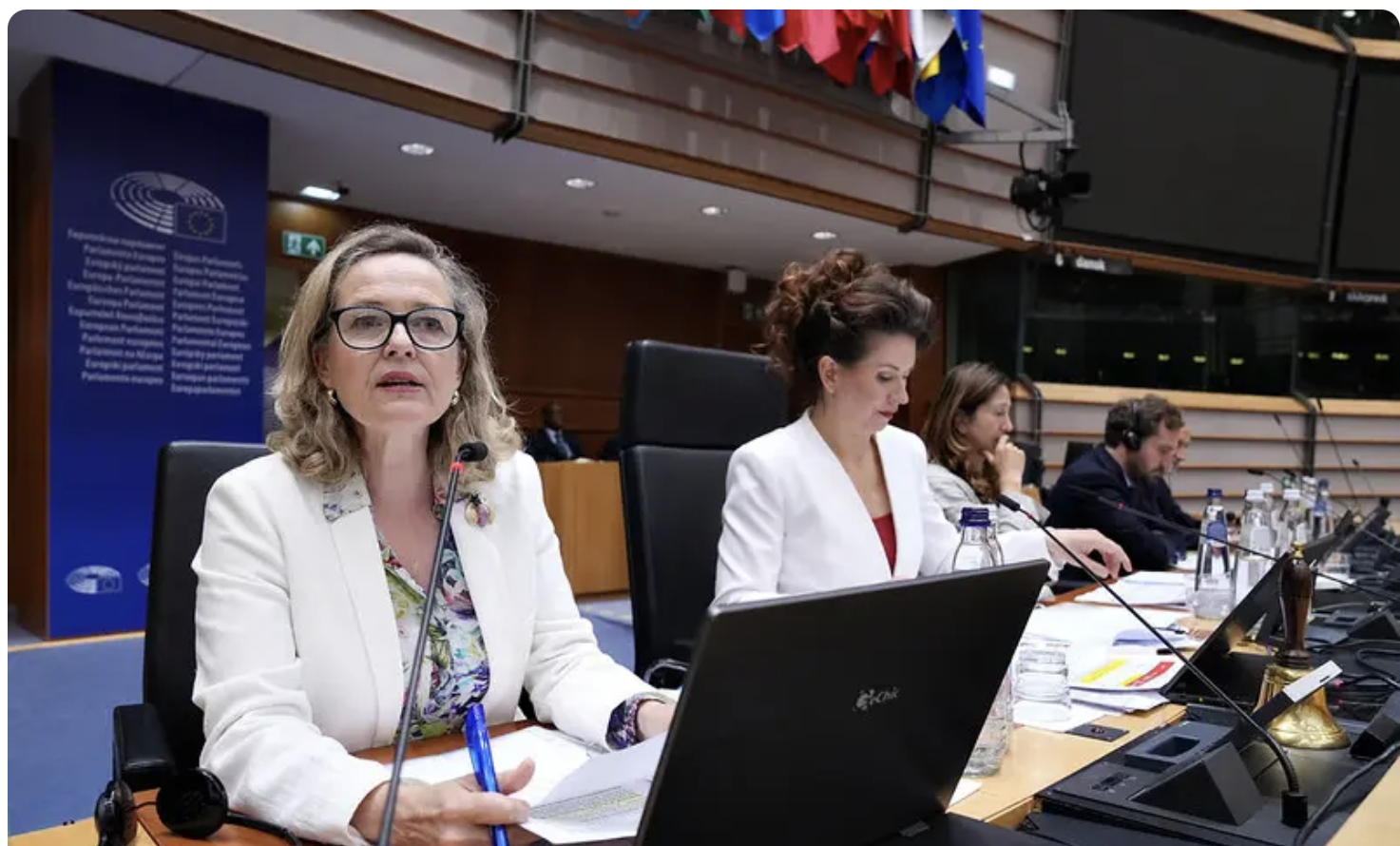
Brussels – “This year, the European Investment Bank plans to invest €6 billion to support housing construction, double the amount allocated in 2024.” This was announced today (2 July) by the institution’s president, Nadia Calviño, on the occasion of the adoption of a Memorandum of Understanding between the EIB and the Committee of the Regions (CoR), which lays the foundations for closer cooperation on housing and other sectors such as regional and urban development, cohesion, innovation and competitiveness, climate and energy, resilience, social infrastructure, and other shared priorities.
The housing crisis was the focus of today’s discussion at the CoR plenary session, where representatives of European regions and cities explained how they are tackling the issue in their areas and highlighted the key role played by the EIB, which last year provided approximately €5 billion in funding to address the problem.
In her speech today, President Calviño therefore confirmed the Bank’s intention to further increase its investments. And that’s not all. This year, the EIB has invested “€21 billion to make European cities and regions sustainable,” explained Calviño, a 21 per cent increase compared with 2024. Among the objectives is “ensuring accessibility,” particularly regarding housing. “Across the EU, for 8 out of 10 young people, the biggest concern is finding affordable housing,” the president reiterated, emphasising that the housing crisis has particular consequences for the Union’s “cohesion and competitiveness.” On this point, the former Spanish Finance Minister noted that if housing across the EU were made affordable, “European GDP could rise by 2 per cent” and, in some countries, by 7 per cent. Therefore, “by 2030, the EIB aims to deliver one million more homes” through local and regional funding. “The diagnosis is clear: Europe needs better homes, built more quickly, and energy-efficient,” she concluded.
Also taking part in the debate was the PD MEP (S&D Group), Irene Tinagli, who chairs the European Parliament’s special committee on the housing crisis; she described the issue as a “multidimensional challenge.” In Europe, “one in ten people spend over 40 per cent of their salary on rent, and in some European regions this figure rises to 70 per cent,” she explained. This has a particular impact on young people, with “a third of Europeans aged between 24 and 35 still living with their parents.” In describing it as a priority for the future, Tinagli noted that “the housing crisis in Europe is deep-rooted and structural. Tackling it requires investment, better coordination at all levels of government, and a shared commitment from the European institutions, Member States, regions, and cities.” She also emphasised the need to address this issue during negotiations on the next European budget, the 2028–2034 Multiannual Financial Framework, so as to move “from words to action.” Because, as the MEP from the European People’s Party and rapporteur for the European housing plan, Borja Giménez Larraz, underlined, there are “dramatic economic and demographic consequences” arising from this crisis, which is preventing Europe from “attracting more talent or families.” According to the MEP, “Europe must remove the obstacles that are slowing down construction and renovation, while supporting investment and empowering local and regional authorities.” To achieve this, there is a need for “a housing simplification package, 60-day planning permission procedures, easier access to construction services, a lower tax burden on housing and the mobilisation of available land.”
According to estimates by theEuropean Commission, around €153 billion per year will be needed to fund the construction of around two million homes a year across the EU. The Committee members therefore reiterated the need to “mobilise public and private financial resources at local, national, and European level.” For this reason, European cities and regions are calling for this issue to remain a priority in the EU’s next long-term budget (2028–2034). In a press release, the CoR highlighted that “a strong and reinforced cohesion policy could help to provide more affordable housing across Europe, but local leaders have warned of the risk that housing may have to compete for funding with agriculture, competitiveness, sustainability and other policies covered by future national and regional partnership plans.”
English version by the Translation Service of Withub

![[Foto: Unsplash]](https://www.eunews.it/wp-content/uploads/2026/06/febiyan-hwDGRQzAeM-unsplash-350x250.jpg)


![[foto: European Council]](https://www.eunews.it/wp-content/uploads/2026/03/euco-260319-120x86.jpg)