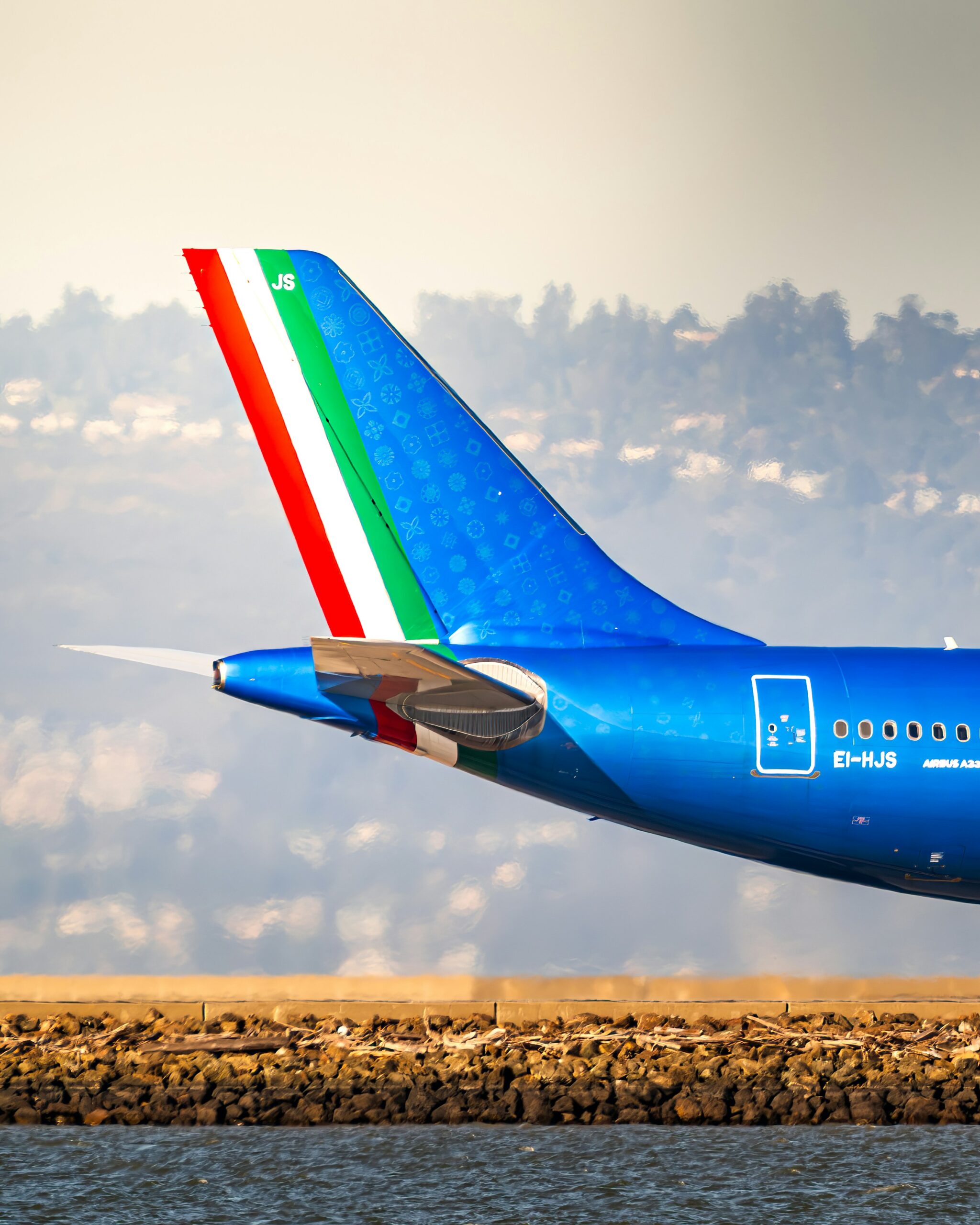
Brussels – The 130 million euros in state aid provided by Italy to certain airlines holding Italian licences as compensation for losses incurred during the Covid-19 pandemic is “in accordance with European Union law” and “compatible with the internal market.” This was ruled by the EU General Court, one of the two bodies that make up the Court of Justice of the EU, rejecting two actions brought by Ryanair. The Irish low-cost airline argued that the aid scheme unduly favoured Italian airlines, or at least those holding an Italian licence, and that the European Commission should therefore not have authorised the measure.
Italy notified the European Commission of the aid scheme in October 2020. The scheme, worth 130 million euros, was intended to compensate airlines for losses incurred between 1 March and 15 June 2020 due to travel restrictions and other containment measures implemented to limit the spread of Covid-19. The Commission had approved the scheme, but Ryanair challenged the decision and, on 24 May, 2023, the General Court ruled in its favour, annulling the Commission’s authorisation. According to the judges, Brussels had not provided sufficient reasoning for its approval decision as regards the
eligibility condition of the aid scheme related to minimum remuneration. The matter, however, did not end there. In a 23 January 2025 judgment, the Court of Justice of the European Union set aside the judgment and referred the case back to the General Court for it to rule again.
In the meantime, the aid scheme had been amended and extended to also cover the period from 16 June to 31 December 2020. On 13 October 2023, Italy notified the extension and amendment of the compensation measure for 2021, while also
providing for an increase of 100 million euros in the budget. The Commission approved that measure too, and its decision is also the subject of an action brought by Ryanair before the General Court.
In today’s judgement (8 July), the Court ruled that the mechanism chosen by Italy to distribute aid to airlines affected by the pandemic was lawful. According to the judges, restricting support to companies holding an Italian licence “is not an infringement of the principle of non-discrimination” because it is aimed at the companies most affected by the measures prohibiting or restricting flights to or from Italy in the context of the pandemic.
The Court also ruled out any infringement with regard to the minimum remuneration condition, considering it to be neutral with respect to the nationality of the airlines, as it “does not by itself entail a difference in treatment
according to the nationality of the airlines but is applied according to the home base of employees.” Finally, Ryanair has not
demonstrated that the “requirement to hold an Italian licence would produce restrictive effects going beyond those
that are inherent in State aid granted under EU law or that that requirement was such as to discourage Ryanair from
carrying out its activities in Italy.” In other words, it did not prove that the requirement to hold an Italian licence unlawfully restricted the freedom of establishment or the freedom to provide services, nor that the Commission had provided insufficient reasoning for its decision.

![[Foto: Unsplash]](https://www.eunews.it/wp-content/uploads/2026/06/victor-volkov-stb9o3RE5lI-unsplash-350x250.jpg)
![[Foto: Unsplash]](https://www.eunews.it/wp-content/uploads/2026/06/emiliano-bar-PaKHbtTDqt0-unsplash-350x250.jpg)


![Da sinistra: il presidente del Consiglio europeo, Antonio Costa; il presidente dell'Ucraina, Volodymir Zelensky: la presidente della Commissione europea, Ursula von der Leyen [Bruxelles, 18 giugno 2024. Foto: European Council]](https://www.eunews.it/wp-content/uploads/2026/06/euco_ua260618-120x86.jpg)
![[foto: Saverio De Giglio/imagoeconomica]](https://www.eunews.it/wp-content/uploads/2026/10/cpt-120x86.png)