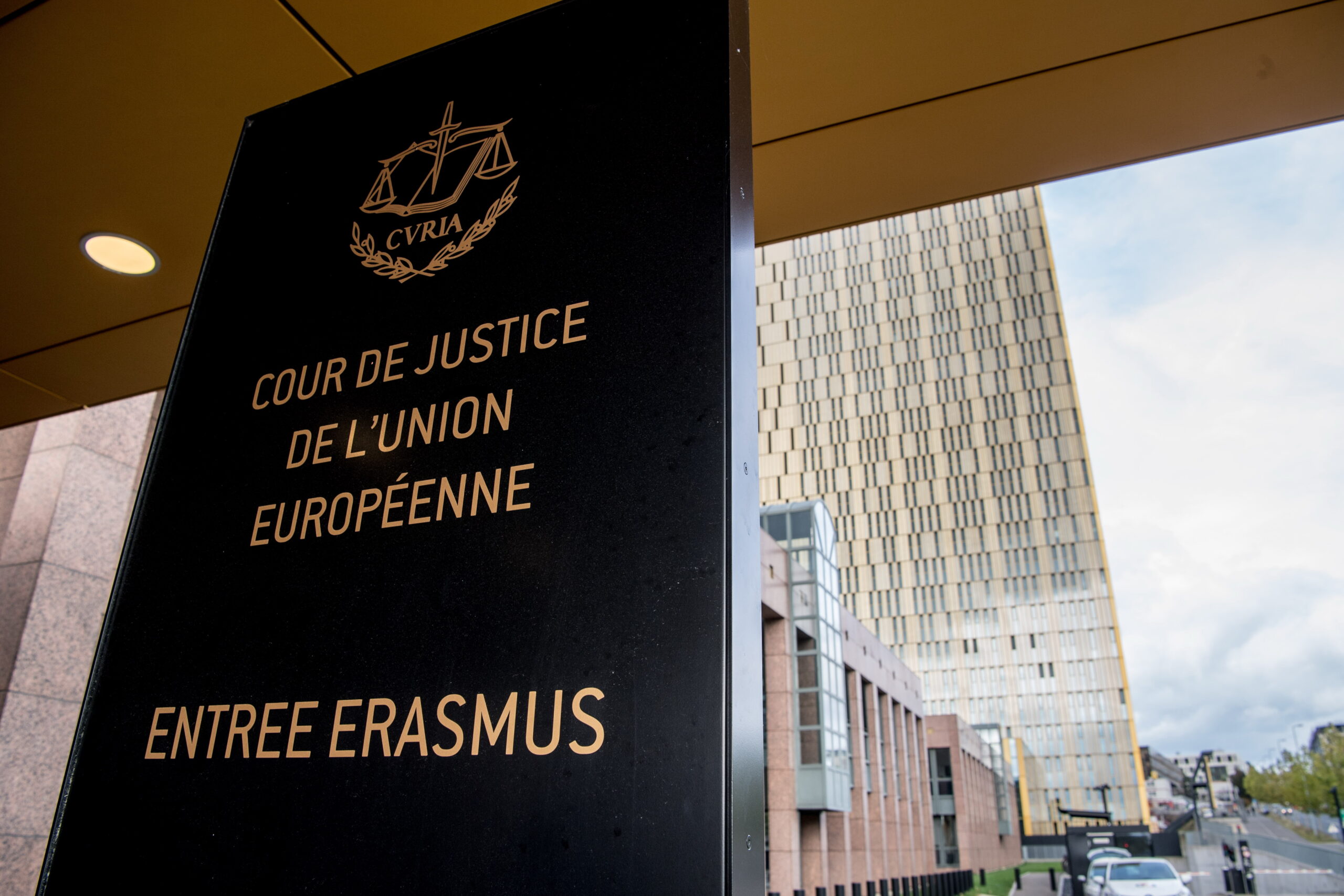
Brussels – The European Commission “did not grant the public sufficiently broad access to agreements for the purchase of COVID-19 vaccines.” This is the conclusion reached today (11 June) by the Advocate General of the Court of Justice of the European Union, Athanasios Rantos, in his opinion on the transparency of contracts concluded by the EU executive for the purchase of Covid vaccines.
The Advocate pointed out that during the coronavirus pandemic, the European Union established a centralised mechanism for vaccine procurement to ensure a rapid and equitable supply to Member States. He also noted that, with the same objective in mind, the Commission had set up a joint negotiating team comprising some of its officials and a limited number of experts from the Member States, tasked with negotiating preliminary vaccine purchase agreements with certain pharmaceutical companies.
In 2021, several Members of the European Parliament and various private individuals requested access to these agreements and the related documents. The Commission granted only partial access, redacting in particular the names of the members of the joint negotiating team and certain contractual indemnification clauses for pharmaceutical companies. The indemnity clauses, at the heart of the dispute, stipulated that Member States would reimburse pharmaceutical companies for any compensation they paid for damage caused by the vaccines.
According to the Commission, the full disclosure of the information would have undermined the protection of the privacy and integrity of the individuals concerned, as well as the protection of the commercial interests of the companies involved. However, considering this level of access to be insufficient, MEPs and private individuals brought the matter before the General Court of the European Union, seeking annulment of the Commission’s decisions. In two judgments of 17 July 2024, the General Court ruled that the Commission had not granted the public sufficiently broad access to the contracts for the purchase of COVID-19 vaccines. In response, the Commission lodged an appeal with the Court of Justice, the higher court.
Advocate General Rantos – an independent legal expert who sits on the Court but does not vote on the judgment – proposed that the Court reject the Commission’s arguments
and uphold the General Court’s judgment. The Advocate General’s opinion is not binding on the Court of Justice, which will now begin deliberations on this case and subsequently deliver a judgment.
Firstly, regarding the disclosure of personal data relating to members of the negotiation team, the Advocate General stated that “a natural person may obtain
disclosure of such information where he or she demonstrates that such disclosure is necessary to pursue an objective in
the public interest.” Rantos, therefore, considered that “the General Court was correct in holding that the transparency of the process of
negotiating agreements for Covid-19 vaccines constitutes a specific purpose in the public interest within the meaning of
EU law.” The Advocate General further stated “that solely the disclosure of anonymised versions of declarations of no of
conflict of interests does not make it possible for the impartiality of the members of the negotiation team.”
Secondly, with regard to the contractual clauses relating to indemnification of the pharmaceutical undertakings, Rantos proposed “that the Commission’s arguments, whereby the Commission claims that their disclosure would undermine the
commercial interests of the undertakings concerned, be dismissed.”
The Advocate General considered that the Commission did not demonstrate that the disclosure of the clauses relating to indemnification would be likely to encourage abusive strategic conduct or increase the risk of liability claims against the pharmaceutical undertakings. Specifically, he stressed that those clauses “do not affect the conditions for triggering liability of the undertakings towards injured third parties, but concern solely the reimbursement mechanisms that may apply between Member States and the undertakings following a possible finding of liability of those undertakings.”
English version by the Translation Service of Withub