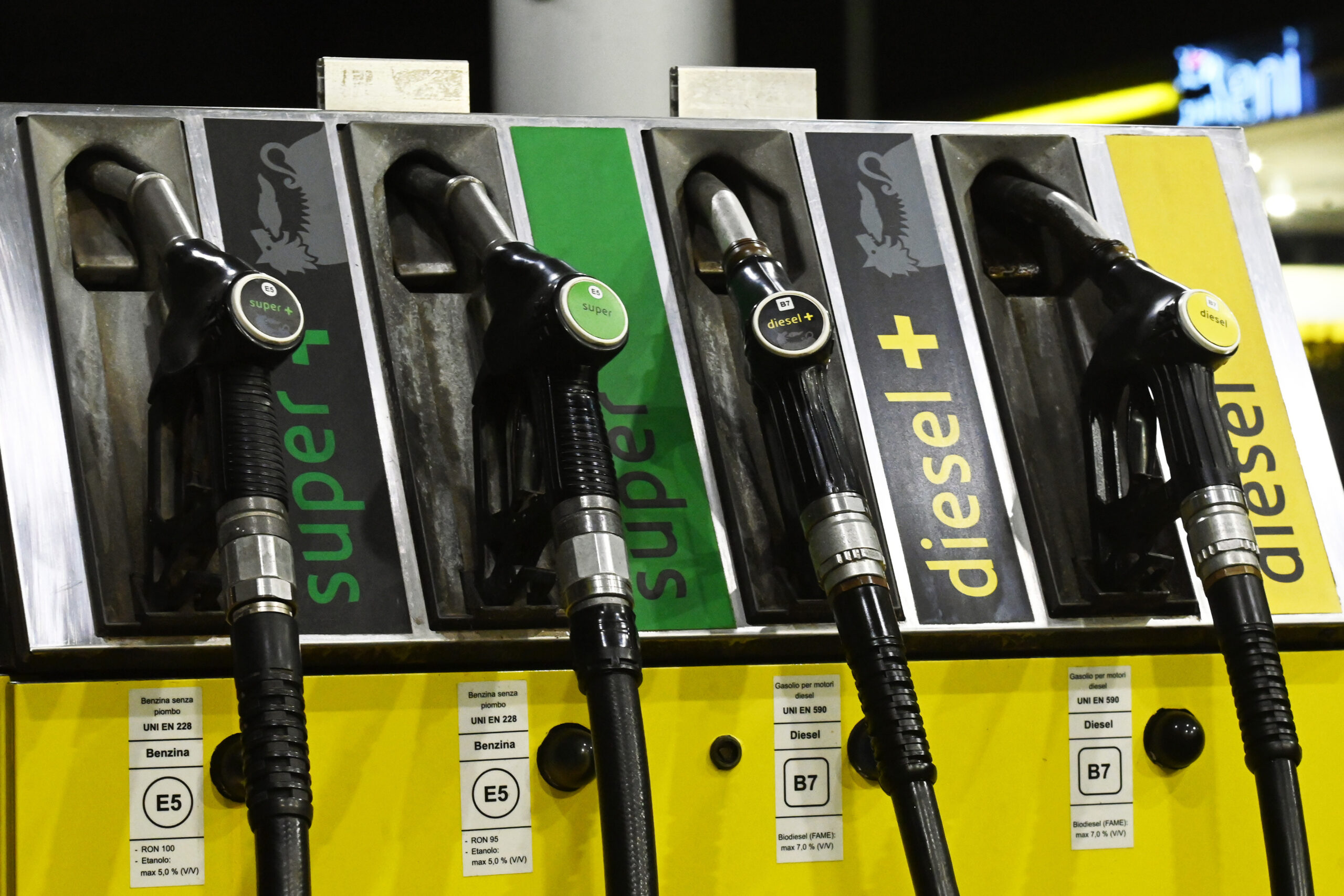
Brussels – Petrol and diesel remain more expensive than they were before the crisis in Iran across almost the entire European Union. On average across the EU, between 23 February and 6 July 2026, petrol prices rose by 10.6 per cent (from €1.637 to €1.811 per litre) and diesel by 10.7 per cent (from €1.594 to €1.764 per litre).
Eunews has analysed data from the European Commission Weekly Bulletin to compare the current situation (as at 6 July) with the pre-war situation in Iran (23 February 2026). As can be seen on the interactive map, the sharpest increases in individual countries are in Finland (+24.1 per cent for petrol, +23.2 per cent for diesel) and Bulgaria (+20.0 per cent for both fuels). Sweden (-7.3 per cent for petrol, -6.0 per cent for diesel) and Ireland (-0.5 per cent and -1.4 per cent) buck the trend; in Malta, prices remain unchanged.
In Italy, the excise duty reduction measures—which had been extended several times—came to an end on 1 July: petrol now costs 9.4 per cent more (from €1.655 to €1.810 per litre) and diesel has risen by 10.9 per cent (from €1.702 to €1.887), which is below the EU average for petrol.
In Spain, the increases are more modest: +3.2 per cent for petrol, +7.9 per cent for diesel. But Spanish motorists have certainly noticed a change compared with last week, when petrol was 2 per cent cheaper than on 23 February. The reason? VAT on fuel, which had been reduced to 10 per cent from 22 March, has returned to 21 per cent from 1 July. The excise duty discount, on the other hand, will continue with gradual reductions: 15 cents per litre in July, 10 cents per litre in August, 5 cents per litre in September, until it is phased out completely in October 2026.

![Secondo la Bce il caro-energia continuerà a pesare sui consumi reali nei prossimi trimestri [foto: imagoeconomica]](https://www.eunews.it/wp-content/uploads/2023/01/Imagoeconomica_1796866-scaled.jpg)

![Da sinistra: il presidente del Consiglio europeo, Antonio Costa; il presidente dell'Ucraina, Volodymir Zelensky: la presidente della Commissione europea, Ursula von der Leyen [Bruxelles, 18 giugno 2024. Foto: European Council]](https://www.eunews.it/wp-content/uploads/2026/06/euco_ua260618-120x86.jpg)
![[foto: Saverio De Giglio/imagoeconomica]](https://www.eunews.it/wp-content/uploads/2026/10/cpt-120x86.png)