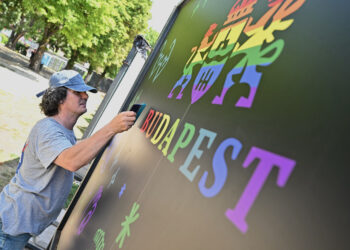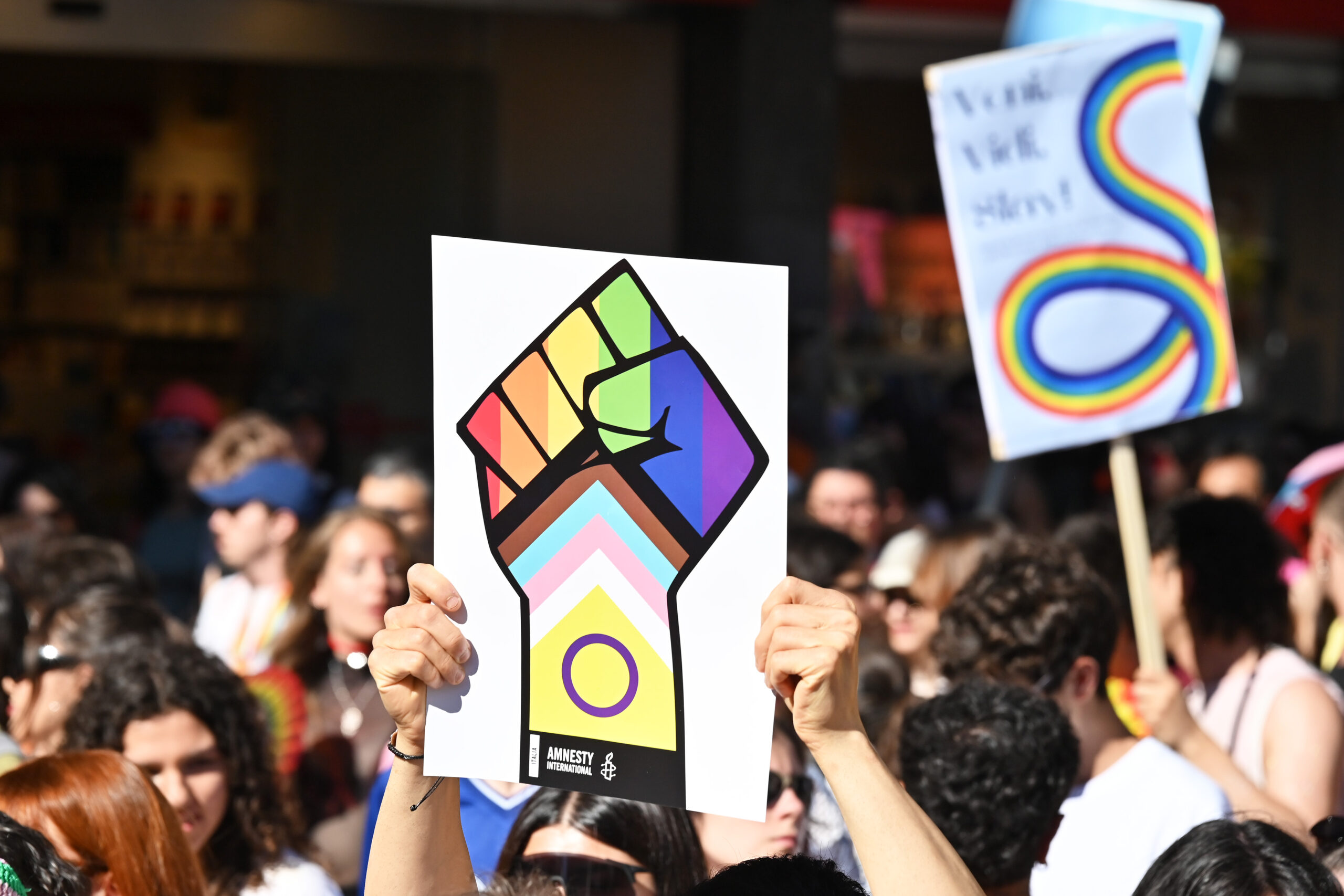
Brussels – It happened on the day Berlin was celebrating freedom, inclusion, and the pride of the LGBTQI+ community, in the European city that, more than any other, has made diversity one of the symbols of its identity. On Saturday (25 July), at around 10 pm, a person driving a van ploughed into the crowd taking part in Christopher Street Day (CSD), the German capital’s Pride event, killing one woman and injuring 29 others. According to reports from Image, after ploughing into the participants, the attacker is said to have got out of the vehicle wielding a machete and attacked other demonstrators, seriously injuring several of them. It all happened just a stone’s throw from the Brandenburg Gate, where the event’s main stage had been set up.
While Germany mourns the victims, the first details are emerging about the perpetrator of the attack, who, following an extensive manhunt, was tracked down and shot dead by the police yesterday evening (Sunday 26 July) in the Spandau district. He is Abdul Ballout, a 21-year-old German citizen of Lebanese origin, who had long been known to the justice system: with a record of assault, extortion, and robbery, as well as a failed attempt to join Islamic State in Syria, for which he had been arrested in Lebanon and detained for three months before being repatriated. In May, he was sentenced to one year and ten months for “planning a serious act of subversive violence,” a sentence that was subsequently suspended in view of the time he had already spent in prison and his stated renunciation of extremism. Now, however, the suspension of his sentence is at the centre of controversy. Marc Henrichmann, a CDU MP and chair of the parliamentary committee overseeing the intelligence services, has called for tougher measures against radicalised individuals. At the same time, the Bavarian Minister of the Interior, Joachim Herrmann, has described the decision to suspend the sentence as “catastrophic.”
“These acts have but one aim: to divide our society,” said Chancellor Friedrich Merz in his address at the memorial service for the victims. Messages of condolence and solidarity have poured in from across Europe. On X, French President Emmanuel Macron called for a response of “unity, freedom, and resolve” in the face of “hatred and violence.” Prime Minister Giorgia Meloni stressed that Italy “condemns and strongly opposes any form of hatred and extremism, working at every level to defend the freedom and security of our citizens.”
The attack is, however, set to fuel the debate on immigration further, strengthening the positions of Europe’s radical right-wing parties. In Germany, the Alternative for Germany (AFD) called on X for “the immediate detention of Islamist threats and consistent deportations.” In France, the co-president of the Rassemblement National, Jordan Bardella, argued that “the Islamist threat remains pervasive in Europe and continues to target what they hate most about our civilisation and what we cherish most: freedom.” In Italy, too, there was no shortage of political reactions. The League reiterated that “Islamic fanaticism is the problem, in Italy and in Europe,” calling for “an end to any granting of space to Islamic organisations until there is a written agreement” with the Italian state. The leader of Futuro Nazionale and MEP for the Europe of Sovereign Nations group, Roberto Vannacci – who, in his book, described homosexual people as not normal – launched a scathing attack on social media: “Now, dear left-wingers, carry on marching with Palestinian flags and carry on encouraging mass immigration from Islamic countries. And, above all, carry on claiming that Salim El Koudri’s terrorist attack in Modena was merely the act of a deranged individual… perhaps this Abdul will also have a Bible brought to him.”
Meanwhile, the Party of European Socialists (PES) defined the attack, which targeted “a peaceful Berlin Pride event,” as “brutal.” For the European Socialists, this is “an assault on freedom, equal rights, and respect.” Therefore: “Our thoughts are with the victims, the injured, and their loved ones. We remain steadfast in defending everyone’s right to live freely. We express our solidarity with Berlin, with Germany, and with the LGBTI+ community.” The leaders of the European institutions, however, have chosen to downplay the clash, focusing their messages on the victims and on the defence of the Union’s founding values. The President of the European Commission, Ursula von der Leyen, recalled in a social media post that “Pride stands for freedom, dignity, and equality, the fundamental values of the European Union. Everyone should be able to live, love, and defend their rights without fear. Hate and violence have no place in our societies. We stand united with the LGBTQI+ community.” The President of the European Council, António Costa, described on X the attack in Berlin as “an attack on the values that define our Union,” whilst the President of the European Parliament, Roberta Metsola, reiterated that “hatred and violence have no place in our Europe of freedom and respect.”
Finally, the Pride organisers stated yesterday (26 July) that they wished to await the results of the police investigation and rejected any use of the events for propaganda purposes. “We do not want this act to be exploited for political ends or for people to be placed under general suspicion,” said a spokesperson to journalists in Berlin. “Behind this violence lies an attempt to divide our society and to pit people against one another. We at Berlin’s CSD will not allow this,” he added.
English version by the Translation Service of Withub