- Europe, like you've never read before -
Thursday, 5 November 2026
No Result
View All Result
  • en ENG
  • it ITA
Eunews
  • Politics
  • World
  • Business
  • News
  • Defence
  • Health
  • Agrifood
  • Other sections
    • Culture
    • Rights
    • Energy
    • Green Economy
    • Finance & Insurance
    • Industry & Markets
    • Media
    • Mobility & Logistics
    • Net & Tech
    • Sports
  • European 2024
    Eunews
    • Politics
    • World
    • Business
    • News
    • Defence
    • Health
    • Agrifood
    • Other sections
      • Culture
      • Rights
      • Energy
      • Green Economy
      • Finance & Insurance
      • Industry & Markets
      • Media
      • Mobility & Logistics
      • Net & Tech
      • Sports
    No Result
    View All Result
    Eunews
    No Result
    View All Result

    Home » Culture » Europe puts education first: basic skills and AI at the heart of the new EU strategy

    Europe puts education first: basic skills and AI at the heart of the new EU strategy

    According to the latest analysis of the 2025 PISA results, 33.9 per cent of 15-year-olds in Europe do not achieve sufficient standards in mathematics, 31.3 per cent in reading and 25.9 per cent in science

    Annachiara Magenta</a> <a class="social twitter" href="https://twitter.com/annacmag" target="_blank">annacmag</a> by Annachiara Magenta annacmag
    5 November 2026
    in Culture, Politics
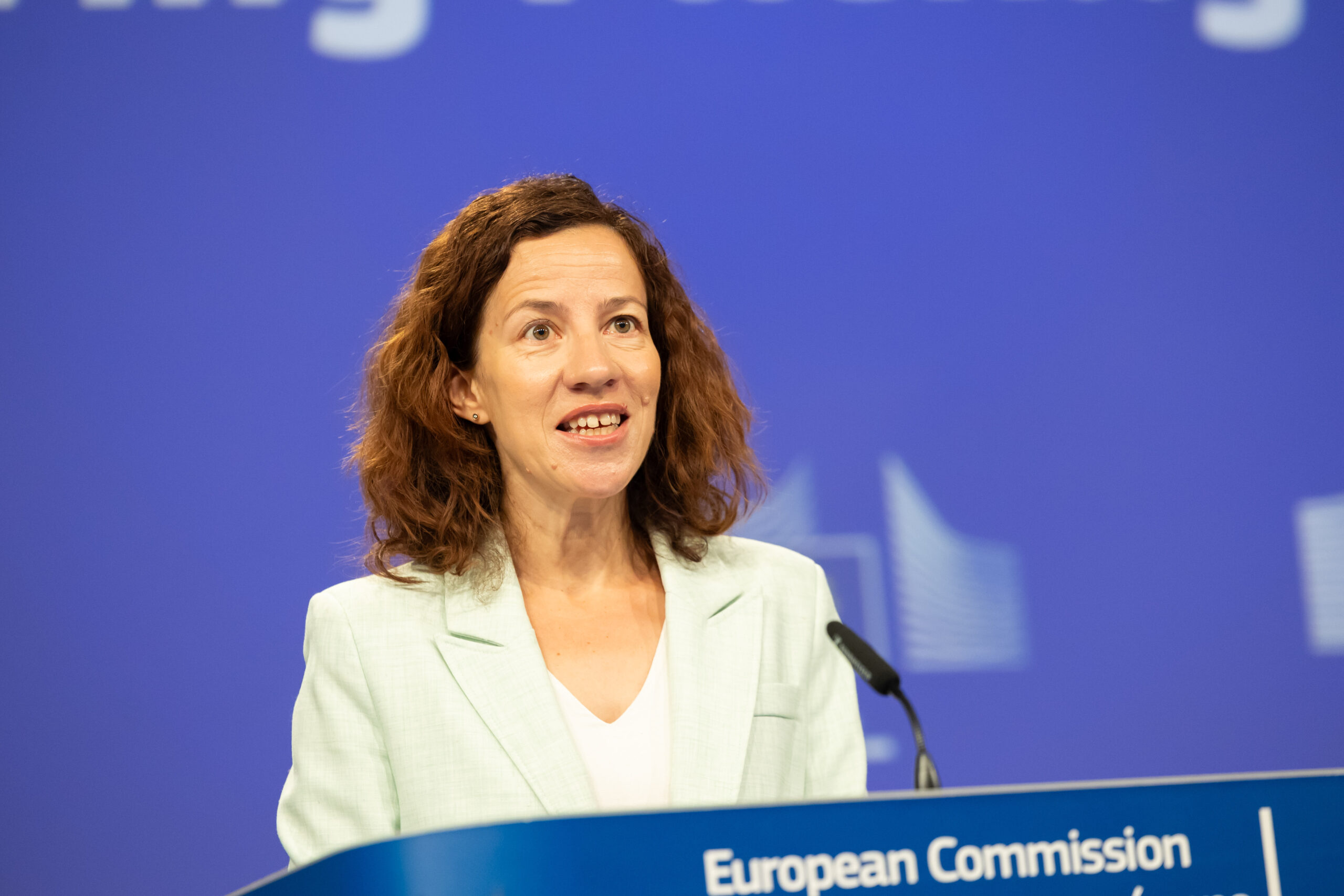
    Roxana Mînzatu - scuola, Europa riparte da competenze di base e IA

    Roxana Mînzatu

    Brussels – A decline in basic skills, the need to integrate artificial intelligence into education systems, and a teaching profession that is becoming less and less attractive. These are the three challenges that the European Commission aims to tackle with the new Education and Skills Package, presented today (5 November) by the Commission’s Executive Vice-President for Social Rights and Skills, Roxana Mînzatu. The aim is to strengthen European education systems and respond to the needs of a rapidly changing labour market. The plan also aims to modernise vocational training and link it more closely to business needs, as part of a strategy that Brussels considers “essential” for the Union’s competitiveness and democratic resilience. 

    The results of the latest PISA tests in 2025 show the difficulties facing the European education system: 33.9 per cent of 15-year-olds in Europe do not meet sufficient standards in maths, 31.3 per cent in reading, and 25.9 per cent in science. Another cause for concern is the decline in the number of students achieving excellent results: in 2025, these figures stood at just 4.8 per cent in reading, 6.4 per cent in science and 6.8 per cent in maths.

    “One in three of our 15-year-olds struggles with reading and mathematics, and the trend is getting worse. This is not only an education issue: it is about democracy and competitiveness, it is about the very future of Europe,” warned Executive Vice-President Mînzatu. “Education must become a top political priority everywhere,” she added. The package, she explained, aims to “engage Member States and support them in their reforms”. 

    The measures focus on four priorities: improving outcomes in basic skills, safely integrating digital technologies and artificial intelligence into schools, making the teaching profession more attractive, and modernising vocational training. For the first objective, Brussels is proposing a Council recommendation which calls on governments to focus reforms and investment on reading, maths, science, and digital literacy, while strengthening support for schools and teachers. From 2027, the European School Alliances will also be launched – partnerships between schools in different countries to improve students’ outcomes – aiming to establish 100 new alliances per year by the next multiannual budget. 

    On the digital front, the Commission aims to develop specific skills in artificial intelligence, with a European certificate for students from the 2027–2028 academic year onwards. There are also plans for a European Healthy Screens Pledge, an initiative to provide schools, families and pupils with common tools on online safety, screen time and the balance between digital and offline life. Meanwhile, on 3 November, the European Consortium for Digital Infrastructure in Education (EDU-EDIC) was established to strengthen European technological sovereignty and develop reliable digital and AI tools for schools.

    Another key focus concerns teachers, with a new European agenda calling on Member States to address staff shortages through improved working conditions, more attractive career paths, and continuous professional development. Finally, the 2026–2030 vocational training strategy provides for new flexible pathways and partnerships between businesses and educational institutions, particularly in sectors where demand for workers is highest, ranging from energy and healthcare to manufacturing, defence, and construction. 

    “A stronger Europe starts with empowered young people,” said Commission President Ursula von der Leyen, highlighting the need to raise standards in reading, maths, science, digital skills, and citizenship, while also preparing children to use artificial intelligence safely. “And for this it is essential that they are supported by well-trained teachers,” she concluded.

    The Member States will now examine the Council’s two recommendations. On 20 November, the Commission will present the package to the 2026 Education and Skills European Summit, thereby launching the implementation phase in collaboration with governments, social partners, teachers’ organisations and student representatives.

    English version by the Translation Service of Withub

    Tags: artificial intelligencecompetenze di baseculturedocenteeducationeducazionegiovani studentilivello scolasticomatematicaroxana minzatuschoolstudio

    Related Posts

    La Commissione europea boccia il tetto agli alunni stranieri nelle classi proposto dal governo italiano
    Culture

    EU Commission raises concerns over cap on the number of foreign pupils per class: the Treaties prohibit discrimination

    3 November 2026
    Proteste in Francia - scuola
    Politics

    France takes to the streets: beyond education, the malaise of a generation

    7 October 2026
    Bambino che legge. Crediti: Aaron Burden via Unsplash
    Rights

    An increasing number of 15-year-olds in the EU lack basic skills in maths, reading, and science

    5 October 2026
    Banchi di scuola. Crediti: Haseeb Modi via Unsplash
    Net & Tech

    Education: less than 30 per cent of EU teachers receive training in artificial intelligence

    22 September 2026
    map visualization
    Roxana Mînzatu - scuola, Europa riparte da competenze di base e IA

    Europe puts education first: basic skills and AI at the heart of the new EU strategy

    by Annachiara Magenta annacmag
    5 November 2026

    According to the latest analysis of the 2025 PISA results, 33.9 per cent of 15-year-olds in Europe do not achieve...

    Ucraina - Kiev - sostegno oltre gli scandali

    EU Commission disburses 4.36 billion euros to Kyiv for financial and defence support

    by Redazione eunewsit
    5 November 2026

    Since the start of Russia’s war of aggression, the EU and its Member States have provided Ukraine with a total...

    Per la Corte di giustizia UE, un alimento a base di CBD non può beneficiare della certificazione biologica se la sua immissione sul mercato nell’Unione non è stata autorizzata. Source:

    EU Court says no to ‘organic’ certification for unauthorised CBD foods

    by Redazione eunewsit
    5 November 2026

    Brussels – A food product containing natural cannabidiol (CBD) cannot be certified as organic if its placing on the market...

    Lagarde: “The costs of climate change are rising”

    by Emanuele Bonini emanuelebonini
    5 November 2026

    The President of the European Central Bank, Christine Lagarde, warns of the trend and urges governments to take decisive action

    • Director’s Point of View
    • Opinions
    • About us
    • Contacts
    • Privacy Policy
    • Cookie policy

    Eunews is a registered newspaper
    Press Register of the Court of Turin n° 27

    Copyright © 2025 - WITHUB S.p.a., Via Savona 127/B, 20144 Milano
    VAT number: 10067080969 - ROC registration number n.30628
    Fully paid-up share capital 50.000,00€


    No Result
    View All Result
    • en ENG
    • it ITA
    • Politics
    • Newsletter
    • World politics
    • Business
    • General News
    • Defence & Security
    • Health
    • Agrifood
    • Altre sezioni
      • Culture
      • Rights
      • Energy
      • Green Economy
      • Gallery
      • Finance & Insurance
      • Industry & Markets
      • Media
      • Mobility & Logistics
      • Net & Tech
      • News
      • Opinions
      • Sports
    • Director’s Point of View
    • Draghi Report
    • Eunews Newsletter

    Attention