
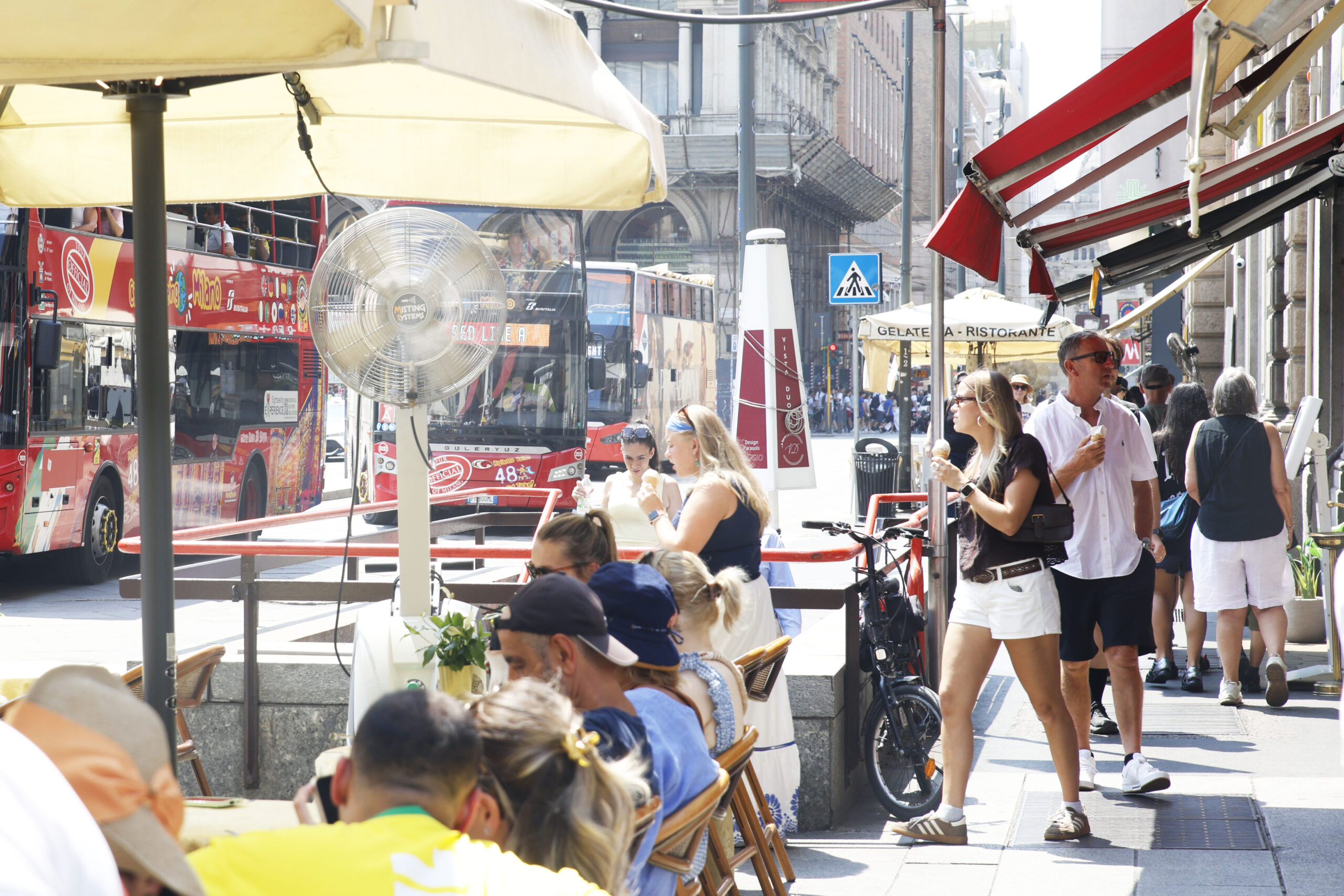
Brussels – In June, Belgium recorded the highest excess mortality rate in Europe during heatwaves, according to Belgian newspaper Het Nieuwsblad, which based its findings on data from the European surveillance network that monitors weekly mortality rates, EuroMOMO. With an excess mortality rate of 48 per cent, the country is said to have surpassed France (23 per cent) and the Netherlands (13 per cent).
According to the Belgian Federal Institute for Public Health, Animal Health and Food Safety (Sciensano), during the heatwave that lasted from 18 June to 1 July, Belgium recorded 1,747 more deaths than expected, representing an excess mortality rate of 47.8 per cent. Wallonia was the hardest-hit region, with an excess mortality rate of 76 per cent. The data also show that the heatwave did not affect only older people: an excess mortality rate of 61.3 per cent was observed among people aged between 15 and 64. These findings come from Be-MOMO, Sciensano’s mortality monitoring system. The deadliest day was 27 June, with 641 deaths and an excess mortality rate of 146.5 per cent.
In Wallonia, mortality rates are significantly higher than in other regions. During the canicule in June – a French term for a heatwave – an excess mortality rate of 76 per cent was recorded – 919 more deaths than expected; in Flanders, the figure was 31.4 per cent – with 682 additional deaths – while in Brussels it was 60.9 per cent – with 159 more deaths.
To date, Be-MOMO does not allow for the identification of a cause of death or an explanation for these significant regional differences, and states that “a more in-depth analysis will be required.” It does, however, note that the heatwave is among the possible causes, given the combination of the three main factors affecting health: the duration of the event, the intensity of the temperatures, and ozone concentrations.
Geert Molenberghs, a professor at the Faculty of Medicine at the Universities of Leuven and Hasselt, also pointed out that the heat has hardest hit people living in the poorest regions. During an interview with the Flemish media, he stated that “there is, for example, a significant difference between Flanders and Wallonia, so there is an undeniable socio-economic aspect to all this.” Therefore, “it is cooler in a large, detached house with some green space around it than in a small flat with too many people.” Given that Flanders was more severely affected (31 per cent) than France and the Netherlands, “we need to rethink the way we build,” he added. According to Molenberghs, the statistics themselves also play an important role. “Northern France was affected just as much as we were,” he said, while “in the south, and particularly in the south-east of France, there was no significant increase in deaths compared with the average.” This means that “these regions are better adapted to high temperatures,” he concluded.



![Da sinistra: il presidente del Consiglio europeo, Antonio Costa; il presidente dell'Ucraina, Volodymir Zelensky: la presidente della Commissione europea, Ursula von der Leyen [Bruxelles, 18 giugno 2024. Foto: European Council]](https://www.eunews.it/wp-content/uploads/2026/06/euco_ua260618-120x86.jpg)
![[foto: Saverio De Giglio/imagoeconomica]](https://www.eunews.it/wp-content/uploads/2026/10/cpt-120x86.png)