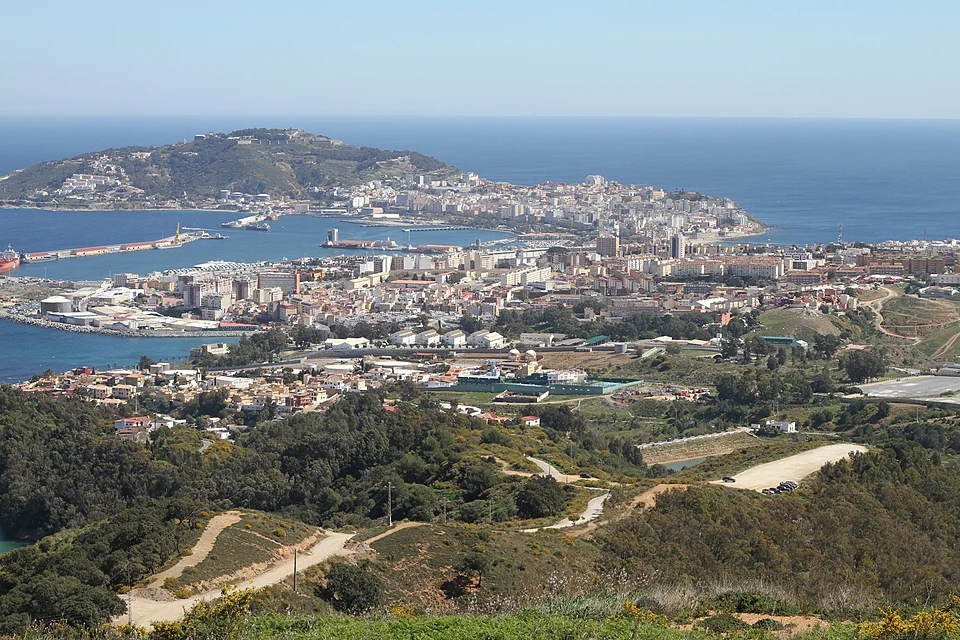
Brussels – The 72 hours of chaos in Ceuta, the Spanish exclave on the northern coast of Morocco and one of the European Union’s external borders, have exposed one of the deepest political rifts between Member States in recent times. Tomorrow (4 August), the interior ministers of the EU-27 will meet via videoconference to seek a common response to the migration crisis, but the real clash will be entirely political. The Spanish Prime Minister, Pedro Sánchez, already grappling with growing domestic discontent, finds himself under pressure this time not so much from the national opposition as from his European partners. Following the illegal entry of around 60,000 migrants in Ceuta last Friday and the swift restoration of border controls by the Spanish and Moroccan authorities, Madrid had expected a show of European solidarity. Instead, a rift has emerged.
“The reaction has been rather uneven,” writes Sánchez in the letter sent Saturday (1 August) to the President of the European Commission, Ursula von der Leyen, the President of the European Council, António Costa, and the Irish Prime Minister, Micheál Martin, who holds the rotating presidency of the Council of the EU. “Most” governments “have shown us support and solidarity, offering assistance.” But not all. For this reason, the Socialist Prime Minister has called for an urgent meeting of interior ministers to “establish a common response” and “reaffirm that the security of our external borders is a shared responsibility of all Member States, and not just those on the Union’s front line.”
There is, however, another passage in the letter that captures the atmosphere in the run-up to the summit. Sánchez denounces those governments that “have chosen to attack Spain and have called for its temporary exclusion from the Schengen area,” going so far as to attribute such positions to “prejudice, fake news, ignorance or political interests.” This is a direct reference to Italy and the other countries that have criticised Spain’s handling of the crisis.
The response came almost immediately. Twenty-two European leaders, on the initiative of Italy and Denmark, signed a second letter addressed to the EU’s top leaders. While acknowledging Madrid’s efforts and its cooperation with Morocco, the document calls for tighter controls at external borders, the elimination of all possible “pull factors” for irregular migration, including mass regularisation programmes, and an urgent meeting of interior ministers.
The European Commissioner for Home Affairs and Immigration, Magnus Brunner, also spoke out in defence of Madrid, and, in response to a parliamentary question on the movements of asylum seekers between Algeria and the Balearic Islands—a migration issue distinct from the events in Ceuta—ended up issuing a warning to Member States. Spain, Brunner pointed out, “had long been a country under severe migratory pressure” and was therefore the beneficiary of European solidarity mechanisms. However, in the face of the Ceuta crisis, this solidarity would have failed Madrid precisely when it needed it most.
A call for shared responsibility that was also reflected in the words of the President of the European Commission, Ursula von der Leyen, who in a letter to Sánchez praised the “efficient and effective” handling of the crisis by the Spanish and Moroccan authorities, reiterating that migration “is a European challenge that requires a European response.” Von der Leyen outlined five priorities—preventing irregular arrivals through cooperation with third countries, strengthening external borders, early warning systems, combating traffickers, and returns—emphasising that Spain can count on the Commission’s support. A message which, in Brussels’ view, aims to reframe the Ceuta crisis from a clash between national governments to a collective responsibility of the Union.
The political row quickly spilt over into a Schengen issue, even though no migrants had arrived on European soil. On the eve of the video conference, the European Commission received notice from Italy regarding the temporary reintroduction of internal border controls with Spain, in force from 1 August to 1 September for air and sea connections. Rome justifies the decision on the grounds of the risk of secondary movements arising from the crisis in Ceuta. The measure is provided for under the Schengen Borders Code, which allows Member States to temporarily reintroduce internal border controls in the event of a serious threat to public order or internal security. However, this is a measure of last resort, which must comply with the principles of necessity and proportionality and is subject to monitoring by the European Commission. Italy is not the only country to have resorted to this measure: Temporary controls are already in place in Germany, France, Austria, the Netherlands, Poland, Sweden, and Norway, albeit for different reasons.
Tomorrow, the ministers will be called upon to discuss Frontex, cooperation with Morocco, and the management of external borders. But the real test will be whether the 27 member states can bridge a political divide which, in just three days, has turned the Ceuta crisis into yet another battleground over European migration policy.
English version by the Translation Service of Withub![Il vertice dei leader Ue si apre con tensioni su Schengen. La Germania chiede una soluzione [foto: imagoeconomica]](https://www.eunews.it/wp-content/uploads/2022/12/Imagoeconomica_1366264-scaled.jpg)




![Il ministro dei Trasporti, Matteo Salvini [Bruxelles, 5 dicembre 2024. Foto: Emanuele Bonini per Eunews]](https://www.eunews.it/wp-content/uploads/2024/12/salvini241205-120x86.jpeg)