
Brussels – In the wake of the devastating earthquake that struck Colombia yesterday (10 August), the European Union is responding. After calling the Colombian Foreign Minister, Omar Bula, to express her condolences, the EU High Representative for Foreign Affairs and Security Policy, Kaja Kallas, today said that the EU “has mobilised Copernicus, our satellite service, to support rescue and relief operations” and is “providing funding to support the response, including through the Red Cross.” The mobilisation had already been announced yesterday by the President of the European Commission, Ursula von der Leyen, on her social media channels, with a promise to “provide further support” if necessary.
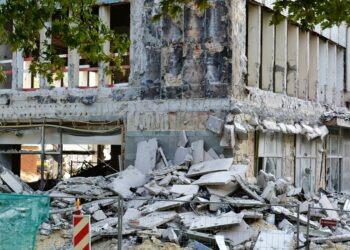
Yesterday, at 7.34 am local time (2.34 pm Italian time), the presidential republic was struck by a violent earthquake measuring 7.4 on the Richter scale, with its epicentre near San José del Palmar, in the department of Chocó, in the north-west of the country. Felt in all 32 Colombian departmental capitals, including Bogotá, Cali, Manizales, and Armenia, the earthquake occurred at a depth of 82 kilometres. According to Asocapitales – a non-profit organisation founded in 2012 that brings together and represents the mayors of the departmental capitals of Colombia – the death toll is at least 132, with over 570 injured. The Colombian president, Abelardo De La Espriella, also reported around 700 injured and 188 missing in the Valle del Cauca alone, while search and rescue operations continue. In addition to the casualties, several buildings have completely collapsed, including sections of some hospitals.
The Copernicus Emergency Management Service (CEMS) is a European Union service that provides free geospatial data and rapid satellite maps for the management of natural disasters. In the event of earthquakes, the service processes optical and radar imagery (taken before and after the earthquake) to assess damage to buildings, roads, and critical infrastructure in support of rescue operations. The service had already been deployed in June in Venezuela. Kallas stated that “the EU’s consular crisis assistance mechanism has also been activated to support EU citizens caught in the disaster.” This is a rapid coordination mechanism managed by the European External Action Service (EEAS) and the Member States, designed to protect and assist European citizens caught up in serious emergencies or disasters abroad, by facilitating operations such as evacuation or joint logistical and medical support. “Our thoughts are with the victims, their families, the injured and all those affected,” the High Representative reiterated.
English version by the Translation Service of Withub