
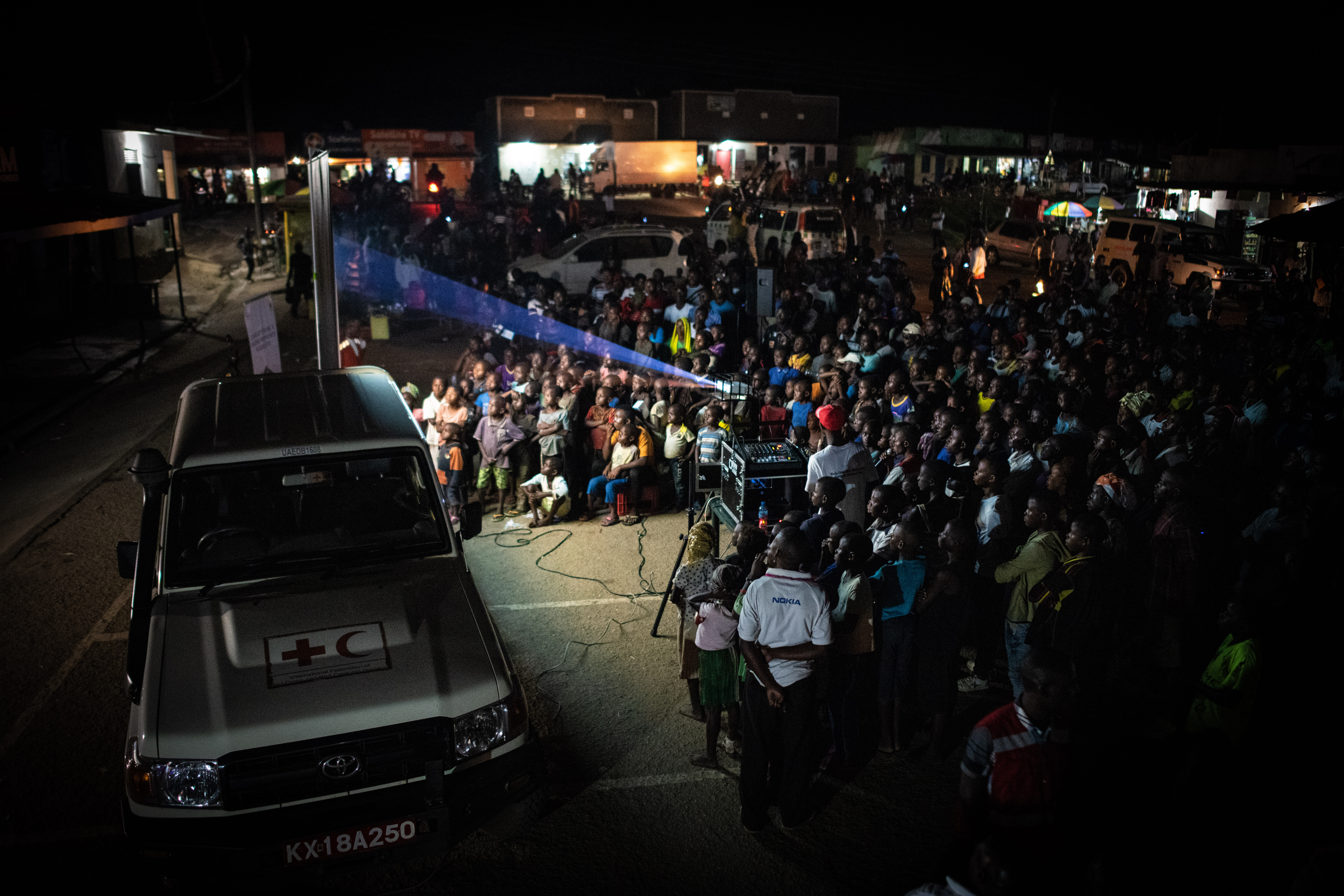
Brussels – Although media attention has waned, the Ebola outbreak continues to spread. In response to the current outbreak in Bundibugyo, Democratic Republic of the Congo, the European Commission today (18 August) announced it is purchasing diagnostic tests worth a total of 2.5 million euros to combat the disease. With the support of the European Executive Agency for Health and Digital – an executive body established in 2021 that manages European Union funding, calls for proposals and programmes in the fields of public health, food safety, digital innovation, industry and space – rapid molecular point-of-care tests and testing instruments will be donated to the African Centres for Disease Control and Prevention (CDC). The first deliveries will begin in August. A further agreement with the World Health Organisation for additional tests is in preparation.
The European Commissioner for Crisis Management, Hadja Lahbib, stated that the initiative is a direct result of her visit to the Ituri Province (Democratic Republic of the Congo) “where our partners made clear that faster and stronger diagnostic capacity is urgently needed.” The Commissioner also stressed that “these tests will help detect cases earlier, get patients into care sooner, and prevent the virus from spreading further.” Today’s action enables Europe to turn “what we heard on the ground into concrete support, working together with Africa CDC and the WHO”, she explained.
From the outset, the EU’s response to the outbreak has been coordinated with Member States, international organisations and EU partners. According to the European Centre for Disease Prevention and Control (ECDC), in the Democratic Republic of the Congo, the outbreak has recorded 3,381 confirmed cases and 1,489 confirmed deaths. In Uganda, there have been 20 cases and two deaths. To date, the Commission has already allocated 493 million euros for emergency aid, vaccines, treatment, and public health security in the Great Lakes region and in Uganda.
Ebola virus disease (EVD) is a serious and often fatal illness that rarely affects humans. Humans become infected with the Ebola virus through contact with infected wild animals, whether alive or dead (fruit bats, chimpanzees, gorillas, monkeys, forest antelopes, porcupines and other mammals). “In an Ebola outbreak, every hour matters,” Lahbib concluded.
English version by the Translation Service of Withub![Ebola [fonte: unsplash]](https://www.eunews.it/wp-content/uploads/2026/06/gani-nurhakim-8thMgrYrjLc-unsplash-350x250.jpg)

![Da sinistra: il presidente del Consiglio europeo, Antonio Costa; il presidente dell'Ucraina, Volodymir Zelensky: la presidente della Commissione europea, Ursula von der Leyen [Bruxelles, 18 giugno 2024. Foto: European Council]](https://www.eunews.it/wp-content/uploads/2026/06/euco_ua260618-120x86.jpg)
![[foto: Saverio De Giglio/imagoeconomica]](https://www.eunews.it/wp-content/uploads/2026/10/cpt-120x86.png)