
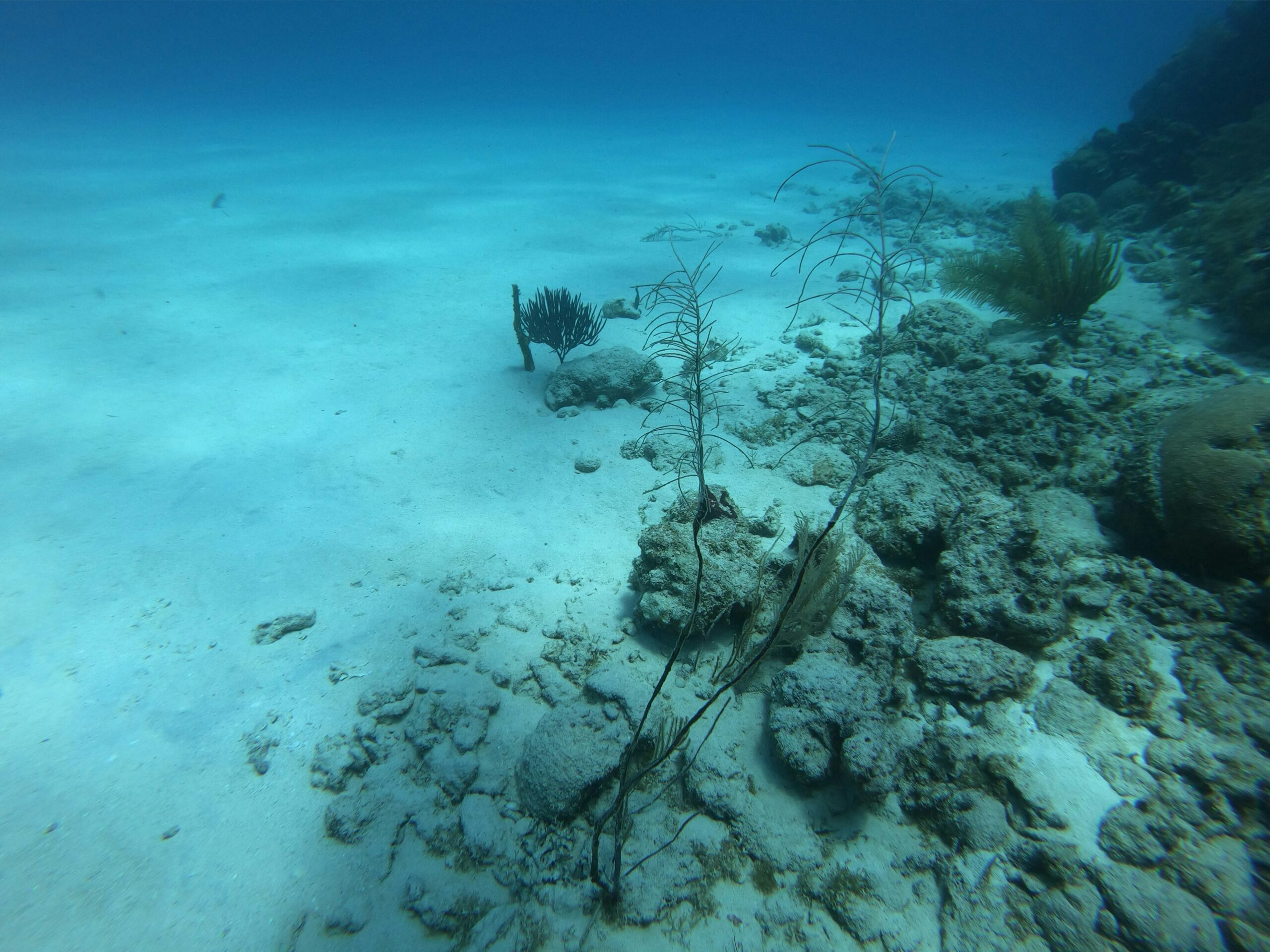
Brussels – Global warming also threatens the seabed, but this issue deserves more attention. Although rising temperatures can affect the behaviour and life cycles of underwater organisms—damaging their tissues or even killing them—most predictions about marine heatwaves focus solely on surface waters. This is also because global warming has implications for fisheries, aquaculture, and marine species conservation. Now, a group of British and Italian researchers pointed out that understanding the impact of climate change on future seabed temperatures is crucial, particularly for species conservation.
In a project financed by Horizon Europe—the European Union’s 2021–2027 Framework Programme for Research and Innovation for the period—a group of researchers analysed temperatures on the continental shelf of north-western Europe, including the North Sea, the coastal waters around the United Kingdom and Ireland, and the northern part of the Bay of Biscay. These are some of the most heavily fished regions in the world.
In particular, the researchers used five regional models to predict future changes in the ocean and their impact on temperature. These models accounted for continental shelf characteristics and forecast surface and seabed temperatures for each season. Specifically, the models were based on a high-risk greenhouse gas emissions scenario used by climatologists in climate simulation models, designated by the Intergovernmental Panel on Climate Change (IPCC, the United Nations’ leading international body, established in 1988 to assess the science of climate change) as “Representative Concentration Pathway 8.5”, which indicates a trajectory in which emissions continue to rise rapidly throughout the 21st century in the absence of mitigation policies. A study cited by the researchers suggests that this is a realistic scenario, given current trends in “global climate policies and industrial development.”
In their research, the academics focused specifically on heatwaves, that is, periods of at least five days during which temperatures were unusually high for the time of year in which they were recorded. Heatwaves were defined as periods with temperatures exceeding 90 per cent of those recorded during a reference period (between 1990 and 2009). Based on this, the researchers ran temperature simulations from the present day to the end of this century.
Under the high-emissions scenario examined—the likelihood of which is still debated—heatwaves are expected to occur for much of the year until 2100. The research also suggests that the frequency and intensity of heatwaves would increase more rapidly on the seabed than at the surface. Furthermore, heatwaves are likely to be more common in autumn, winter, and spring, rather than in summer. The researchers also found that certain seabeds, such as those around north-western Ireland and off the south-western coast of Norway, appear to be more resilient to heatwaves.
The findings suggest that sea-temperature models should predict temperature variations throughout the year, whereas they currently focus only on the summer months. As most other coastal shelf systems are likely to experience similar warming effects, the researchers suggest further investigating such prediction models. Finally, the scientists emphasise the need to understand, on the one hand, how future heatwaves may affect seabed communities and, on the other, what impact non-summer heatwaves have on organisms and ecosystems at all depths.
English version by the Translation Service of Withub
![Mappa della Nuova Caledonia [foto: Eric Gaba /Wikimedia Commons]](https://www.eunews.it/wp-content/uploads/2026/08/New_Caledonia_and_Vanuatu_bathymetric_and_topographic_map-fr-350x250.jpg)