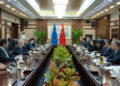
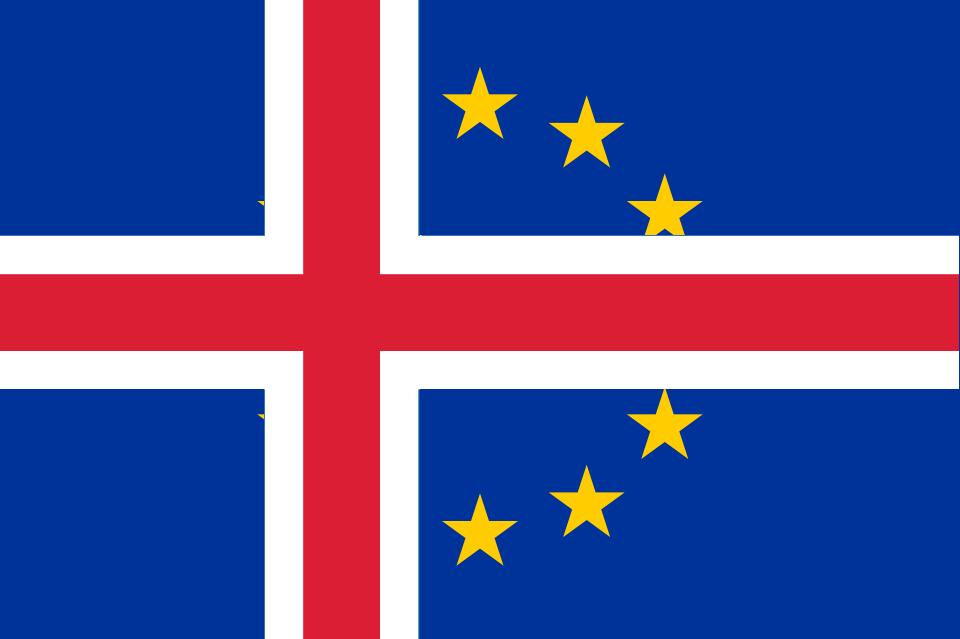
Brussels – EU or no EU? Iceland’s citizens are being asked to answer a question that has become increasingly existential for the country — especially in light of Donald Trump’s shifts in U.S. policy, a key factor behind the referendum on resuming negotiations for EU accession. Tomorrow (29 August), over 266,000 Icelandic voters will head to the polls for a vote which, whatever the outcome, is set to be historic. Iceland’s accession process seemed to have been definitively abandoned, but the changed international context has brought it back onto the national political agenda.
Iceland and the accession process
The 29 August vote is not about saying “yes” or “no” to the European Union. It is not a vote to apply for EU membership – and thus become a candidate country – nor is it a Brexit-style referendum to abandon the current “external participation” (through the European Economic Area) in the twelve-star club. Iceland is not an EU member, but it is a candidate country that has effectively suspended the accession process. Tomorrow’s referendum is to determine whether to resume that process.
The Reykjavik government had applied for EU membership in July 2009, and negotiations began a year later, in July 2010. In September 2013, however, the government decided to stop the whole process, with fisheries and the EU’s restrictions in this area among the main reasons for a complete and official withdrawal in early 2015, after concluding 11 negotiation chapters.
The “yes” camp: Trump and international tensions make the EU a safe bet
After a decade of ‘golden isolation’, Iceland is trying to turn a new page. Russia’s military aggression in Ukraine has certainly influenced the mood and stance of the national political class. But it is, above all, factors arising after the Russia-Ukraine conflict that have convinced the parties to call a referendum. The key factor in this vote is Donald Trump, the President of the United States, whose unpredictability and aggressive policies have forced a strategic rethink.
Tariffs, but above all the desire to annex Greenland, have prompted Iceland to ask itself some questions. Added to this is the US’s disengagement from NATO, of which Iceland is a founding member. In such a context, the European Union becomes a guarantee of defence, security, stability, and reliability. The crisis caused by the Israeli-US war in Iran – with rising energy prices and knock-on effects on supply chains – has also led to fluctuations in the Icelandic króna, which has suddenly become volatile. The single market and the single currency therefore present an attractive prospect.
The “no” camp
EU fisheries regulations have always dampened euro‑enthusiasm. Iceland’s fishing industry is one of the cornerstones of its economy, and the idea of opening up its waters and fishing grounds to “foreign” fishing vessels was unpopular then and remains so now. Similarly, the idea of fixed fishing quotas is not well received.
But the entire primary sector remains the real sticking point. Like fisheries, agriculture is also a sensitive issue for Iceland. There are fears on the island about the negative impact the Common Agricultural Policy could have on local production. Then there is the more “nationalist” issue of EU membership. Some people do not want to cede or lose too much national sovereignty.
These fears will certainly play a part in the vote. Encouraging signals have nevertheless emerged from Brussels: exemptions may be granted to adhere to a whole series of rules. At this historic moment, Iceland would certainly benefit from the EU, but the reverse is also true, and the European Commission is well aware of this. Tomorrow’s vote could help write a new chapter in national, international, and European history. The EU Commission has, for the time being, chosen to remain silent so as not to interfere in a vote that has never been so decisive.
English version by the Translation Service of Withub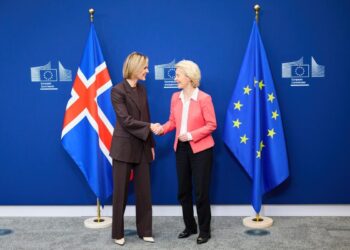
![Banconota da 500 corone islandesi [foto: By Central Bank of Iceland, Bradbury Wilkinson, New Malden. - http://coinsbanknotespictures.blogspot.com/2012/06/currency-of-iceland-500-kronur-banknote.html, Public Domain, https://commons.wikimedia.org/w/index.php?curid=29951906, elaborazione eunews]](https://www.eunews.it/wp-content/uploads/2026/06/euro-corona-islanda-350x250.png)