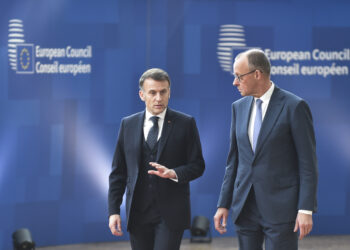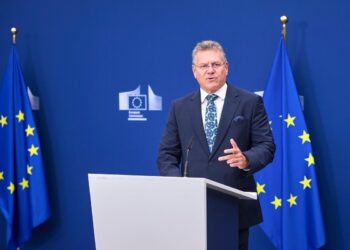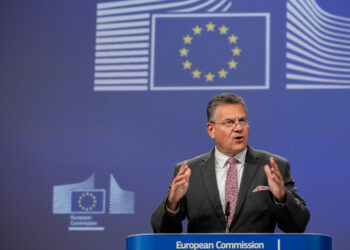
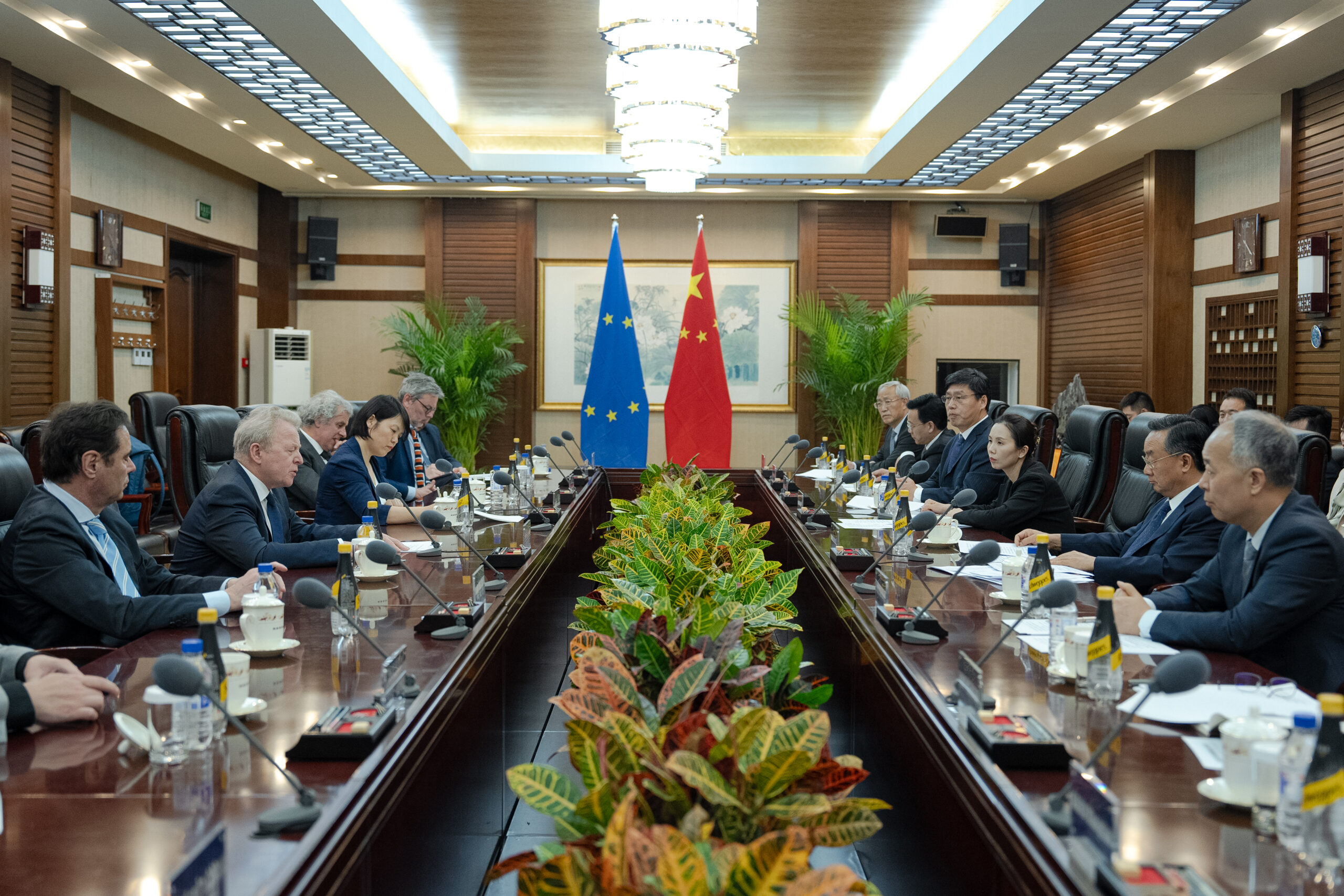
Brussels – Do not shut down dialogue with Beijing, but adopt a more resolute and assertive stance, prioritising measures designed to challenge it. At the very same time as the European Commission’s trade negotiators and the Trade Commissioner, Maroš Šefčovič, are preparing to travel to China for two days of talks aimed at tackling Beijing’s huge trade surplus, the European Parliament is calling for a change in approach, shifting the focus from diplomacy – which should nevertheless be maintained – to a new phase of economic and trade counter-offensive. This is the call made in the recommendation voted through by the plenary by a large majority (454 votes in favour, 86 against and 110 abstentions), making an explicit request to the European Commission and the Council to stop the pleasantries and take action. This request from the plenary comes just a few days after the French President, Emmanuel Macron, and the German Chancellor, Friedrich Merz, sent a letter to the President of the Commission, Ursula von der Leyen, calling for “a credible instrument” in the hands of the EU executive “that allows for decisive and systematic responses,” “up to and including immediate exclusion from the single market, should this prove necessary.”
“Our trade deficit amounts to almost one billion euros a day,” states Hilde Vautmans (RE), rapporteur for the approved text. Given the situation, she emphasised at a press conference, “the EU must use its defence mechanisms.” Vautmans adopts a tone and line of reasoning worthy of Donald Trump, the US president who, faced with trade deficits, first threatened and then unilaterally imposed tariffs on everyone, including the EU, with the aim of restoring the balance in America’s favour.
To date, the EU’s policy towards the People’s Republic has been characterised by targeted responses linked to unfair competition, such as the tariffs on “made in China” electric cars produced and sold with the help of state subsidies that contravene the rules. Now, however, the paradigm seems to be shifting, so much so that Vautmans hopes that the President of the European Commission, Ursula von der Leyen, will “announce measures to tackle trade imbalances” as early as next week’s meeting of Heads of State and Government (15 and 16 October).
An end to dependence on China: new partners wanted
The EU intends to pursue a new approach towards China, characterised by “less China”. Less accommodation on trade matters also means reducing dependence on Chinese imports and the potential for them to be used as a tool. The recommendation calls for a “rigorous risk-mitigation strategy,” which should focus in particular on critical raw materials, medicines, batteries, electric vehicles, information and communication technologies, semiconductors and other strategic sectors.
In terms of trade and investment, MEPs support the need to ensure reciprocity and a level playing field, and consider proportionate action by the EU to be “necessary” should China fail to open up its markets. They propose strengthening partnerships under the Global Gateway, the EU’s global investment strategy, by offering a credible alternative to China’s New Silk Road, particularly in Africa and Latin America.
Espionage, interference, and aid to Russia: the EU’s accusations against Beijing
“We must protect critical infrastructure from espionage and interference,” continues the rapporteur for the recommendation, in a public and unequivocal indictment. The approved text devotes a section to cyber-attacks, foreign interference, espionage, and hybrid threats. All these activities, which the European Union attributes to Beijing, are included in the report on EU-China relations, as well as activities aimed at international destabilisation.
The People’s Republic is criticised for doing nothing in the Russia-Ukraine conflict. The Chinese government is urged to “use its influence over Russia to help bring the war to an end,” something which has not happened so far, much to the disappointment of Europeans. Furthermore, MEPs oppose “any unilateral change to the status quo in Taiwan through the use of force or coercion.”
“We want to cooperate with China wherever possible, while maintaining a firm stance on our security and our values,” Vautman states bluntly. It is now up to the leaders and the European Commission to decide how to proceed. The gauntlet has been thrown down to the Chinese Dragon.
English version by the Translation Service of Withub