Brussels – “Despite ambitious EU plans and rising spending, achieving defence readiness by 2030 is challenging.” The EU Court of Auditors has burst onto the political debate on security and defence with a report that seems to call everything into question, reducing the EU’s strategy to mere proclamations, announcements and little else. The doubts the auditors in Luxembourg raised are rooted in the common foreign policy, which is by no means truly European but “characterised by a complex institutional framework and a multilevel governance structure.” This translates into “ significant coordination challenges across the different players and increases the risk of overlapping responsibilities.”
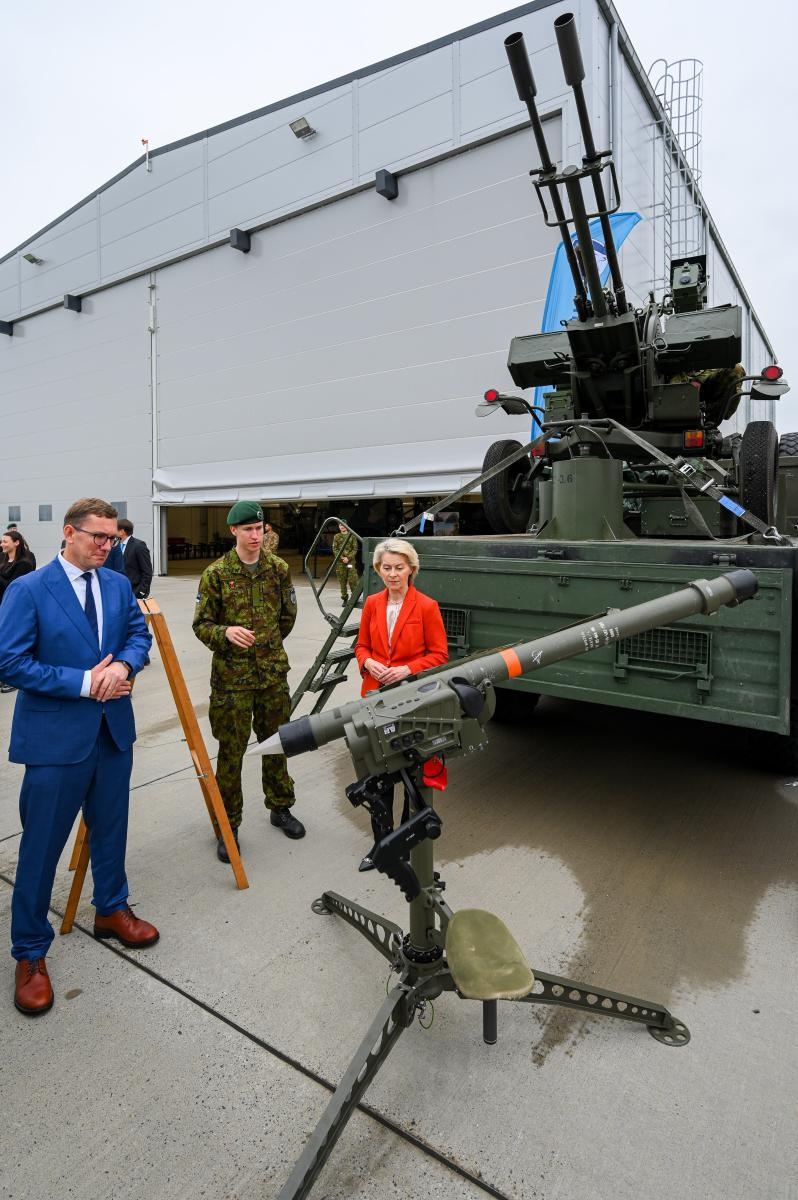
The Court of Auditors goes straight to the point: the EU’s entire strategy – Readiness 2030, that is, the plan to ‘Re-arm Europe’ – renamed for reasons of image and political expediency – risks resulting in a waste of public resources. Precisely because of the national nature of defence and a management approach that remains heavily government-led, “insufficient coordination among various EU funding streams, as well as between EU and national funding, together with the absence of an effective, top-down EU planning process may lead to fragmented investments, duplication or persistent capability gaps.”
The EU Court of Auditors also identifies “implementation risks” arising from a market that is insufficiently developed to meet new needs and demands. Shortages “of skilled staff” cannot be ruled out, particularly in light of young people’s lack of interest in heavy industry, and this, together with “bottlenecks of materials” and the “high inflation rate” stemming from high energy costs resulting from the war in Iran, “makes it difficult to utilise the allocated funds.”
In essence, the strategy the European Commission presented with great fanfare appears to be rushed and flawed, paying little attention to the structural limitations of the EU and its political and institutional architecture. For this reason, “capitalising on new opportunities and heeding the existing risks is key,” stressed Marek Opioła, the Member of the European Court of Auditors responsible for the report. “The goal of defence readiness by 2030 remains challenging,” he reiterated. True strategic autonomy in defence, he notes, may prove more challenging in light of “ongoing major constraints, such as fragmented national systems, industrial bottlenecks, slow political coordination, and reliance on the United States.”
Reporting and debt: the other critical factors in ‘Readiness 2030’
There are also at least two further critical issues in the twelve-point strategy to revitalise defence and the defence industry: one concerns expenditure controls and transparency; the other regards government debt and the conflict between the security agenda and the Stability Pact and budgetary rules. As regards financial audits, the auditors in Luxembourg point out that, in themselves, “the financial accountability arrangements are equally complex, and vary depending on the funding instrument and entity involved.” To complicate matters further, “the absence of an audit mandate for all bodies and instruments involved limits the ECA’s ability to fully perform its role of external auditor.”
Concerning public finances, “The increasing use of debt-financed defence spending, EU-backed loans (through the SAFE programme, Ed.) and the activation of flexibility clauses may undermine fiscal sustainability by slowing public debt reduction, increasing contingent liabilities and placing additional pressure on the EU budget headroom, in the absence of proper provisioning.” The EU therefore risks undermining the Stability Pact reform and efforts to correct macroeconomic imbalances, further compromising national governments’ fiscal positions, spending, and room to manoeuvre.
English version by the Translation Service of Withub

![Un carroarmato su strada. L'Ue vuole sostenere la mobilità militare [foto: Wikimedia Commons]](https://www.eunews.it/wp-content/uploads/2023/05/Challenger2-Bergen-Hohne-Training-Area-2.jpg)