
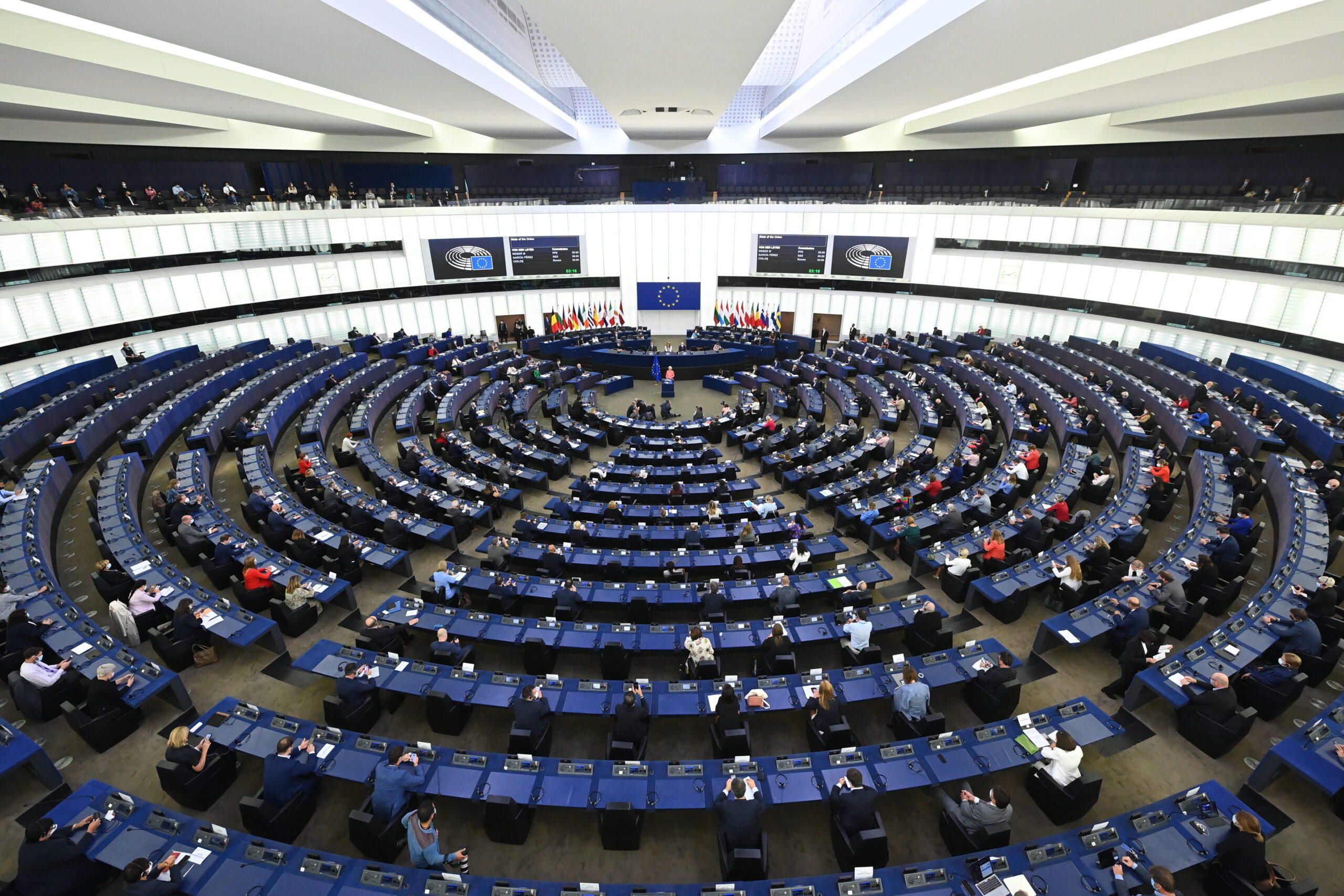
Brussels – A defence industry to be relaunched, even at the expense of environmental safeguards and through procedures that are far too accelerated. The European Parliament is set to vote on the European Commission’s simplification proposal for everything aimed at reviving the defence sector — better known as the fifth Omnibus package — which bundles together controversial elements on which, nonetheless, there is broad cross‑party convergence. The text arrives in the Chamber in a consolidated and finalised form – that is to say, agreed with the Council – and is therefore, in all likelihood, already set to be adopted.
The timetable includes a debate (Tuesday 15 September) and a vote (16 September). The voting procedure is not expected to take long. On the contrary, there will be just two amendments: the first calls for the text to be approved, the second for it to be rejected. The call to reject the proposal comes from The Left group, confirming a guaranteed majority for a measure that risks undermining commitments and proclamations on sustainability and the clean energy transition.
Recital number 8 states that “defence readiness projects, including related industrial and governmental activities, can, where applicable, fall within the scope of existing provisions of Union law, including in the field of Union environmental law, that allow for derogations on grounds of overriding public interest, public safety or in response to a crisis.” In this regard, “Member States can use such derogations where appropriate for purposes of defence readiness activities and investments”.
It therefore opens the door to acting in derogation of environmental‑protection rules, delivering a slap to the Green Deal and to pre‑existing legislation. The text confirms the approach put forward by the Security and Defence Committee and the Internal Market Committee, which had tabled amendments of the same nature and which therefore remain in the final version, albeit in a less explicit form. Likewise, the possibility of tacit approval for contracts and industrial projects, based on the “silence-means-consent” principle, has been watered down.
To further speed up and streamline the authorisation process, MEPs have proposed introducing the principle of tacit approval for the granting of permits. In practice, an application for authorisation should be deemed granted if the project promoter has not been informed within the prescribed time limits. This wording has been made less explicit, with references to a “tacit approval mechanism” of permit granting, and the clarification that “such tacit approval is without prejudice to Member States’ obligations to perform case-by-case examinations, assessment procedures or public consultations, which are to be carried out pursuant to Union or national law.”
English version by the Translation Service of Withub

![Il castello di Alden Biesen, in Belgio, dove si riuniranno i leader dell'UE per il vertice informale dedicato a mercato unico e competitività [foto: European Council]](https://www.eunews.it/wp-content/uploads/2026/02/aldenbiesen-350x250.jpg)