




Brussels – Unemployment remains stable in the EU, but there were nearly 350,000 more people out of work over the past year. In August, the unemployment rate in the European Union stood at 6.1 per cent, unchanged from July but up from 6 per cent in August 2025. In the eurozone, the figure remained at 6.4 per cent, compared with 6.3 per cent a year ago, according to the latest figures published by Eurostat.
In absolute terms, there were 13.6 million people out of work in the EU in August, 348,000 more than in the same month of 2025. In the eurozone, there were 11.36 million unemployed, an increase of 267,000 over the past year. Compared with July, however, the rise was modest: 12,000 more people in the EU and 26,000 in the eurozone. The situation amongst younger people is particularly worrying. In the EU, the unemployment rate amongst under-25s rose to 15.4 per cent, from 15.3 per cent in July, bringing the total number of young people out of work to almost 3 million. In the eurozone, however, the figure fell slightly, from 15.1 per cent to 15 per cent. However, compared with August 2025, the number of young people out of work rose by 19,000 in the EU and by 38,000 in the eurozone.
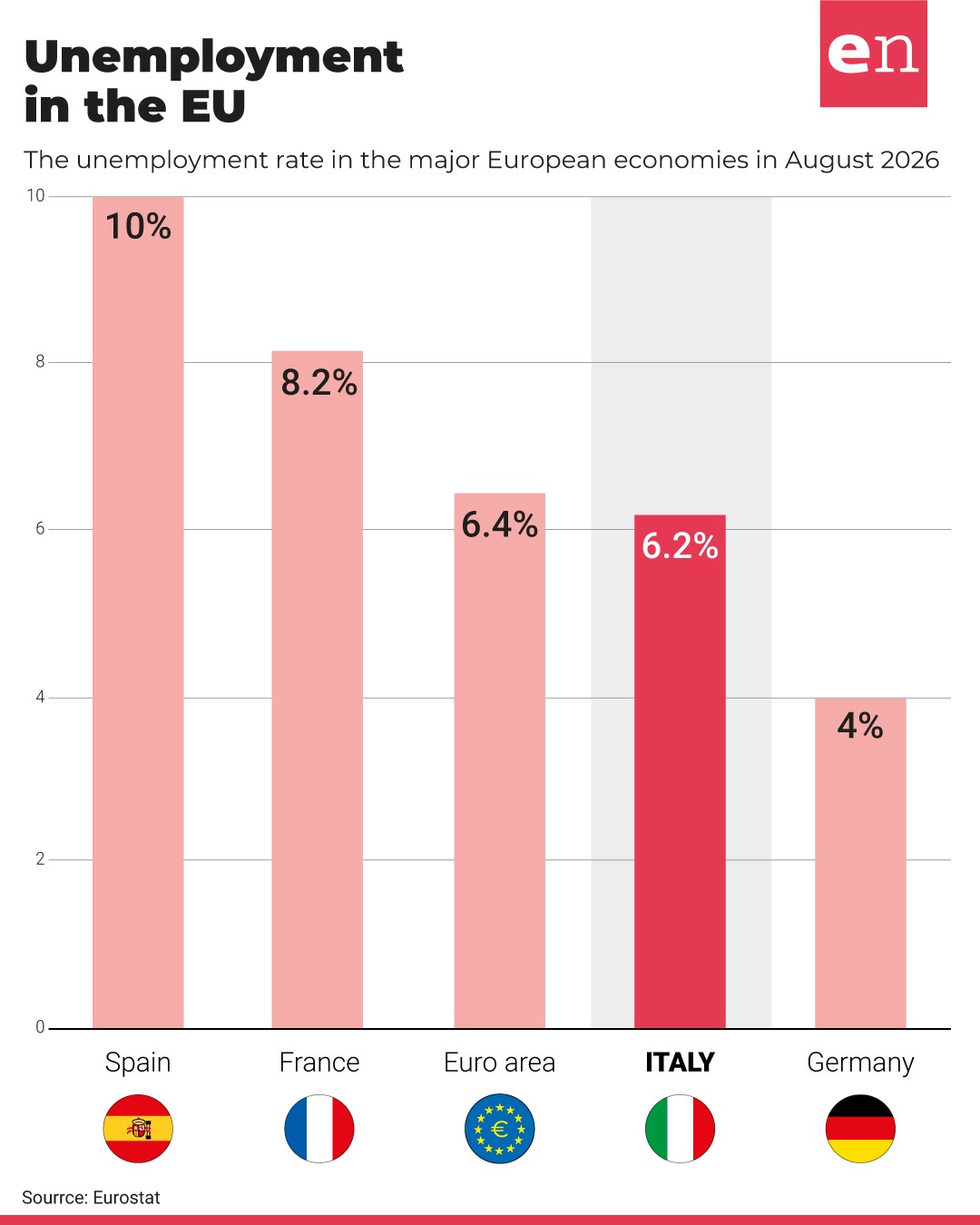
The picture varies considerably from country to country. In Italy, the unemployment rate rose to 6.2 per cent in August, up from 6 per cent in July and 5.7 per cent in August 2025, bringing the total number of people out of work to around 1.59 million. The figure is even more striking among young people: the rate rose from 19.7 per cent in July to 20.3 per cent, with around 253,000 under-25s out of work.
The European labour market, however, is not just about people leaving employment. In 2024, 3.5 million new businesses were set up in the EU, compared with 3.1 million closures, resulting in a business birth rate of 10.4 per cent. In 19 of the 27 Member States, more businesses were established than closed. And some of these businesses are growing rapidly: Eurostat classified 180,200 European businesses as ‘high-growth’, employing a total of 14.1 million people. This is another facet of a labour market which, despite the challenges, continues to transform and generate new business opportunities.
English version by the Translation Service of Withub





![[foto: Nzeemin/Wikimedia Commons, rielaborazione Emanuele Bonini/Eunews]](https://www.eunews.it/wp-content/uploads/2026/10/mediterranean-sea-120x86.png)
