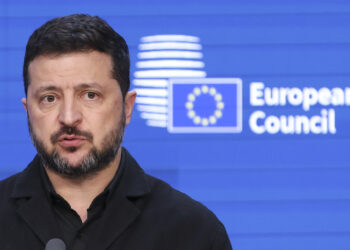
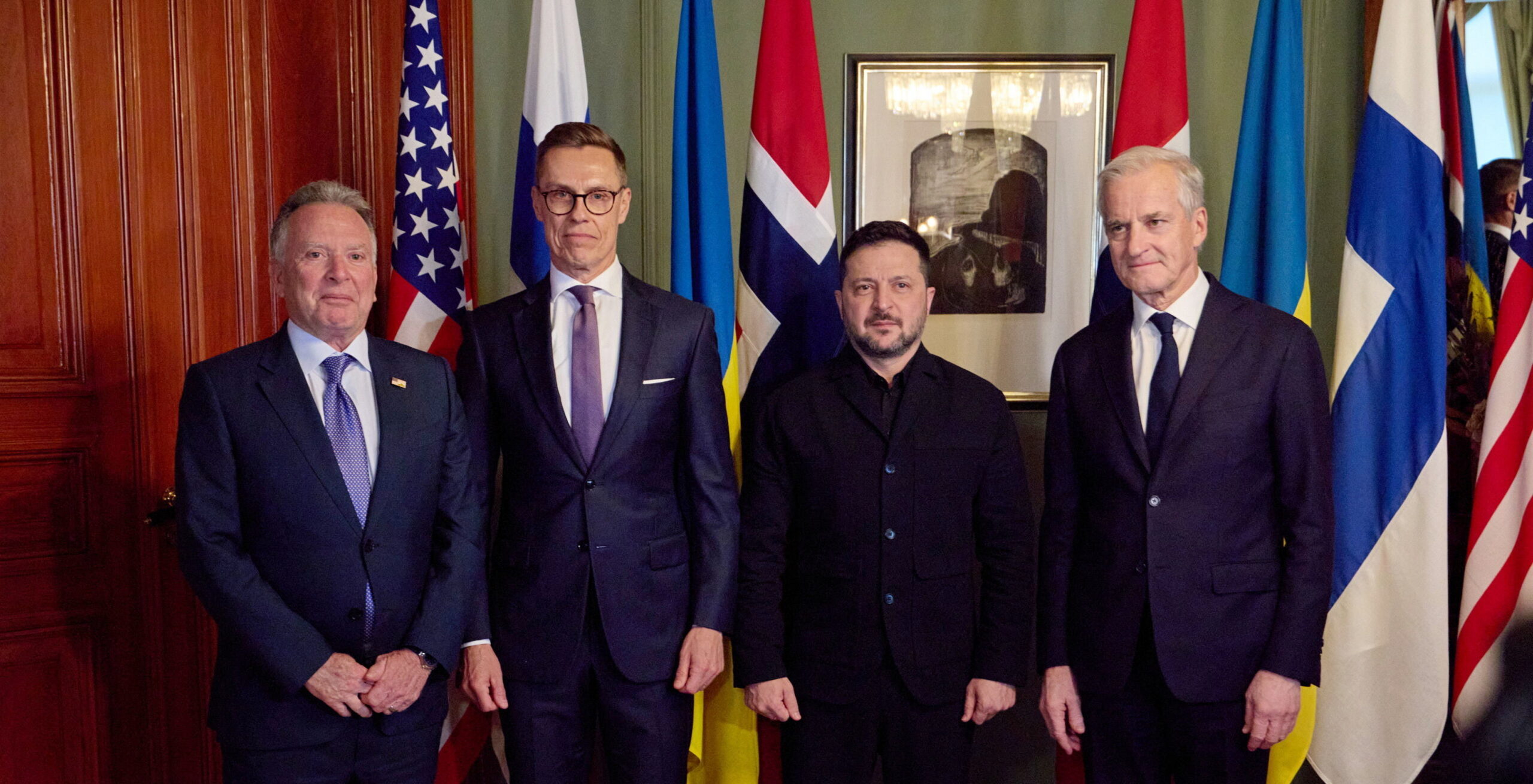
Brussels – The European Commission took part in the meeting held yesterday (20 October) in Oslo between the President of Ukraine, Volodymyr Zelenskyy, and Donald Trump’s special envoy, Steve Witkoff, on possible peace talks between Kyiv and Moscow, and delivered its message. This is an achievement that the Berlaymont building claims credit for and highlights. “The really important thing is that we are sitting at the table, that we are able to set out our position and that we can work towards a common goal: to put an end to this horrific war, which has gone on for far too long,” stated today (21 October) the European Commission’s chief spokesperson, Paula Pinho, during the daily press briefing.
Yesterday’s talks were organised to draw up a peace proposal which Witkoff himself will present today in Russia, at a meeting with President Vladimir Putin. According to a report in the New York Times, Washington is reportedly trying to persuade Zelensky to accept a deal with Moscow that includes territorial concessions in the Donbas, promising “potential economic benefits” for Kyiv in return. In fact, the central themes of the discussion were “territory, security, and post-war prosperity” for Ukraine, the spokesperson explained.
Pinho also pointed out that the meeting was attended by the President of Finland, Alexander Stubb, the Prime Minister of Norway, Jonas Gahr Støre, and the national security advisers (or their deputies) from Germany, the United Kingdom, Italy, the EU and NATO. The European Commission was represented by the Head of Cabinet to the President of the European Commission, Bjorn Seibert. “We were there, we attended, and in this way we can convey our message directly to those who share an interest in bringing this conflict to an end. It is good, a very good thing, that we had the opportunity to do so,” he emphasised. At present, the Berlaymont Building expects that “upon the US delegation’s return from Russia, a debriefing on the outcome of the talks will take place,” he added.
With regard to a possible summit between the United States, Russia, and China on the situation in Ukraine, and the EU’s absence from such a forum, Pinho warned that “if a meeting is held to discuss Ukraine, Ukraine must, first and foremost, be present.” As for “other types of meetings, it is up to the organisers and partners to decide what to discuss and how to proceed.”
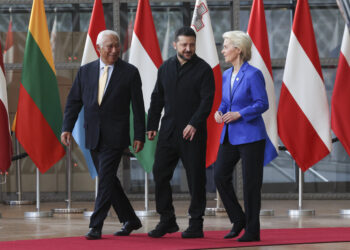
One issue that remains unresolved, however, is Elon Musk’s decision to reduce the power of the Starlink satellites in Ukraine. This was an issue that Zelensky had raised directly with 27 EU heads of state in Brussels during last week’s European Council meeting. Here, the spokesperson for the European Commission, Thomas Reigner, reiterated that “SpaceX must urgently restore full operational capacity of its services for Ukraine, as the country needs this vital information.” In fact, the technology is needed “to keep soldiers in contact, to protect citizens and to operate the drones required for the defence of the territory,” he clarified.
A situation which is also demonstrating “just how much Europe’s security depends on space,” he explained. “Europe must do more: this is an urgent need that affects us directly. For this reason, we are actively working on the development and deployment of a constellation comprising over 300 satellites,” he announced. “It will provide high-level secure satellite connectivity for both civilian and military purposes, and, of course, we will fully involve Ukraine in this project.”
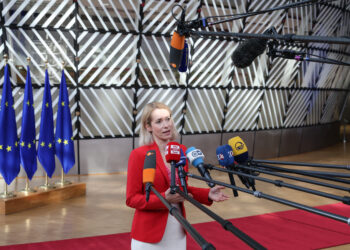
This appeal had already been made last week by the EU High Representative for Foreign Affairs and Security Policy, Kaja Kallas, upon her arrival at the European Council, on the second day of the meeting in Brussels. “Starlink is truly indispensable for Ukraine and, unfortunately, in the short term Europe is unable to replace it. We have the European Defence Agency, which has effectively identified all the key capabilities and enablers that we lack and that we need to address. Now, the issue is the implementation of all this, and we must do so as soon as possible because we ourselves need these capabilities,” Kallas had specified.
English version by the Translation Service of Withub