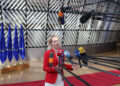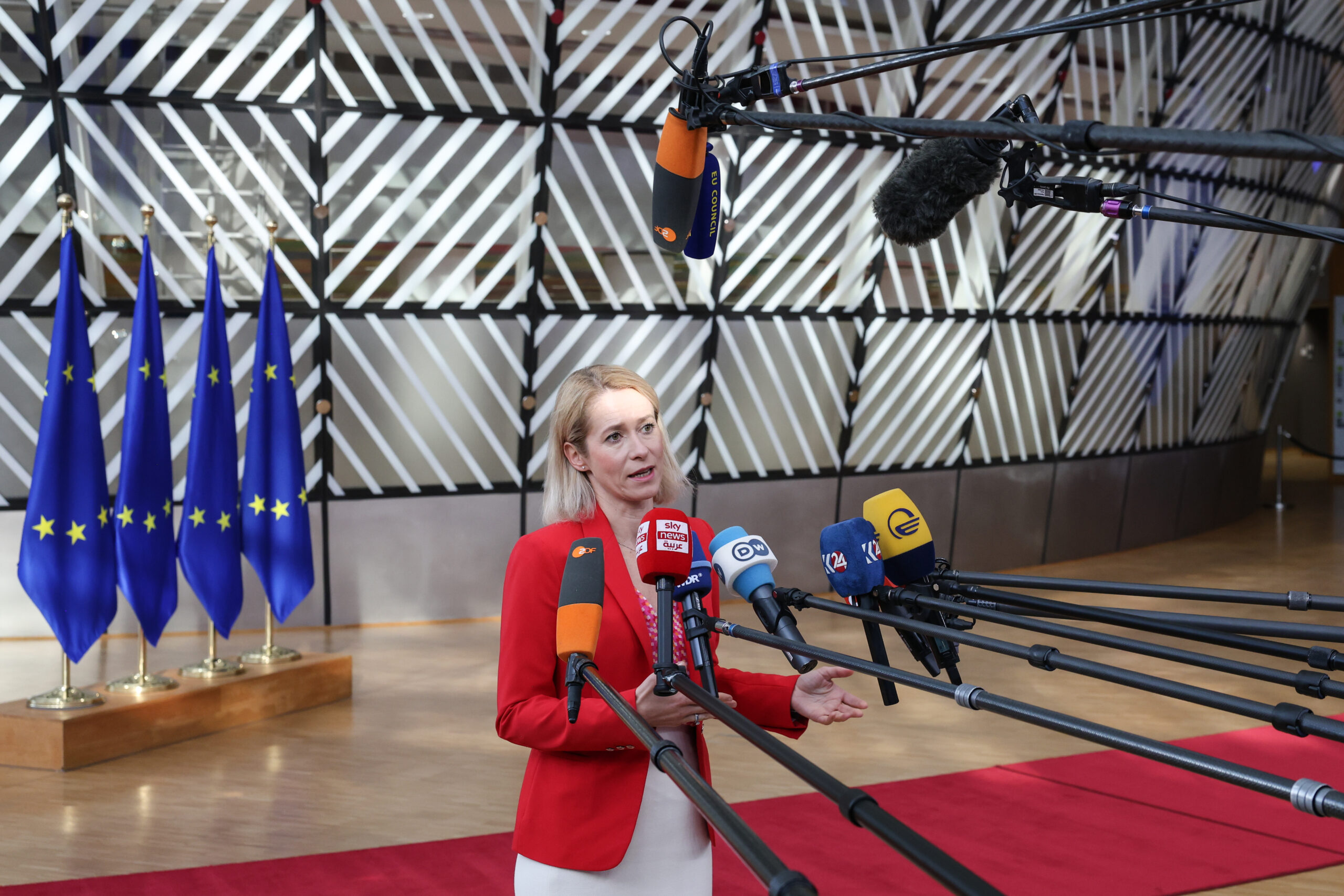
Brussels – “Dialogue with our American allies is very, very difficult,” said the EU High Representative for Foreign Affairs and Security Policy, Kaja Kallas, on her arrival at the European Council for the second day of talks in Brussels. She did not hold back on expressing her bitterness at the state of relations with Washington regarding sanctions against Russia for its aggression against Ukraine. She noted that “Starlink is truly essential for Ukraine and, unfortunately, in the short term, Europe is unable to replace this capability.”
The difficulties faced by Ukrainian military communications due to restrictions on Starlink – Elon Musk’s SpaceX satellite network that provides broadband internet access – highlight Kyiv’s dependence on American technology and the limits of Europe’s ability to replace it. Recent disruptions to the satellite links used by Ukrainian forces, particularly for drone operations, highlight just how crucial US support remains on the ground. This issue comes against a backdrop of growing tensions between Washington and Brussels over the handling of the war.
This incident highlights the need to speed up the strengthening of European defence. Kallas pointed out that “the European Defence Agency actually mapped all the critical capabilities and enablers that we are missing that we have to fulfil.” In other words, the gaps that Member States must fill. “Now, the question is the implementation of this, and we need to do this as soon as possible because we need the capabilities ourselves,” she said.
Ukraine remains, however, the priority for European leaders, particularly in the run-up to what is set to be a particularly difficult winter, as also confirmed by the President of the European Council, António Costa, the Ukrainian President Volodymyr Zelensky and the President of the European Commission, Ursula von der Leyen, at the start of the proceedings. “The situation is really grave. We need to support Ukraine also to get through the winter because the winter is going to be harsh,” Kallas stressed, highlighting in particular the need to strengthen air defences. From Moscow, she added, “We do not see any signs from Russia that they want to stop this war, or they are into any kind of truce or peace.”
For this reason, Brussels intends to continue putting pressure on the Kremlin. Despite the complexity of the dialogue with the White House, “we are trying to convince also our American partners that if we want to end this war, then we have to squeeze the aggressor,” the High Representative said. The aim, she clarified, “is not only to end this war, but to make sure that there are no more wars started by Russia.” For this reason, “I have also prepared with the Foreign Ministers our list of requests, our list of European security concerns that we should also present to Russia,” because it is impossible to “give all the things that they are interested in without having some kind of concessions also from the Russian side”, the former Estonian Prime Minister added. Meanwhile, the EU is working on a new package of sanctions.
Among the most pressing issues on the table is funding for Ukraine next year, amid limited resources and negotiations on the European multiannual budget. Kallas drew attention to the frozen Russian assets: “We have agreed that we will not return the frozen assets unless Russia pays reparations to Ukraine.” Kyiv, she stressed, “needs this money right now.”
English version by the Translation Service of Withub
![[Copyright: European Union]](https://www.eunews.it/wp-content/uploads/2026/10/euco-261015-350x250.png)