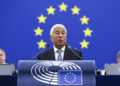
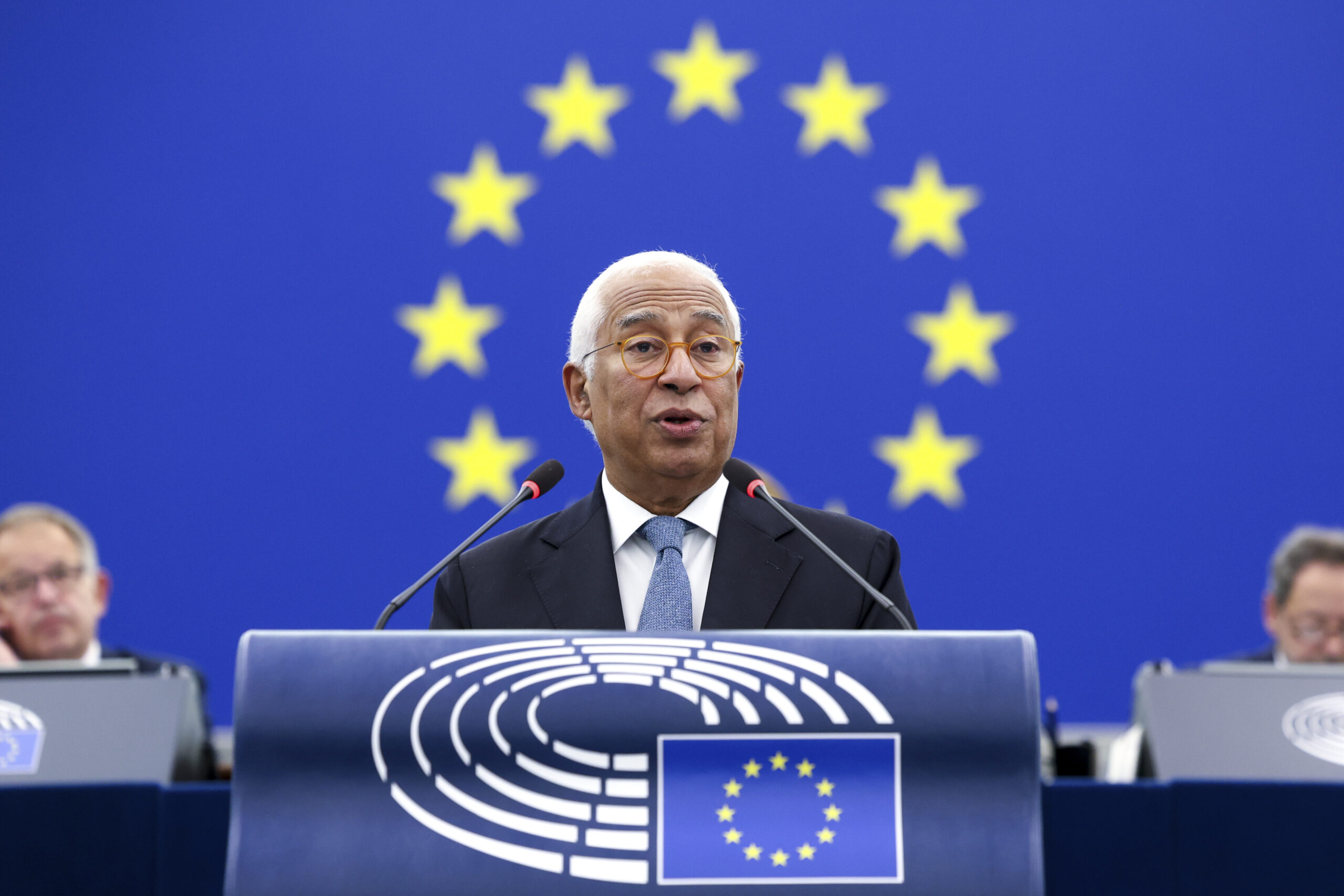
Brussels – Artificial intelligence (AI) is the main topic of the forthcoming informal meeting of EU heads of state and government, to be held on 13 November in Dublin (Ireland). The President of the European Council, António Costa, sent the official invitation letter to the 27 leaders on 3 November, outlining the agenda ahead. “Given the rapid pace of AI development,” Costa emphasised, “I believe the time has come to launch an initial dedicated discussion, at leader level, on the opportunities offered by this technology, as well as its transformative impact on our economies and societies.” The proceedings will consist of a morning session and a lunchtime session, with the aim of concluding “by 4 pm,” the President said.
The first session of the morning will feature two “external guests”, with whom the heads of state will have the opportunity to exchange views. The first is the CEO of Mistral AI, Artur Mensch, “with whom we will analyse Europe’s position in the global AI landscape and the strategic issues the Union must address to strengthen its competitiveness and sovereignty in this field,” he explained. These include “reducing critical dependencies, strengthening European capabilities in the AI sector, and developing the necessary infrastructure – underpinned by affordable clean energy and public and private investment at scale – as a condition for strategic autonomy.” In particular, the meeting will provide an opportunity to discuss how to harness AI’s potential for “industrial transformation through wider uptake across the economy.”
The second part of the morning will feature the Nobel Laureate in Physics and professor of computer science, Geoffrey Hinton, who will focus “on the broader impact of AI on our societies, as well as on issues relating to security and trust.” The topics of this debate will range “from fundamental rights and the protection of children, to democratic processes and our social model, right through to the need to tackle market concentration and security challenges, including cybersecurity,” the President explained. In this instance, the aim is to reflect “on how Europe can contribute to international cooperation and the governance of advanced AI security.” As for the lunch, Costa anticipates “an exchange of views amongst the 27 Member States on the way forward for Europe in the area of artificial intelligence.”
In addition to the letter of invitation, the President also sent a guidance note containing “further details on the issues to be discussed, as well as some suggestions for questions that might guide the discussion.” With regard to the ongoing discussions on the next Multiannual Financial Framework for 2028–2034, Costa noted that the budget “and, in particular, the new European Competitiveness Fund could play a decisive role in this context. Europe must define its position in this global race: which technological capabilities need to be developed internally and what tools are required to reduce critical dependencies, while strengthening competitiveness, productivity, and technological sovereignty,” he emphasised.
This focus on artificial intelligence comes after that, last February, “at Alden Biesen (Belgium), we agreed that 2026 will be the Year of Competitiveness” and after that “at the March European Council, we emphasised that, to stimulate growth in Europe, it is essential to channel investment towards the technologies of the future and accelerate innovation,” the President recalled. Following next week’s meeting, “I expect we will return to the subject of artificial intelligence in 2027, including as part of the discussions we will have during the leaders’ next retreat at Alden Biesen,” on the occasion of another informal meeting of the leaders, he concluded.
English version by the Translation Service of Withub