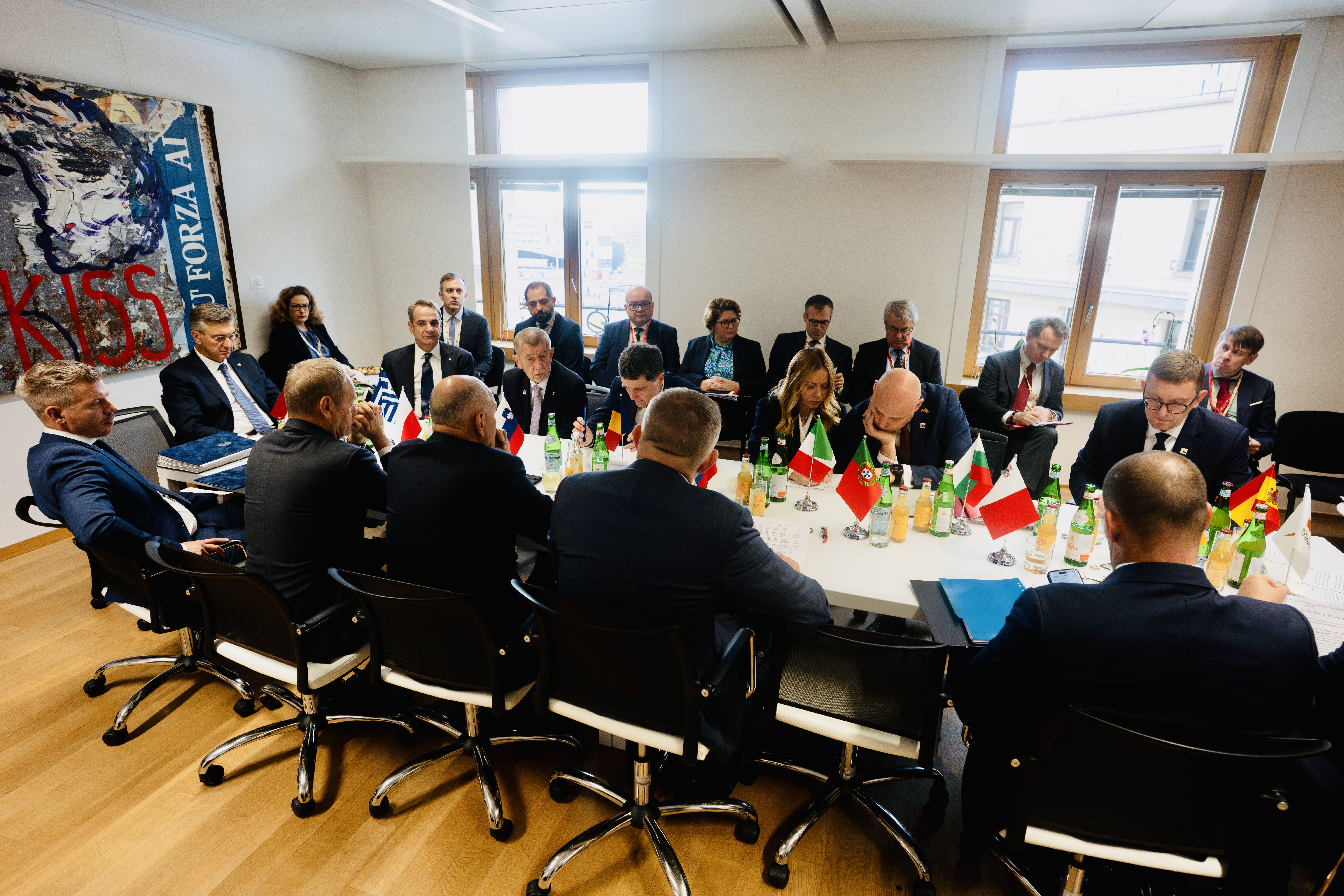
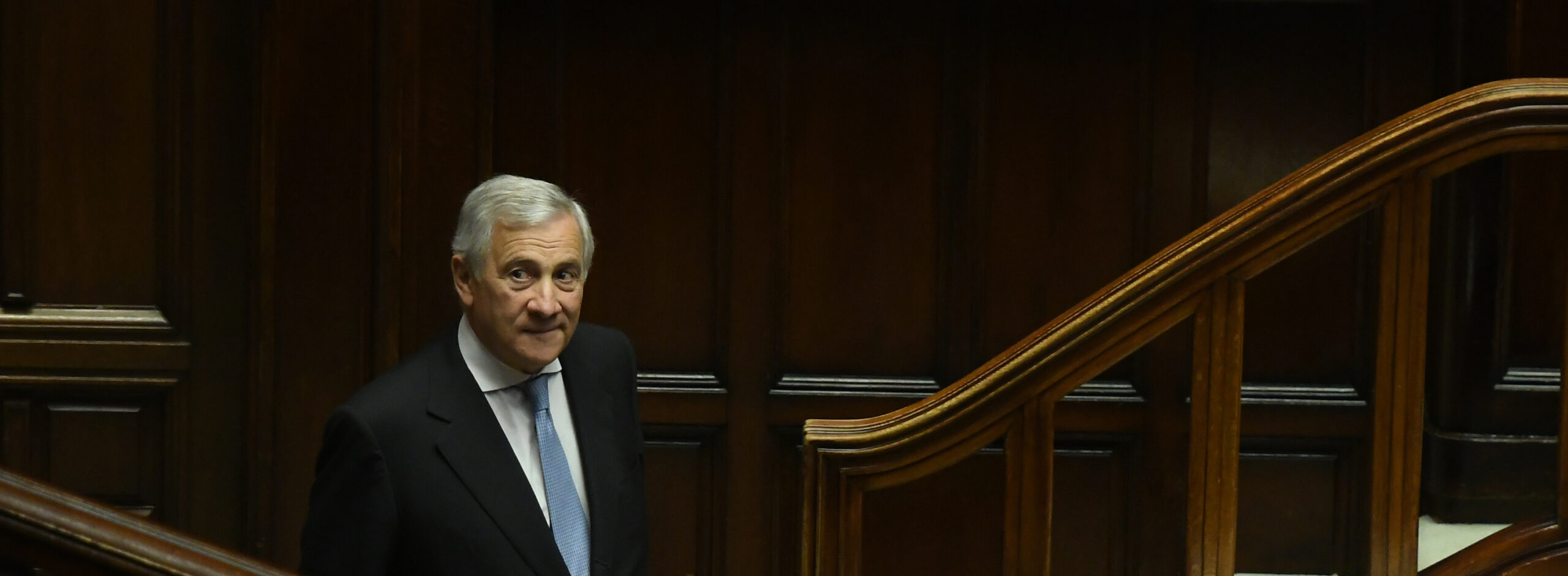
Brussels – At the negotiating table to end Russia’s war of aggression in Ukraine, “Europe needs an envoy to speak on behalf of the entire Union. This could be a group of states or a single person. The important thing is that there is a unified position, because otherwise European policy would appear weak.” This was emphasised today (15 October) by the Deputy Prime Minister of Italy and Minister for Foreign Affairs, Antonio Tajani, on the sidelines of the pre-summit meeting of the European People’s Party (EPP), the gathering of heads of state and key political leaders from the EPP family ahead of the European Council. This is not a new development, but rather a request that the minister has already made: “Europe must have a representative capable of speaking with the Americans, the Russians and the Ukrainians,” he stressed this morning.
In her address to Parliament ahead of the Summit yesterday, the Prime Minister, Giorgia Meloni, stated that the agreement on Russian diesel announced by US President Donald Trump is “a very risky choice” as it could legitimise Moscow, provide the Kremlin with new resources to fund the war in Ukraine and undermine the Western sanctions strategy. A decision for which Meloni received public thanks from the President of Ukraine, Volodymyr Zelenskyy, “for your support and for your clear and unequivocal principled stance.”
Tajani “fully endorses” the political line of the government of which he is Deputy Prime Minister, and this morning he stressed that the Trump administration’s decision to reopen the market to the Russians is “risky and unacceptable”. Despite this, he was quick to reassure that “relations with the United States remain extremely strong, because they are long-standing” and “the United States is our main ally.”
However, Europeans are also feeling the consequences of their US ally’s actions on another front: the Middle East and the Strait of Hormuz, where the European Union is working to ensure security and freedom of navigation through its ASPIDES operation. This situation, however, could be improved. At least in the view of the Italian Defence Minister, Guido Crosetto, who for weeks has been calling for Brussels and, above all, the member states to step up their naval contribution in the area. A call also endorsed by the EU’s High Representative for Foreign Affairs and Security Policy, Kaja Kallas, and stressed by Tajani today. “We are calling very strongly for the ASPIDES mission to be strengthened to ensure freedom of navigation through the Suez Canal, the Red Sea and Bab-el-Mandeb. Europe must speed up the process; there have been some positive responses, and it is now a matter of turning those positive responses into action.”
At present, “Italy is doing everything it can,” the Minister for Foreign Affairs clarified, as “we are ensuring commercial maritime transport in that area, through which approximately 40 per cent of Italy’s commercial maritime traffic transits – which also accounts for 60 per cent of the maritime traffic carrying goods produced in our country to Asia.” This is “vital for the whole of Europe, which is a manufacturing continent.” The call, therefore, is to speed up “the process at a time of great difficulty because, as you know, the Houthis continue to attack,” he concluded. Kallas also reiterated the same appeal upon his arrival at the European Council: “We need more ships.”
English version by the Translation Service of Withub
![[Copyright: European Union]](https://www.eunews.it/wp-content/uploads/2026/10/euco-261015-350x250.png)


![La presidente del Parlamento europeo, Roberta Metsola, con il presidente del Consiglio europeo, Antonio Costa [Bruxelles, 15 ottobre 2026. Foto: European Council]](https://www.eunews.it/wp-content/uploads/2026/10/metsola-costa-120x86.png)