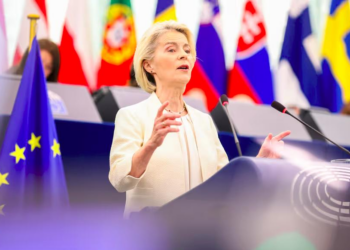

Brussels – Moving forward without paying too much attention to others’ choices. The European Union condemns US President Donald Trump’s decision to strike a deal with Vladimir Putin’s Russia, and is responding with greater firmness. The Foreign Affairs Council in Luxembourg begins with a display of unity of purpose, aimed at undermining the Kremlin’s resistance. “We are moving forward on our own path,” said the EU’s High Representative for Foreign Affairs and Security Policy, Kaja Kallas, on her arrival.
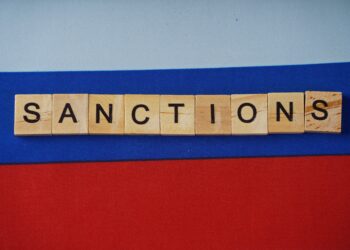
The EU is working on a new package of sanctions targeting around 1,600 entities and individuals. This is the most extensive package to date, coming on top of the 21 packages of restrictive measures already approved. This is a necessary move, given that, as Kallas insists, “only pressure on Russia works and can bring the conflict to an end,” which amounts to a distancing from the US and its president.
Over the weekend, Trump moved to suspend energy sanctions on Russia, paving the way for the resumption of Russian diesel imports. The US President also criticised the Ukrainian President, Volodymyr Zelensky, for failing to call an election. These decisions and statements are driving a wedge through the Euro-Atlantic front on foreign policy, among both allies and non-allies. Even Ireland, a neutral country, is criticising the US. Dublin’s Foreign Minister, Helen McEntee, describes Trump’s decision as “worrying”, in the face of which “we must redouble our efforts in keeping pressure on Russia, and continue to support Ukraine.”
“We must keep the channels of dialogue with the United States open,” The Irish Foreign Minister also added. This is a phrase often used in diplomacy to indicate that relations with a counterpart are strained and compromised, but that the spirit and hope for détente and constructive engagement have not been abandoned. In essence, relations between the EU and the United States are at a critical juncture, and the EU is trying not to make a big deal of it.
The foreign ministers of the Baltic states (Estonia, Latvia and Lithuania) are aligning themselves with their European partners’ position: “Sanctions work when they are tightened, not when they are weakened” – a message that smacks of condemnation of Trump’s United States, expressed by Kestutis Budrys (Lithuania), with his counterparts reiterating that pressure, sanctions, and isolation are the only possible way to bring the conflict to an end. This stance is also shared by Croatia, further evidence of a united European Union against Russia.
English version by the Translation Service of Withub