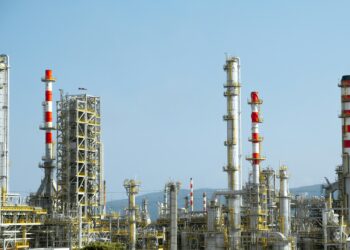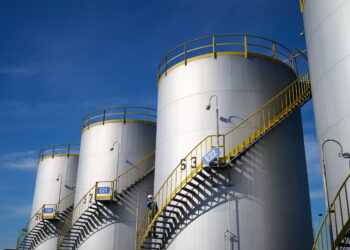
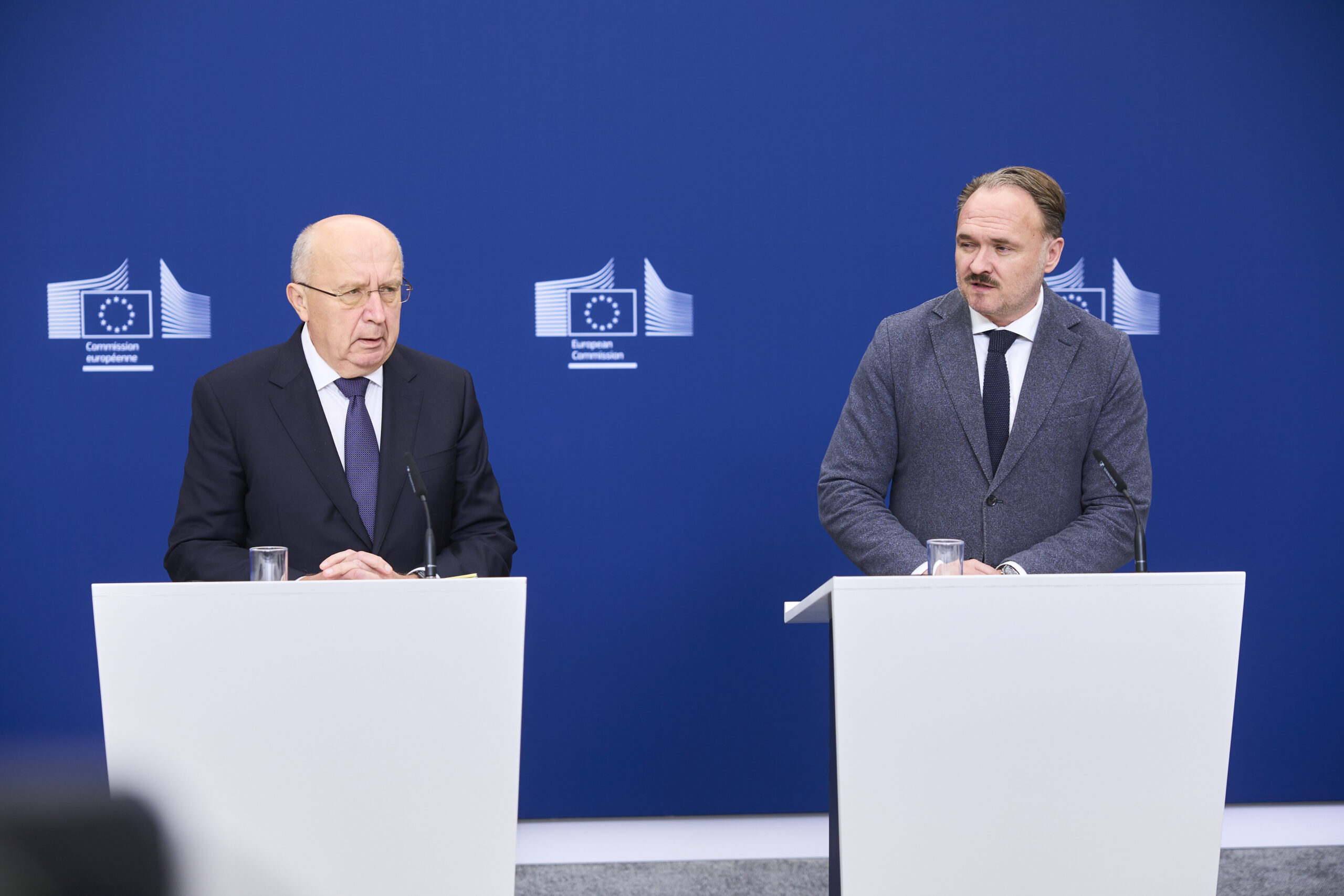
Brussels – Increasing production at refineries across Europe: This is the European Commission’s objective in tackling the crisis caused by high fuel prices, with a particular focus on the defence sector. “Given the difficult geopolitical situation and the urgent security needs in Europe, we must ensure reliable supplies,” stated today (28 October) the Commissioner for Energy, Dan Jørgensen, at a press conference marking the first meeting of the European dialogue on refineries. This is a platform with a very clear objective: “To maximise the production of the most urgently needed fuels, in particular aviation fuel and diesel, which are essential for mobility, the economy as a whole, and our defence.” Chaired by Jørgensen and the European Commissioner for Defence, Andrius Kubilius, the meeting was attended by industry representatives, business leaders, engineering firms, the main trade associations, and NATO.
“In an energy crisis where crude oil and petroleum product prices have risen significantly worldwide, and fuel costs in the EU are skyrocketing,” explained Jørgensen, European refineries have played a vital role “in ensuring security of supply, producing the fuels demanded by the market, including aviation fuels.” However, these companies now appear to be in crisis. According to the Commissioner, “over the last two decades, around 25 per cent of EU refineries have closed down, reducing domestic refining capacity by around 10 per cent.” Furthermore, “as highlighted by the International Energy Agency, we expect the global diesel market to remain under pressure at least until 2027, which will keep prices high,” he added. For this reason, “we will commit to increasing the volumes coming out of refineries in Europe,” and we will “ensure that these supplies are affordable,” he announced.
The Danish official also noted that, in the long term, “refineries and new entrants to the sector will need to embark on a path towards increased biofuel production,” because “the potential is considerable,” given that “the production of renewable liquid fuels has already partly offset the reduction in refining capacity in Europe.” As part of this dialogue, “we will work towards a shared roadmap for its transformation, so that it can contribute to the EU’s security objectives, in line with our climate ambitions,” he emphasised. But all this is for the long term, because in the short term Europe’s focus remains firmly on fossil fuels. “An adequate supply of fuel for our armed forces,” commented Kubilius, “is crucial for our defence readiness” because “without fuel, defence is impossible.” But “without traditional fossil fuels for many years to come, defence will not be possible,” he emphasised.
At a press conference, Kubilius outlined the four key points of the meeting. “Firstly, we need adequate production capacity for fuels, including sustainable aviation fuels, with a view to the long term,” the Commissioner explained. Secondly, maintaining “sufficient refining capacity, taking into account the transition the refining sector is undergoing and the need for our refining industries to remain competitive.” The third point is ensuring access to supplies. In other words, “we must ensure we are able to transport fuels in the event of a crisis.” And finally, “we must address the resilience of our critical fuel infrastructure.” This means “protecting this infrastructure, but also examining very concrete projects, for example, on how to upgrade the capacity of the Central European pipeline system that was built during the Cold War.” Furthermore, according to the Defence Commissioner, “the current system is concentrated in the western part of Europe; we must therefore assess how to expand this infrastructure to facilitate supplies to the eastern flank.”
Jørgensen described today’s dialogue as “very fruitful,” “but it is only a first step.” Work will therefore now continue at a technical level ahead of a further meeting early next year to “take stock of the progress made.” The sector “has put forward a number of proposals that we need to assess,” he concluded.
The EU is therefore aiming to increase the capacity of its refineries. This is despite the temperatures of recent months, which have been described in Brussels as the “summer of truth”. According to Copernicus, “the summer of 2026 in Europe was characterised by persistent heat, record-breaking heat stress, severe drought conditions, exceptionally low river flows and widespread forest fires. Western Europe experienced its hottest summer on record, while Europe as a whole recorded its third-hottest summer.”
English version by the Translation Service of Withub