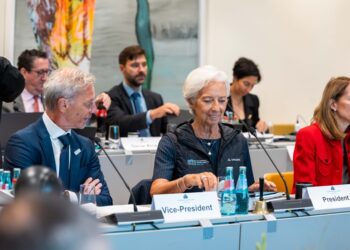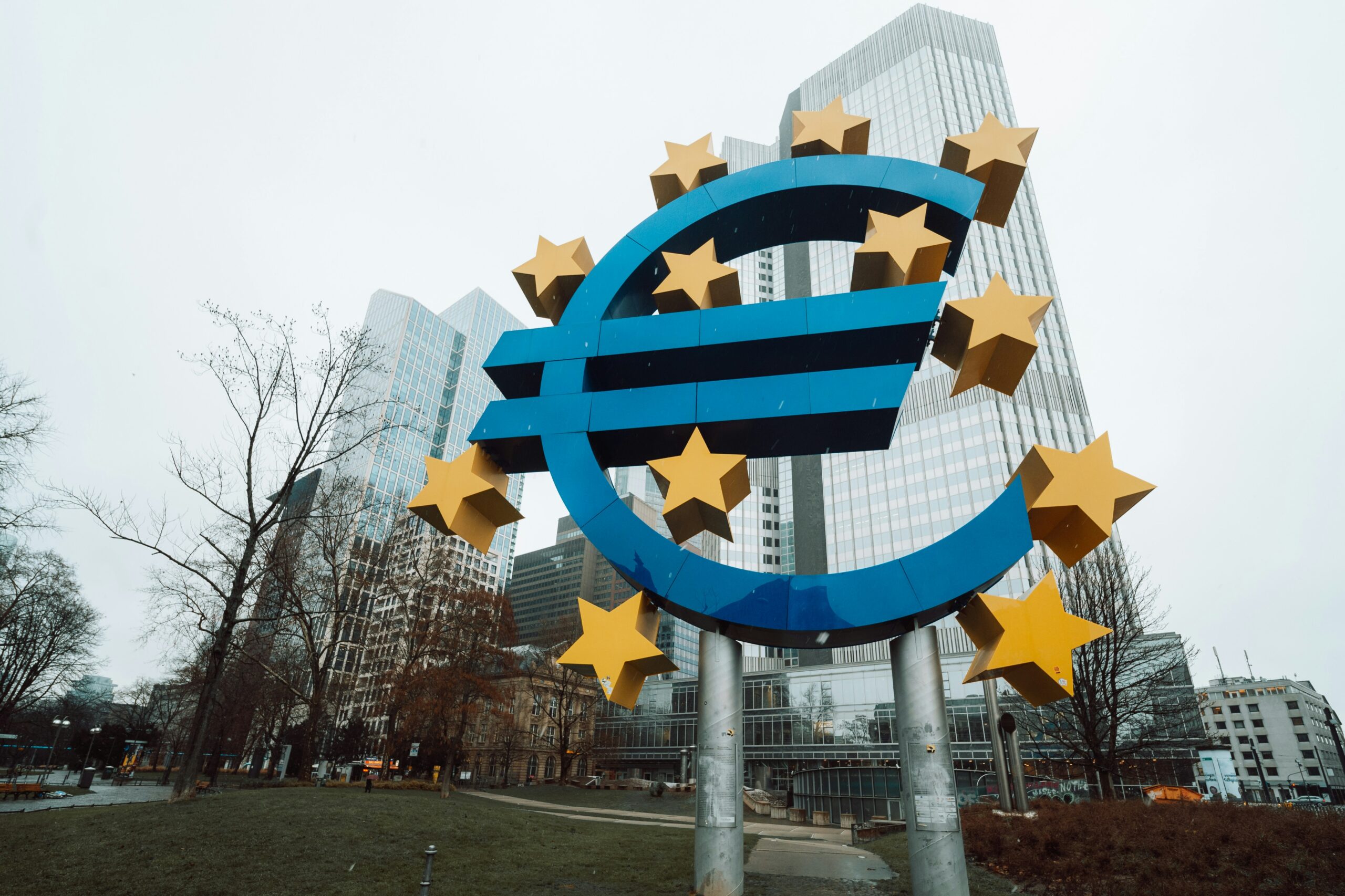
Brussels – The European Central Bank’s key interest rates remain unchanged. At least for now. This is the decision taken by the Governing Council of the ECB at its meeting today (29 October): “The interest rates on the deposit facility, the main refinancing operations and the marginal lending facility will remain unchanged at 2.50 per cent, 2.65 per cent and 2.90 per cent respectively.” In fact, the issue of raising them was on the agenda, and the ECB discussed whether “a rate rise would be appropriate, but decided unanimously to keep rates on hold and that a measured approach was the right one,” clarified the President, Christine Lagarde.
This does not mean that the situation is set in stone, but rather that it remains under constant review and subject to possible reassessment. “Since our last meeting, financing conditions have tightened; a factor that is likely to weigh on both inflation and growth,” acknowledges Lagarde. But “we are determined to steer monetary policy in such a way as to ensure that inflation stabilises at our 2 per cent target over the medium term” and “well equipped to deal with the current high level of uncertainty,” she reassures. In particular, the ECB will adopt “a data-driven approach that will assess the situation on a case-by-case basis at each meeting,” and its decisions on interest rates “will be based on an assessment of the inflation outlook and the associated risks.” In fact, “today’s decision” not to raise rates “does not preclude the possibility” of doing so in the future. “The next meeting is scheduled for December and, unless the current assessment is altered by significant developments, the way forward is already clear,” she explains.
The recipe laid out by Lagarde sounds like a mantra. “Higher potential growth requires structural reforms and must be underpinned by sound public finances” and “the sustainability of public finances is a fundamental anchor for broader economic stability”, she points out, with a special reference to countries whose public debt has spiralled out of control: “Countries with high levels of debt must take into account in their fiscal policy plans the fact that interest rates are higher and are likely to remain higher for some time.”
Furthermore, fiscal measures to address the energy shock “should be temporary, targeted, and specific”, while “simplifying and harmonising rules within the EU Single Market, accelerating the energy transition, and completing the savings and investment union are key elements in making our economy more dynamic and resilient.” Finally, “as the process of defining the legal framework for the digital euro enters its final phase, we reiterate the importance of reaching an agreement on the Single Currency Package as soon as possible.”
These are the challenges, against a backdrop where inflation rose to 3.8 per cent in September, up from 3.2 per cent in August, and energy price inflation recorded “a marked increase,” rising to 18.9 per cent from 14.3 per cent in August. “Energy prices have risen above the baseline scenario envisaged in the ECB staff’s September projections,” the President acknowledges, explaining that “this is likely to lead to a further rise in inflation in the short term,” while “thereafter, the decline in energy inflation, together with the effects of higher interest rates, should help bring inflation back towards the target.”
In conclusion, the risks to the growth outlook are skewed to the downside, because “any further disruptions to energy supplies could lead to a sharper and more prolonged rise in energy prices than currently forecast” and “a deterioration in global financial market conditions, or an intensification of the fallout on global bond markets, could lead to a tightening of financing conditions, thereby dampening demand.” Added to this is “uncertainty regarding public finances,” which “could contribute to tighter financing conditions and weaken confidence, with negative repercussions on consumption and investment.” Finally, “a resurgence of trade tensions between major economies could further disrupt supply chains, reduce exports, and weaken consumption and investment.”
On the contrary, the risks to the inflation outlook are on the upside, because “the energy shock could intensify further, with potentially more pronounced repercussions on the prices of other goods and on wages than currently anticipated.” In particular, gas prices “could rise in the event of further supply disruptions or should an unusually harsh winter coincide with low stock levels.” In this regard too, “the resurgence of trade tensions could lead to greater fragmentation of global supply chains, reduce the supply of critical raw materials and exacerbate capacity constraints in the euro area economy,” while “extreme weather events – potentially exacerbated by the intensification of the El Niño phenomenon – and, more generally, the ongoing climate and environmental crises, could lead to a larger-than-expected rise in food prices.”
English version by the Translation Service of Withub