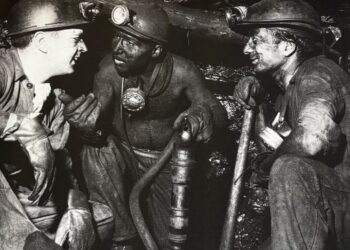
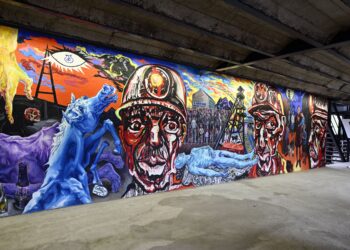
Brussels – No longer a stranger: seventy years on from the Marcinelle tragedy,
an identity has been restored to one of the still-unnamed victims of the mining disaster of 8 August 1956. His name is Bruno Pompeo, born on 2 April 1928 in Racale, in Puglia, who emigrated to Belgium on 28 July 1951 in search of work and a better life. After his arrival, Pompeo began working in Shaft 24 of the Monceau-Fontaine mines in Couillet. His career then took him to the Bois du Cazier for the first time on 5 November 1952. After a spell at other coal mines, he returned to the mine on 17 June 1955, where he remained until the day of the tragedy.
On 8 August 1956, a fire broke out in the underground tunnels of the Bois du Cazier, in Marcinelle, marking a turning point in European history. The flames and smoke spread rapidly through the shafts, trapping hundreds of workers at great depths. The death toll stood at 262, comprising people from twelve countries, including 136 Italians. It was a tragedy that left a deep mark on the Italian community that had emigrated to Belgium and on relations between the two countries. For decades, some of the victims remained unidentified.
The identification of Bruno Pompeo was made possible thanks to the work initiated in 2021 by the National Institute of Criminalistics and Criminology (INCC), with the assistance of anthropologists, dentists, forensic pathologists and the DVI (Disaster Victim Identification) team, through the analysis of the remains and the comparison of DNA with samples provided by family members.
The Bois du Cazier has thanked the Pompeo family for agreeing to assist with the identification process, as well as all the experts and organisations involved. Seventy years on from the disaster, this work can restore a name and a story to the men who had left their home countries to build a future for themselves in the Belgian mines. Where, all too often, they met their deaths instead.
English version by the Translation Service of Withub