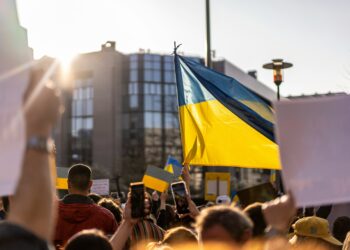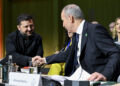
Brussels – More funds and funding allocated to defence will not automatically make Europe safer. According to what emerged during a hearing organised on 10 November by the Consultative Commission on Industrial Change (CCMI) of the European Economic and Social Committee (EESC), “to turn investment into equipment and technology, companies need predictable orders, easier access to the defence market, and stronger industrial cooperation.” Although Europe is investing more in the sector, the Committee believes that the capacity to produce the necessary equipment is not guaranteed. The problems stem from “fragmented procurement, uncertain demand, dependence on supply chains and a skills shortage,” which are holding back the expansion of the European defence industry. For EESC members, Russia’s war of aggression in Ukraine exposed these weaknesses, “while demonstrating the importance of rapid innovation, particularly in the fields of drones, electronic warfare, and battlefield software.” The Committee therefore argues that “closer industrial cooperation with Ukraine could enable Europe to strengthen its own capabilities, while supporting the Ukrainian defence industry.”
During the hearing, the issue of “foreseeable demand” was raised. The experts pointed out that “companies in the defence sector plan their investments over timeframes of five, ten, or even fifteen years.” Conversely, “in order to expand their facilities, develop technologies or recruit staff, they need clear, long-term orders.” Similarly, “smaller companies also face greater difficulties” because “they may lack the funding, testing facilities, and access to military users needed to bring such solutions to market,” even “when they develop promising technologies.” We need to “connect innovators and SMEs with end-users, who can test their technologies and provide operational feedback. Otherwise, promising companies risk failing to take the next step, from innovation to production,” concluded Daniel Fiott, head of the defence, investment and innovation programme at the Centre for Security, Diplomacy and Strategy at the Vrije Universiteit in Brussels.
Now, the EESC rapporteurs, Eitvydas Bajarūnas and Franck Uhlig, will draw up an exploratory opinion on strengthening the defence industry and innovation in the EU (including through greater cooperation with Ukraine) at the request of the incoming Lithuanian Presidency of the Council of the EU. The opinion is due to be adopted in December 2026.
English version by the Translation Service of Withub