
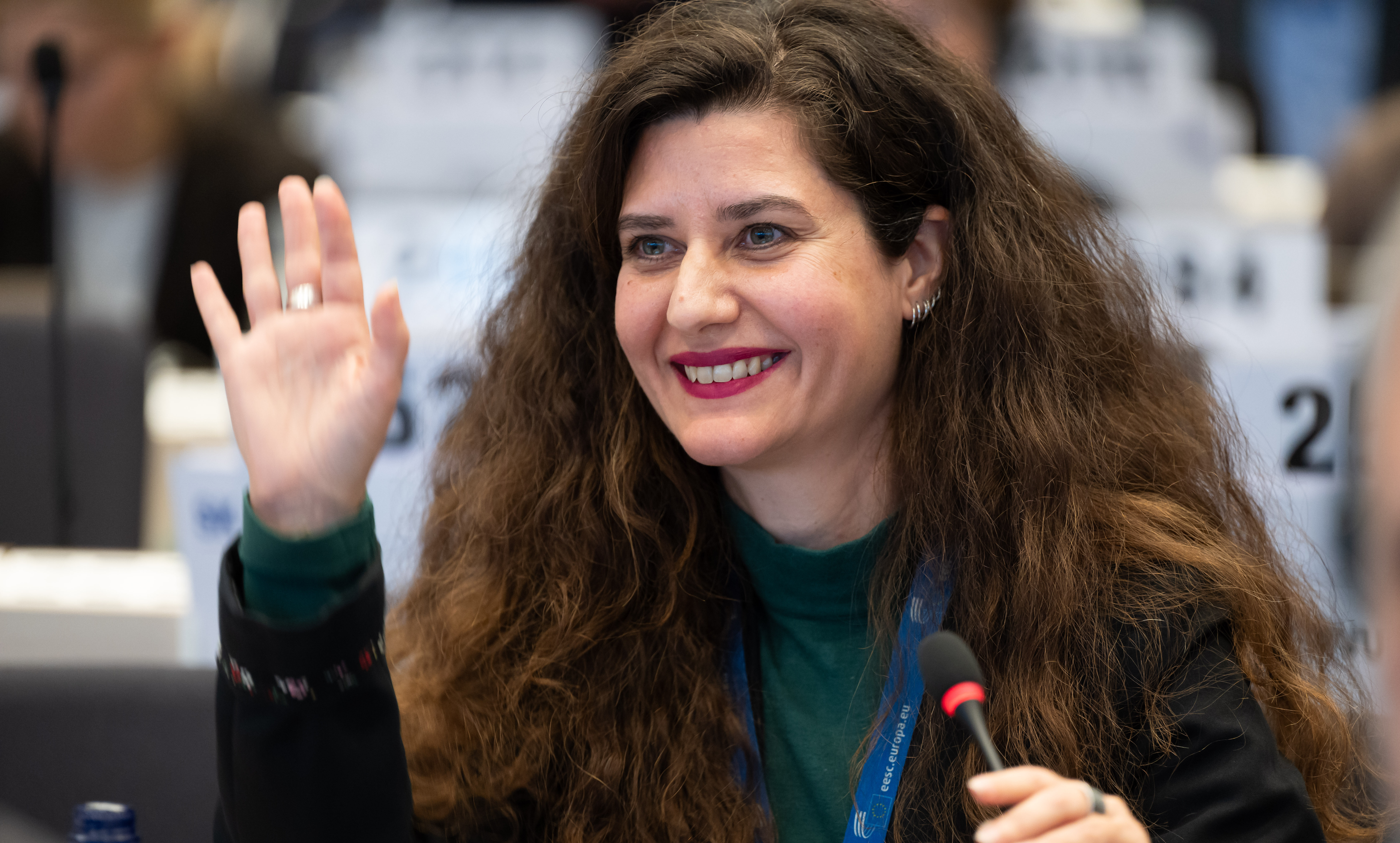
by Maria Nikolopoulou *
We have the ingredients. We have the recipes. But somehow, we still haven’t managed to cook the meal.
That was the image I used during discussions at the UN Food and Agriculture Organization (FAO) in Rome few weeks ago. And it captures something deeply frustrating about our efforts to achieve gender equality in agriculture and food systems.
We know what needs to be done. We have international commitments, voluntary guidelines, research and policy recommendations. We have decades of evidence showing that empowering women benefits families, communities, economies and food security.
Yet the gap between our ambition and women’s everyday realities remains painfully wide.
The United Nations has declared 2026 the International Year of the Woman Farmer. This is an important opportunity to recognise the women who cultivate our land, produce our food and sustain rural communities.
But recognition is not enough.
Women do not need to be celebrated for their resilience while being denied the resources, rights and opportunities that would make their lives less difficult.
Not only farmers, but all the women behind our food
When we talk about women in agriculture, we often picture a woman working in a field or running a family farm.
But food systems are much bigger than farms.
Women work in food processing plants, packaging facilities, transport, distribution, markets and countless other activities along the food supply chain. Many face precarious employment, low wages, inadequate social protection and limited opportunities to influence decisions affecting their lives.
Their contribution is essential, yet their voices are too often absent from the conversations that shape agricultural and food policies.
This was one of the messages I emphasised at FAO: we must look beyond women farmers and include women workers throughout the entire food value chain.
Their meaningful participation, together with that of trade unions, farmers’ organisations and other civil society representatives, is essential if international commitments are to become reality.
This is also why the European Economic and Social Committee, which brings together representatives of employers, workers and civil society organisations, has an important role to play.
Policies cannot succeed if they are designed, implemented and followed up without the people whose lives they are supposed to improve.
Women’s rights cannot be taken for granted
There is another uncomfortable reality we must confront.
At a time when we should be building on decades of progress towards gender equality, women’s rights are increasingly being questioned and, in some contexts, rolled back.
We cannot assume that progress, once achieved, is permanent.
During my intervention in Rome, I stressed that women are political actors. We must recognise ourselves as such.
This means participating in public life, making our voices heard, defending our rights and ensuring that decision-makers are held accountable for the commitments they make.
It also means building alliances, especially with men who share the conviction that equality is not a women’s issue alone, but a fundamental condition for a fairer society.
In agriculture, this political dimension is particularly important.
Who decides how agricultural subsidies are distributed? Who has access to land and credit? Who is represented in farmers’ organisations? Who sits at the table when food policies are negotiated?
These are not merely technical questions. They are questions about power.
And unless women have a meaningful say in answering them, equality will remain an aspiration rather than a reality.
Europe must also look at itself
It would be a mistake to consider gender inequality in agriculture a problem that exists only elsewhere.
Across the European Union, women play a crucial role in farming and rural communities, yet continue to face barriers to farm ownership, access to finance, leadership positions in the farmers associations and economic independence.
As Europe discusses the future of its Common Agricultural Policy, generational renewal and the resilience of rural communities, we must ensure that women’s needs and experiences are not treated as an afterthought.
Supporting women farmers means more than creating targeted programmes. It requires looking at the broader conditions that determine whether women can participate fully in economic and social life.
Affordable and accessible childcare and healthcare, transport, education, digital connectivity, services that support women survivors of gender based violence and decent working conditions are all part of the picture.
We cannot expect women to build the future of rural Europe while ignoring the structural inequalities that limit their opportunities.
And we cannot build sustainable food systems without recognising the rights and contributions of all the workers who make them function.
There can be no equality without peace
There is one final point I raised in Rome that deserves far greater attention.
In a world marked by armed conflicts and growing instability, we must remember that women’s rights are particularly vulnerable when peace breaks down.
War destroys livelihoods, disrupts food production, forces people from their homes and makes access to food, land and essential services increasingly difficult.
Women often carry a disproportionate burden of these crises, while having limited influence over the decisions that determine their future.
Evidence from peace processes has shown that women’s meaningful participation can contribute to more durable and inclusive peace agreements.
That is why defending women’s rights must also mean defending peace and ensuring that women participate in peacebuilding and decision-making.
Food security, gender equality and peace cannot be treated as separate ambitions. They are deeply interconnected.
The real test begins after the speeches
The International Year of the Woman Farmer should not become another occasion for congratulating ourselves on commitments that have yet to be fulfilled.
Its success should be measured by what changes for women on the ground.
Can more women own land? Can they access finance and technology? Are women workers better protected? Are their voices represented in organizations that take the decisions? Do women have the freedom and opportunities to shape their own futures?
At FAO, we discussed the tools and commitments already available to us. The challenge now is to put them into practice.
We need governments willing to act, institutions willing to listen, and civil society organisations empowered to hold decision-makers accountable. And if willingness is not there, to preparing the transition from voluntary guidelines to mandatory actions.
Above all, we need to recognise women not simply as beneficiaries of policies, but as people with rights, agency and political power.
We already have the ingredients. We already know the recipe.
It is time to stop talking about the meal and finally put it on the table.
* Maria Nikolopoulou is a member of the European Economic and Social Committee (EESC), the EU’s consultative body representing employers, workers and other civil society organisations.