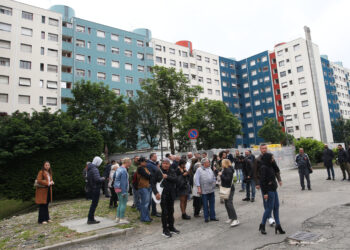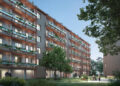

Brussels – The housing crisis is an emergency affecting the whole of Europe – as evidenced by the protests in recent weeks, which began in Spain and have since spread to other countries, including Italy – and the European Union is trying to curb it with the Affordable Housing Act. However, legislative processes take time, while the crisis is very much ongoing. It is against this backdrop, therefore, that Manni Group, a Verona-based company specialising in off-site steel construction solutions, has published a position paper, produced by EDERA, comprising seven proposals to improve the construction of student accommodation and social housing. The aim is to identify a series of practices that can meet housing needs in Italy and across Europe.
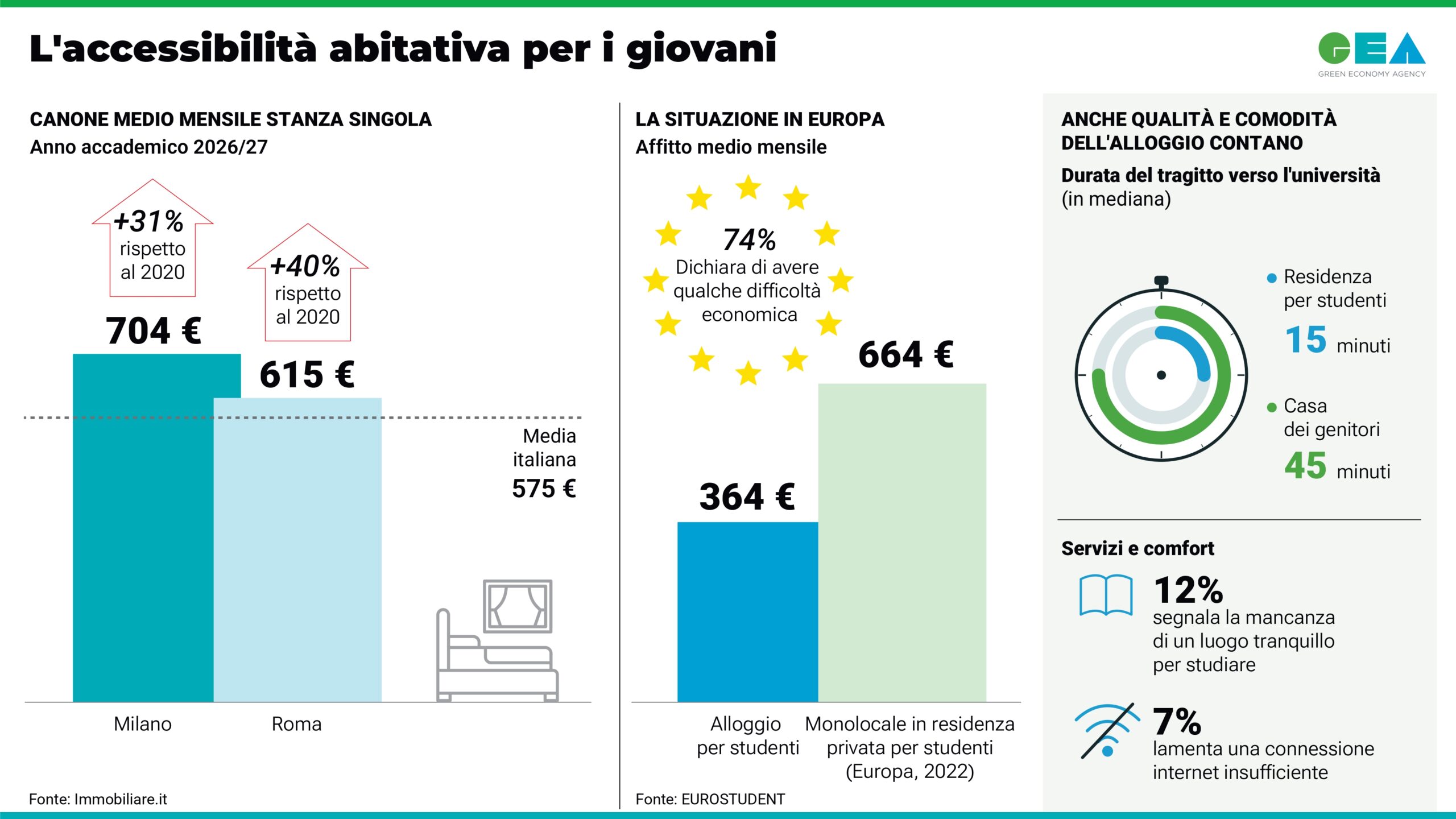
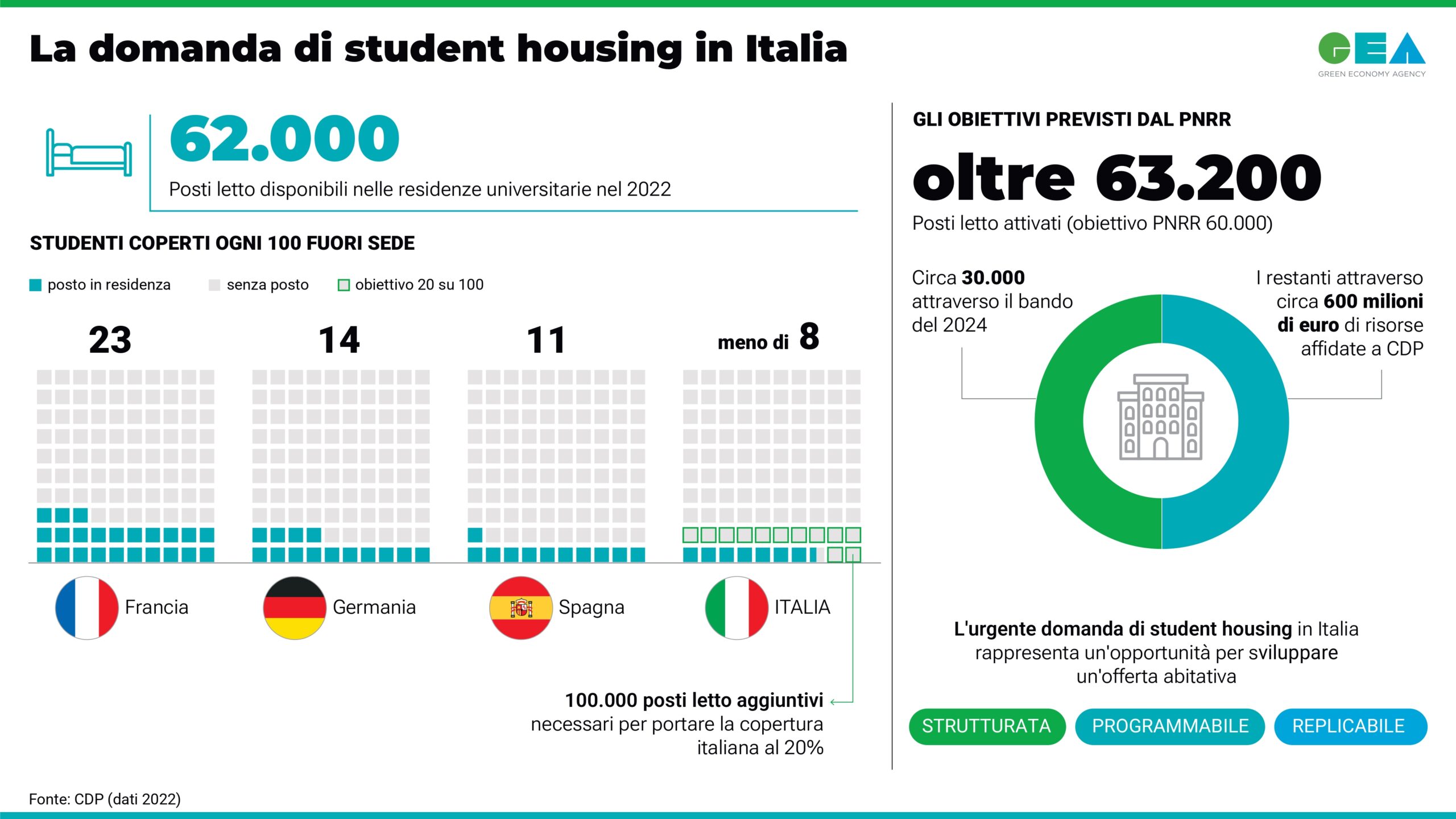
It is estimated that Europe will need over two million homes a year, even as the construction sector has experienced an 8 per cent decline in productivity since 2019. In Italy, estimates range between 100,000 and 150,000 units. Demand is caught between rising prices (+60 per cent since 2013 for property purchases across the EU, +20 per cent for rents), a shortage of social housing (60,000 units in Italy that cannot be allocated due to a lack of maintenance, compared with 650,000 families on the waiting list) and ever-increasing pressure on major cities. In Italy alone, over 63,200 student beds have been made available, more than the 60,000 provided for in the NRRP. And then there are the regulatory frameworks, which are raising the bar for environmental performance.
The answer cannot lie solely in regulations. The construction industry can provide solutions. One example is off-site construction, which involves the factory production of components and panels that are then assembled on site. Compared with the prefabricated buildings of previous decades, off-site construction standardises interfaces and processes, affords designers greater freedom in their work and in the choice of materials, and reduces the impact of on-site work.
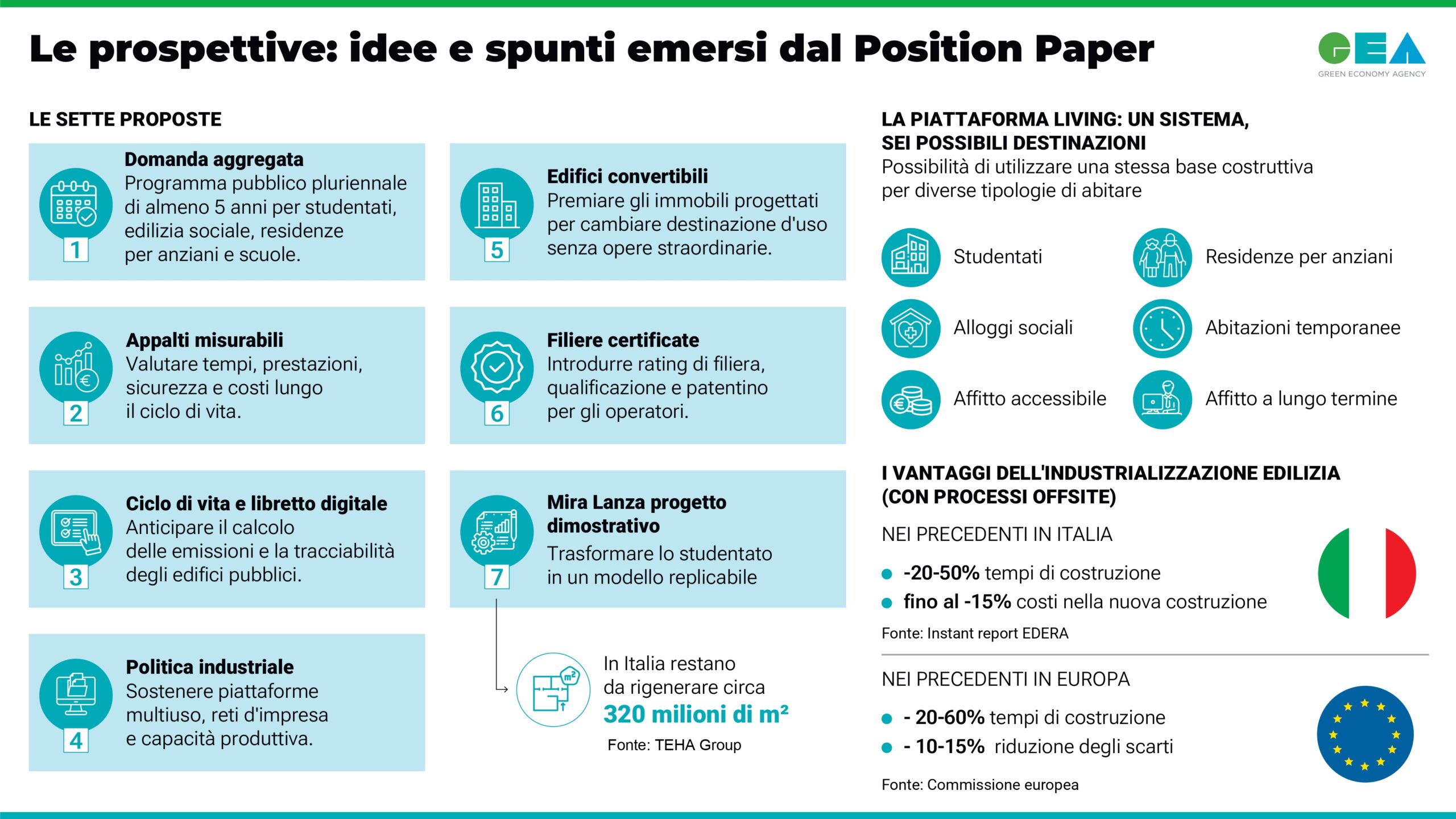
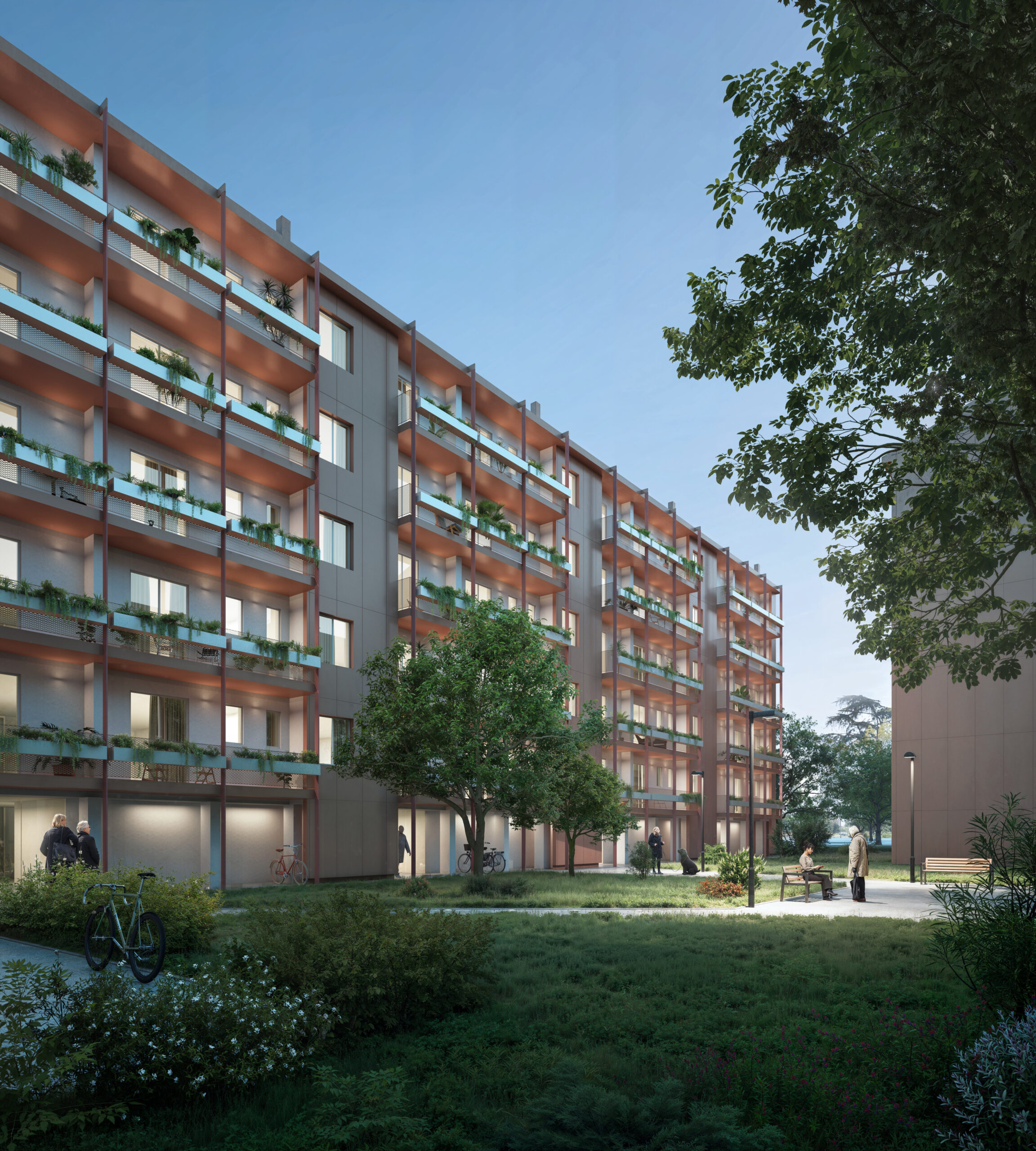
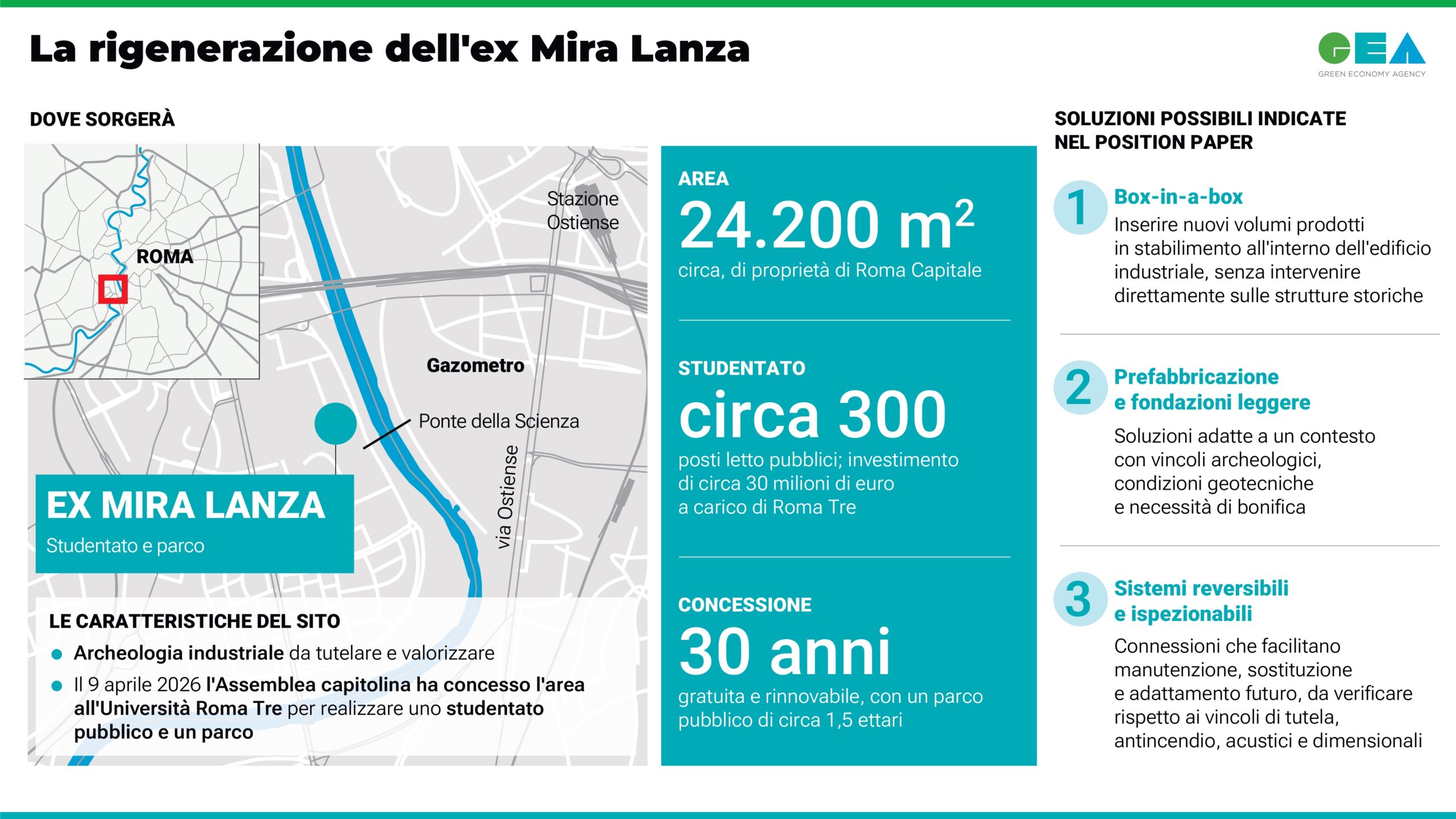
There are seven proposals. Firstly, to draw up a programme covering at least five years for the aggregate demand for student accommodation, social housing, senior living facilities, and schools, with predefined specifications and framework agreements with building contractors. Next, it is necessary to establish verifiable criteria and incentives for those who complete construction projects within specified timeframes. The working group suggests that the decree transposing European Directive 2024/1275 on energy performance in buildings should immediately provide for the calculation of life-cycle emissions and the issuance of a digital energy performance certificate for public buildings. The fourth proposal is to recognise construction industrialisation as a strategic sector within industrial policy, while the fifth introduces planning incentives for the conversion of buildings. Furthermore, the group calls for a supply chain rating system for industrial operators (starting with established companies, followed by SMEs through a phased approach) and specific training programmes for the public and private sectors. Finally, it proposes that the former Mira Lanza project serve as a pilot project for the European off-site initiative, with open data on timescales, costs, performance and impacts.
“Today, the key issue is not merely constructing buildings but creating the conditions to carry out complex projects with greater certainty and less risk,” says Enrico Frizzera, CEO of Manni Group. “True value goes beyond speed. Industrialisation allows components to be produced in controlled environments, with consistent quality standards, traceable processes and measurable performance,” he adds. “In a context where public and private investors are increasingly demanding guarantees regarding the ability to meet deadlines, costs and deliverables, a qualified supply chain becomes a strategic asset,” he noted.