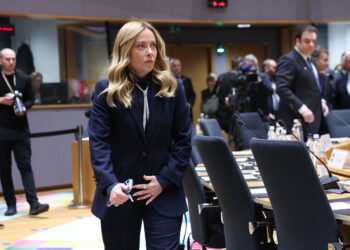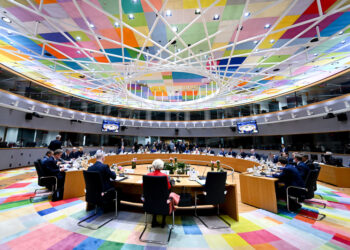
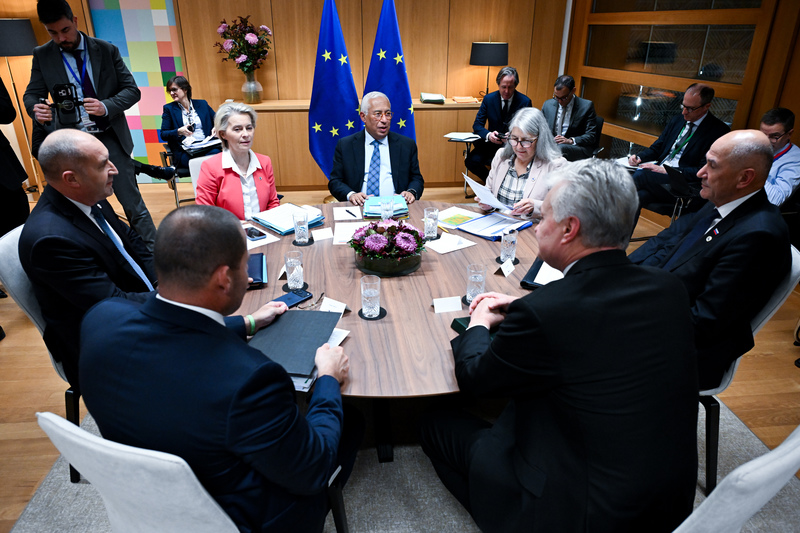
Brussels – “We have not reached an agreement“. The President of the European Council, António Costa, acknowledged the failure of the extraordinary summit he had called to discuss the multiannual financial framework (MFF 2028–2034) shortly before 1 am, at the end of a day’s proceedings that saw the heads of state and government leave Brussels just as they had arrived: divided and far from any possible agreement. So much so that Costa cancelled the second day of the summit, originally scheduled for today (27 November) and postponed everything until December.
The 27 Member States discussed the multiannual budget in three different aspects: the total budget, the allocation of resources across the various headings, and new own resources. Well, as Costa explained at the end-of-day press conference, “regarding the global volume of the budget, some member states asked for further reductions.” Nothing new, therefore, compared with the initial positions. “And some even proposed to reverse some cuts, especially on Cohesion,” Costa added, noting that positions here also remain unchanged.
Regarding the distribution between the different priorities, “a large majority of member states asked not to compress funding for agriculture and cohesion,” the President of the European Council said. Finally, as regards new own resources, “we will continue to work.”
Everything at a standstill, then. Zero progress, as is also demonstrated by the figures from a press conference at which there was very little to say. Costa’s speech lasted just over three minutes; that of the President of the European Commission, Ursula von der Leyen, lasted not even three minutes; and the question-and-answer session lasted a mere seven minutes.
https://www.eunews.it/2020/11/17/bilancio-ue-provvisorio-regole/
It took Costa just under a quarter of an hour to point out that “when we decided to launch NextGenerationEU (the post-pandemic recovery programme, ed.), we also decided that we would fund it through own resources”, the money that flows directly into the European Commission’s coffers without having to ask Member States for contributions. “We specified two types of new own resources: a tax on digital companies and the CBAM.” A way to put pressure on governments over a key element of the negotiations that is currently at a standstill.
The Frugals refuse to meet Costa: a rift rather than a deadlock
The extraordinary summit that Costa convened not only failed to produce any results, but also revealed a deep political rift. The President of the European Council chose to suspend the plenary session to meet with the heads of state and government in small groups. This decision was not welcomed by the frugal countries in favour of cuts, to the extent that Austria, Belgium, Denmark, Finland, Germany, the Netherlands and Sweden decided to boycott these meetings, snubbing Costa and avoiding any confrontation.