
- Europe, like you've never read before -
Wednesday, 15 April 2026
No Result
View All Result
  • it ITA
  • en ENG
Eunews
  • Politics
  • World
  • Business
  • News
  • Defence
  • Health
  • Agrifood
  • Other sections
    • Culture
    • Diritti
    • Energy
    • Green Economy
    • Finance & Insurance
    • Industry & Markets
    • Media
    • Mobility & Logistics
    • Net & Tech
    • Sports
  • Newsletter
  • European 2024
    Eunews
    • Politics
    • World
    • Business
    • News
    • Defence
    • Health
    • Agrifood
    • Other sections
      • Culture
      • Diritti
      • Energy
      • Green Economy
      • Finance & Insurance
      • Industry & Markets
      • Media
      • Mobility & Logistics
      • Net & Tech
      • Sports
    No Result
    View All Result
    Eunews
    No Result
    View All Result

    Home » World politics » Ukraine’s entry into the EU is not just a benefit for Kyiv

    Ukraine’s entry into the EU is not just a benefit for Kyiv

    The Bruegel think tank makes an initial cost-benefit estimate of enlargement. For the EU, the country's accession implies a 136 billion euro expenditure, but has a whole series of returns

    Emanuele Bonini</a> <a class="social twitter" href="https://twitter.com/emanuelebonini" target="_blank">emanuelebonini</a> by Emanuele Bonini emanuelebonini
    7 March 2024
    in World politics
    Ucraina Allargamento Ue

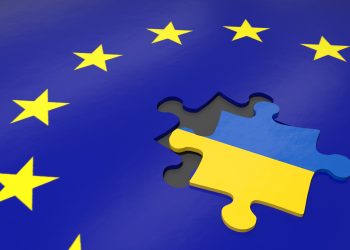
    3d illustration. Puzzle piece with Ukraina flag.

    Brussels – Costs, sure, but also benefits, and not insignificant ones. The European Union’s political choice to bring Eastern countries into the EU is decisive and dictated by geopolitical reasons and a Russian conflict in Ukraine that has inevitably reshaped logic and strategies. It also triggered thoughts on what and how the European Union will change. Making early calculations is a policy brief of the Bruegel think tank about Ukraine’s entry into the club. It first points out that “the net cost of Ukraine’s entry into the EU for the current member countries would amount to 136 billion euros at current prices in the period from 2021 to 2027, which is 0.13 percent of EU GDP (Gross Domestic Product) over the same period.”

    It may seem like a high figure, but Bruegel calculations show that the overall size of the impact of Ukrainian EU membership on the 2021-2027 Multiannual Financial Framework (MFF) would increase from 1,12 percent of GDP to 1.20 percent in the baseline scenario, which assumes that Ukraine regains its territorial integrity and that the war has no long-term impact on the country’s population or GDP. In addition, most net payers would need to contribute about 0.1 percent more of their GDP to the EU budget. Figures that are certainly not exorbitant. 

    However, this is an estimate and a preliminary one at that. The brief underlines that this is “the baseline scenario.” Having an idea of what Ukraine’s full membership may mean in economic terms is not simple at the moment because there are so many unknowns, foremost the country’s borders. Pre-conflict Ukraine or Ukraine without Donbas?

    Change in cohesion policy

    What is certain is that the current member states would lose some funding in an expanded Ukraine scenario. Bruegel estimates that the Twenty-Seven countries “would receive €24 billion less in cohesion funding than in the current situation without Ukraine. The reason for this multi-billion loss is that Kyiv’s entry would reduce the EU’s average Gross National Income per capita, which is an indicator of the allocation of funds. The problem is not new, so much so that the EU Commission’s expert group has already warned the Commission that more funds will be needed in the future. For Italy, the Mezzogiorno and funding for Southern regions are at stake; definitely not a small matter.

    What Ukraine can achieve

    Net of membership in the European Union, Ukraine can have economic returns from its membership. Specifically, according to preliminary calculations, Kyiv would gain €32 billion in cohesion policy payments, 85 billion euros in Common Agricultural Policy (CAP) payments, and 7 billion euros in payments from other EU programs (all numbers are at current prices and refer to the entire 2021-2027 MFF). European public administration spending could increase by €4 billion, while the EU would save about €2 billion on funds currently allocated to its neighbors.

    The benefits for the EU

    A larger EU with Ukraine in it would certainly be good for Kyiv. But what does the EU gain from this enlargement? According to Bruegel, the integration of Ukrainian workers into the EU labor markets would reduce the dramatic labor shortage in the Union. In addition, the accession would improve the EU’s energy security and could reduce energy costs. Looking at it from a regional perspective, Ukraine’s presence in the Union would stabilize the EU’s eastern neighborhood and increase the EU’s military and security capabilities.

    English version by the Translation Service of Withub
    Tags: bruegelenergyenlargementmff 2021-2027ukrainework

    Related Posts

    Ucraina Allargamento Ue
    World politics

    From industrial to agricultural policy. Risks and opportunities for Italy from EU enlargement

    29 December 2023
    Consiglio Europeo Ucraina Allargamento Ue
    World politics

    Ukraine’s historic day. European Council unblocks the road to EU membership

    14 December 2023
    map visualization
    produzione industriale - fonte:  Imago economica

    Industrial production rose in February, up 0.4 per cent in the EU and the euro area

    by Caterina Mazzantini
    15 April 2026

    According to Eurostat data, growth was driven mainly by non-durable consumer goods, which rose by 2.6 per cent

    Fonte: SYSPEO/SIPA / IPA

    The EU calls on Meta to reinstate third-party AI assistants on WhatsApp

    by Giulia Torbidoni
    15 April 2026

    In a separate initial decision, in cooperation with the Italian competition authority, the Commission today extended the investigation to Italy...

    Le bandiere UE e del Regno Unito. Fonte: Imagoeconomica

    The EU and the UK have formalised London’s participation in Erasmus+ in 2027

    by Caterina Mazzantini
    15 April 2026

    An agreement has been signed to restore academic exchanges following Brexit. According to von der Leyen, the two sides of...

    Multi-annual budget: EU Parliament gives initial approval to the €200 billion increase

    by Emanuele Bonini emanuelebonini
    15 April 2026

    The Budget Committee has approved a 10 per cent increase to the draft budget. The vote in the chamber is...

    • Director’s Point of View
    • Opinions
    • About us
    • Contacts
    • Privacy Policy
    • Cookie policy

    Eunews is a registered newspaper
    Press Register of the Court of Turin n° 27


    Copyright © 2025 - WITHUB S.p.a., Via Rubens 19 - 20148 Milan
    VAT number: 10067080969 - ROC registration number n.30628
    Fully paid-up share capital 50.000,00€


    No Result
    View All Result
    • it ITA
    • en ENG
    • Politics
    • Newsletter
    • World politics
    • Business
    • General News
    • Defence & Security
    • Health
    • Agrifood
    • Altre sezioni
      • Culture
      • Diritti
      • Energy
      • Green Economy
      • Gallery
      • Finance & Insurance
      • Industry & Markets
      • Media
      • Mobility & Logistics
      • Net & Tech
      • News
      • Opinions
      • Sports
    • Director’s Point of View
    • Draghi Report
    • Eunews Newsletter

    No Result
    View All Result
    • it ITA
    • en ENG
    • Politics
    • Newsletter
    • World politics
    • Business
    • General News
    • Defence & Security
    • Health
    • Agrifood
    • Altre sezioni
      • Culture
      • Diritti
      • Energy
      • Green Economy
      • Gallery
      • Finance & Insurance
      • Industry & Markets
      • Media
      • Mobility & Logistics
      • Net & Tech
      • News
      • Opinions
      • Sports
    • Director’s Point of View
    • Draghi Report
    • Eunews Newsletter

    Attention