- Europe, like you've never read before -
Thursday, 16 April 2026
No Result
View All Result
  • it ITA
  • en ENG
Eunews
  • Politics
  • World
  • Business
  • News
  • Defence
  • Health
  • Agrifood
  • Other sections
    • Culture
    • Diritti
    • Energy
    • Green Economy
    • Finance & Insurance
    • Industry & Markets
    • Media
    • Mobility & Logistics
    • Net & Tech
    • Sports
  • Newsletter
  • European 2024
    Eunews
    • Politics
    • World
    • Business
    • News
    • Defence
    • Health
    • Agrifood
    • Other sections
      • Culture
      • Diritti
      • Energy
      • Green Economy
      • Finance & Insurance
      • Industry & Markets
      • Media
      • Mobility & Logistics
      • Net & Tech
      • Sports
    No Result
    View All Result
    Eunews
    No Result
    View All Result

    Home » World politics » EU and Persian Gulf countries: political rehearsal in Brussels for a new partnership

    EU and Persian Gulf countries: political rehearsal in Brussels for a new partnership

    Russia and trade are a hurdle, but the first-ever summit of its kind in the EU capital is already being hailed as a significant achievement. It is also the result of the work of Di Maio, the special envoy for the region

    Emanuele Bonini</a> <a class="social twitter" href="https://twitter.com/emanuelebonini" target="_blank">emanuelebonini</a> by Emanuele Bonini emanuelebonini
    15 October 2024
    in World politics

    Brussels – Trade, energy, combating climate change, and security, especially maritime security, and the involvement in regional security: the European Union and the Arab Gulf countries (Bahrain, Kuwait, Oman, Qatar, Saudi Arabia, and the United Arab Emirates) are seeking a new season of bilateral relations with the first ever high-level political summit, which in Brussels is being hailed as the highest moment ever: a culmination of meticulously conducted work by Luigi di Maio in his role of the first ever special EU envoy to the Persian Gulf.

    An opportunity greeted in the EU capital with satisfaction, showing the willingness of the Arab world to get involved, to try to dialogue on issues that are nevertheless thorny, far from smooth, and on which orientations and points of view are far from convergent, starting with the issue of the Russian-Ukrainian conflict.

    All countries in the region supported the UN General Assembly resolution condemning Russian aggression, but unlike the Europeans, they have not enacted sanctions packages. Bahrain, Kuwait, Oman, Qatar, Saudi Arabia, and the United Arab Emirates “have relations with Russia, which clearly changes positions,” EU sources acknowledge. It also complicates the technical work on drafting conclusions for the end of the summit, which the EU would like but recognizes that there are differences. Therefore, it is possible to end the summit without a statement.

    “It is clear that there are risks we have to take,” the same EU sources say but “the fact that the leaders of the Gulf countries are coming to Brussels is already an important element, a sign.” Of course, when discussing the conclusions, “issues will surface,” there are no illusions, “but we are working to find a solution.”

    There are evident difficulties regarding trade relations, which the parties would like to revive. However, at least two main obstacles weigh heavily: differences in regulations to access the public procurement sector and hydrocarbons. The European Union is committed to the green transition and the shift from fossil fuels to renewables, while Arab Gulf countries have plenty of oil (Saudi Arabia, UAE, and Kuwait are members of OPEC, the Organization of the Petroleum Exporting Countries) and at reduced prices compared to those paid by Europeans, making it unattractive and less competitive to opt for the sustainable transition the EU is banking on.

    Despite all this, political tests for a new season of bilateral cooperation will unfold in Brussels. There are three main goals: to make relations with these countries more strategic from a geopolitical perspective, to respond together to global challenges (climate, energy), and to strengthen bilateral relations (trade, visa regime). It starts with the Brussels summit to try to lay new groundwork. And have more on the side of European countries that are still overly unbalanced toward Russia: a message for the ‘lord of Russia,’ Vladimir Putin.

    English version by the Translation Service of Withub
    Tags: commerciogulf countriesluigi di maiorussiasafetyukraine

    Related Posts

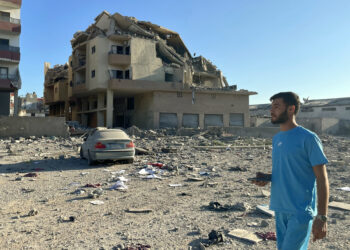
    A man walks past destruction caused by Israeli airstrikes in the Masaken neighbourhood on the outskirts of Tyre on September 26, 2024. The United States and its allies pressed for a 21-day ceasefire in the sharp escalation of fighting between Israel and Hezbollah that has threatened to plunge Lebanon into an all-out war. (Photo by Hassan FNEICH / AFP)
    World politics

    EU, G7, and Gulf monarchies call for 21-day ceasefire between Israel and Hezbollah

    26 September 2024
    map visualization
    Controlli all'Aeroporto Fiumicino. Fonte: Livio Anticoli via Imagoeconomia

    Queues of over 3 hours and missed flights: problems with the EU’s new customs‑control system

    by Giorgio Dell'Omodarme
    16 April 2026

    The Entry/Exit System, introduced by the Commission last October and officially in force since 10 April, is under fire from...

    VIKTOR ORBAN PRIMO MINISTRO UNGHERIA, JAMES DAVID JD VANCE VICEPRESIDENTE STATI UNITI

    Disgust proved stronger than the desire for democracy

    by Lorenzo Robustelli @LRobustelli
    16 April 2026

    You can be left-wing (a bit, or very much so), you can be centrist, you can be right-wing (again, a...

    Eurozone March inflation higher than expected, up 0.7 percentage points from February

    by Emanuele Bonini emanuelebonini
    16 April 2026

    Eurostat has published its final figures and revised its preliminary estimates upwards: the cost of energy is having an increasingly...

    Da sinistra: l'ex-premier bulgaro, Boyko Borissov, il presidente russo, Vladimir Putin, l'omologo turco, Recep Tayyip Erdoğan, e serbo, Aleksandar Vučić, all'inaugurazione del gasdotto TurkStream nel 2020

    War in Iran boosts Russia: March oil and gas exports surge, driven by China and India

    by Emanuele Bonini emanuelebonini
    16 April 2026

    The CREA think-tank: "Exports up 52 percent in a month, generating revenues of 713 million euros a day". The EU...

    • Director’s Point of View
    • Opinions
    • About us
    • Contacts
    • Privacy Policy
    • Cookie policy

    Eunews is a registered newspaper
    Press Register of the Court of Turin n° 27


    Copyright © 2025 - WITHUB S.p.a., Via Rubens 19 - 20148 Milan
    VAT number: 10067080969 - ROC registration number n.30628
    Fully paid-up share capital 50.000,00€


    No Result
    View All Result
    • it ITA
    • en ENG
    • Politics
    • Newsletter
    • World politics
    • Business
    • General News
    • Defence & Security
    • Health
    • Agrifood
    • Altre sezioni
      • Culture
      • Diritti
      • Energy
      • Green Economy
      • Gallery
      • Finance & Insurance
      • Industry & Markets
      • Media
      • Mobility & Logistics
      • Net & Tech
      • News
      • Opinions
      • Sports
    • Director’s Point of View
    • Draghi Report
    • Eunews Newsletter

    No Result
    View All Result
    • it ITA
    • en ENG
    • Politics
    • Newsletter
    • World politics
    • Business
    • General News
    • Defence & Security
    • Health
    • Agrifood
    • Altre sezioni
      • Culture
      • Diritti
      • Energy
      • Green Economy
      • Gallery
      • Finance & Insurance
      • Industry & Markets
      • Media
      • Mobility & Logistics
      • Net & Tech
      • News
      • Opinions
      • Sports
    • Director’s Point of View
    • Draghi Report
    • Eunews Newsletter

    Attention