- Europe, like you've never read before -
Saturday, 25 April 2026
No Result
View All Result
  • it ITA
  • en ENG
Eunews
  • Politics
  • World
  • Business
  • News
  • Defence
  • Health
  • Agrifood
  • Other sections
    • Culture
    • Diritti
    • Energy
    • Green Economy
    • Finance & Insurance
    • Industry & Markets
    • Media
    • Mobility & Logistics
    • Net & Tech
    • Sports
  • Newsletter
  • European 2024
    Eunews
    • Politics
    • World
    • Business
    • News
    • Defence
    • Health
    • Agrifood
    • Other sections
      • Culture
      • Diritti
      • Energy
      • Green Economy
      • Finance & Insurance
      • Industry & Markets
      • Media
      • Mobility & Logistics
      • Net & Tech
      • Sports
    No Result
    View All Result
    Eunews
    No Result
    View All Result

    Home » World politics » Misunderstandings among Kyiv’s allies play into Moscow’s hands

    Misunderstandings among Kyiv’s allies play into Moscow’s hands

    Among the European chancelleries that, on paper, support Ukrainian resistance, there is not yet full agreement on how the "reassurance force" should operate once a truce is reached. Meanwhile, Witkoff and Putin are talking about it in the Kremlin, but there are no high expectations

    Francesco Bortoletto</a> <a class="social twitter" href="https://twitter.com/bortoletto_f" target="_blank">bortoletto_f</a> by Francesco Bortoletto bortoletto_f
    11 April 2025
    in World politics
    Zelensky

    Ukrainian president Volodymyr Zelensky speaks during a joint press conference following his meeting with NATO Secretary General in Kyiv on October 3, 2024, amid the Russian invasion in Ukraine. NATO's new chief visited Kyiv on October 3, 2024, a major show of support for Ukraine in his maiden trip in the role. (Photo by Anatolii STEPANOV / AFP)

    Brussels – While the White House special envoy meets with Putin in Moscow, in Europe Ukraine’s allies continue to discuss how to ensure peacekeeping in the former Soviet republic once a pause in the fighting is reached. But not everyone is on the same page, neither between the two sides of the Atlantic nor, it seems, within the Old Continent.

    For example, there did not seem to be much harmony this morning (April 11) between Kaja Kallas and John Healey, at least judging from the thoughts shared separately by the two with the press. The EU High Representative for Foreign Policy claimed that she did not get the “clarity” she expected from the meeting of defence ministers from the coalition of the willing, held yesterday at NATO headquarters in Brussels. “Different member states have different views,” explained the former Estonian premier, “and discussions are moving forward.”

    Kaja Kallas
    The High Representative of the Union for Foreign Affairs and Security Policy, Kaja Kallas (photo: European Council)

    This observation prompted the British Defence Minister to offer a clarification a few hours later: the plans being developed at the coalition level are “real, substantive, and well advanced,” Healey said, adding that “the EU is not part of that planning.” In fact, the reins of the group—comprised of some 30 countries including many EU members (but not all), and of which the United States is not a member—are solidly in the hands of London and Paris.

    With regard to the contents of these plans, yesterday’s meeting revealed the four cornerstones around which the operations of the so-called “reassurance force” (which will not be a force for peacekeeping) are to be pivoted: security in the skies, security in the Black Sea, end of land fighting, and reinforcement of the Ukrainian armed forces. The latter, Kyiv’s allies have been repeating for weeks, will be the central element of deterrence against potential new Russian aggression.

    The main problem at this stage is that, to proceed with working out the details, it is necessary to know the terms of a potential ceasefire. Lacking the latter, it is difficult for the military leadership to devise precise plans. Moreover, all the “willing” ones continue to reiterate the need for Washington to provide some asset—intelligence sharing, air cover or even ground troops—to further ensure peacekeeping. Still, the star-studded administration has outright denied any military involvement in the former Soviet republic.

    In Brussels today, Defence Ministers and military leaders came together to build the momentum and progress of our Coalition of the Willing.

    We stand by Ukraine in the fight, and we will stand by Ukraine in the peace. pic.twitter.com/Y0mJkTRH5u

    — John Healey (@JohnHealey_MP) April 10, 2025

    Be it as it may, Healey chaired today’s meeting of another group, the so-called Contact Group for Ukraine (otherwise known as the Ramstein Group), which has about fifty members, including the U.S.. However, today’s meeting was the first in which Washington was not the host (the Pentagon chief, Pete Hegseth, was remotely connected). At the end of the meeting, His Majesty’s Secretary of Defence announced new aid to Kyiv totalling more than 21 billion, called “a record increase in military funding for Ukraine.”

    In the meantime, in these same hours, Steve Witkoff—the chief negotiator designated by Donald Trump to lead the negotiations between Washington, Kyiv and Moscow (despite his official title being that of special envoy for the Middle East)—arrived in the Kremlin to personally meet Vladimir Putin. Before landing in the Federation capital, Witkoff met in St. Petersburg with Kirill Dmitriev, Putin’s investment envoy.
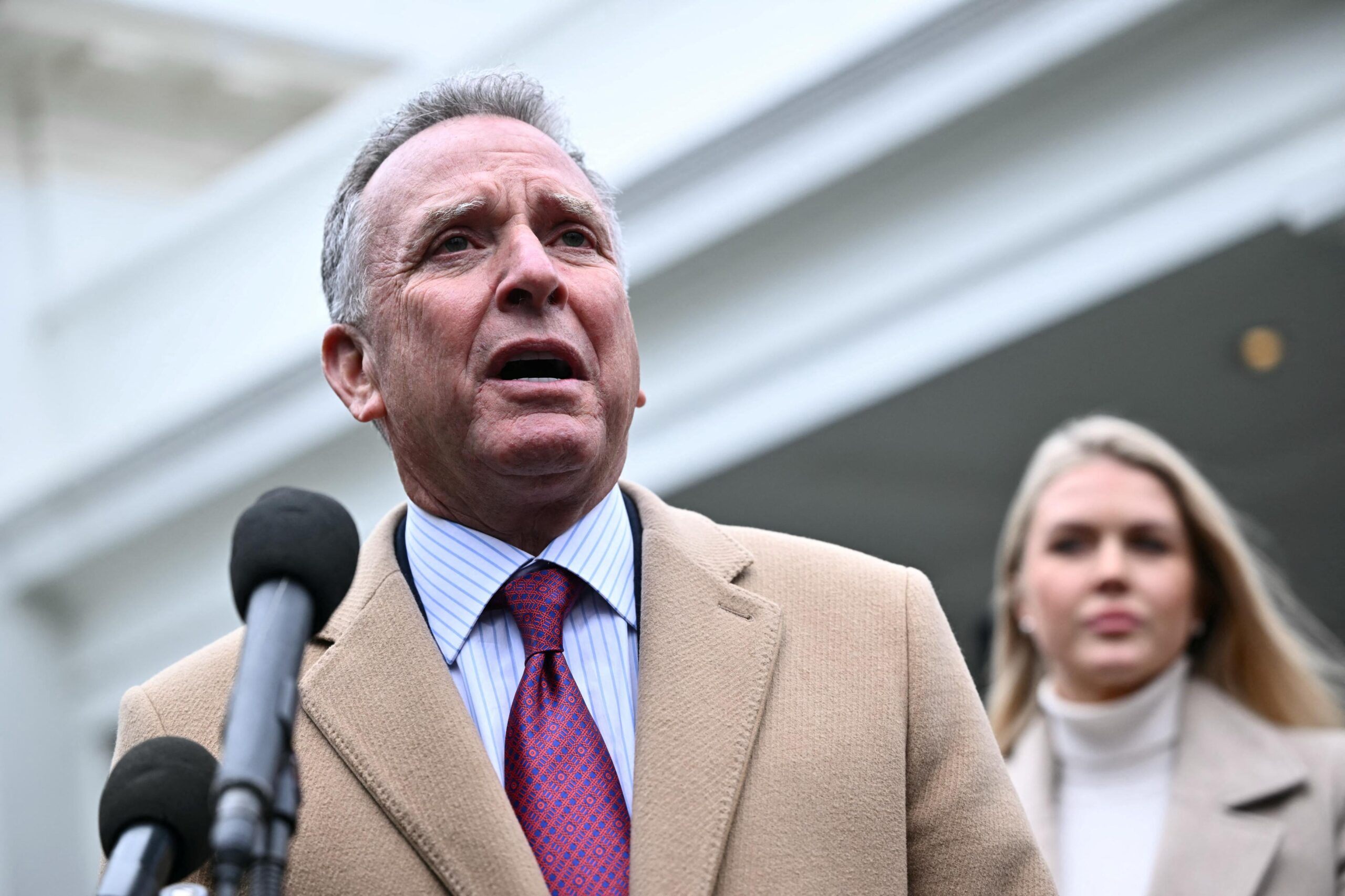
    Steve Witkoff
    Steve Witkoff, the White House special envoy to the Middle East (photo: Mandel Ngan/Afp)

    Kremlin spokesman Dmitri Peskov said that during the face-to-face meeting, the two “might discuss” a next meeting between Putin and Trump, but gave no further details and anticipated that from today’s visit, “no significant breakthrough should be expected.” Meanwhile, on Truth Social, the White House tenant wrote, “Russia needs to get moving.”

    The diplomatic negotiations for a ceasefire are frozen since the Russian president set a series of maximalist conditions to agree to a pause in hostilities, which consequently have never ceased, despite Kyiv’s willingness (in principle) to a truce. On the ground, the situation has long been turning in favour of Moscow’s military, to the point that several analysts agree that the launch of a new spring offensive by the Federation is imminent, to further advance the front line and come to the negotiating table from an even stronger position.

    English version by the Translation Service of Withub
    Tags: coalition of the willingjohn healeysteve witkoff

    Related Posts

    Andrij Sybiha Mark Rutte
    World politics

    Ukraine, NATO remains wary of Putin – and tugs at Trump’s sleeve

    4 April 2025
    Emmanuel Macron
    World politics

    Ukraine, Macron announces European “reassurance force”

    27 March 2025
    Vladimir Putin
    World politics

    Ukraine and Moscow at odds immediately after Riyadh ceasefire talks conclude

    25 March 2025
    map visualization
    Le dichiarazioni alla stampa dei presidenti del Consiglio europeo, Antonio Costa, della Commissione europea, Ursula von der Leyen,

    Von der Leyen to Middle Eastern leaders: “In times of crisis, bonds grow stronger”

    by Giulia Torbidoni
    24 April 2026

    EU leaders note that Europe’s security is “closely linked” to that of the region in turmoil and, in addition to...

    Across the EU, 24.3 per cent of young Europeans are involved in online activism

    by Iolanda Cuomo
    24 April 2026

    According to Eurostat, 24.3 per cent of young Europeans have been involved in online activism, either by expressing an opinion...

    The European Council faces an uphill battle over the budget. Meloni: “Extremely difficult negotiations”

    by Emanuele Bonini emanuelebonini
    24 April 2026

    At the informal summit of heads of state and government on the seven-year budget (MFF 2028–2034), positions remain far apart...

    L'aula del Parlamento europeo nella sede di Strasburgo. Fonte:

    The EU budget, the energy crisis and Ukraine: the topics on the agenda at the EU Parliament’s plenary session

    by Giorgio Dell'Omodarme
    24 April 2026

    The proposal by the EPP, S&D, and Renew Europe on the next MFF suggests raising Member States’ contributions to 1.27...

    • Director’s Point of View
    • Opinions
    • About us
    • Contacts
    • Privacy Policy
    • Cookie policy

    Eunews is a registered newspaper
    Press Register of the Court of Turin n° 27


    Copyright © 2025 - WITHUB S.p.a., Via Rubens 19 - 20148 Milan
    VAT number: 10067080969 - ROC registration number n.30628
    Fully paid-up share capital 50.000,00€


    No Result
    View All Result
    • it ITA
    • en ENG
    • Politics
    • Newsletter
    • World politics
    • Business
    • General News
    • Defence & Security
    • Health
    • Agrifood
    • Altre sezioni
      • Culture
      • Diritti
      • Energy
      • Green Economy
      • Gallery
      • Finance & Insurance
      • Industry & Markets
      • Media
      • Mobility & Logistics
      • Net & Tech
      • News
      • Opinions
      • Sports
    • Director’s Point of View
    • Draghi Report
    • Eunews Newsletter

    No Result
    View All Result
    • it ITA
    • en ENG
    • Politics
    • Newsletter
    • World politics
    • Business
    • General News
    • Defence & Security
    • Health
    • Agrifood
    • Altre sezioni
      • Culture
      • Diritti
      • Energy
      • Green Economy
      • Gallery
      • Finance & Insurance
      • Industry & Markets
      • Media
      • Mobility & Logistics
      • Net & Tech
      • News
      • Opinions
      • Sports
    • Director’s Point of View
    • Draghi Report
    • Eunews Newsletter

    Attention