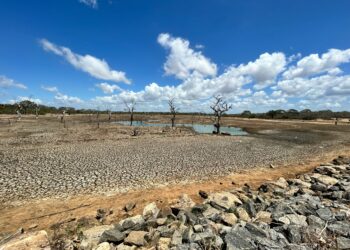
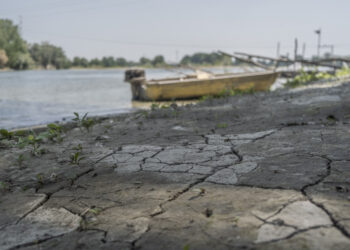
Water is one of the most significant challenges of our time. The availability of clean freshwater for human consumption, for our economic activities and for the living environment is severely impacted by decades of unsustainable water use, pollution and climate change. To address these challenges, the European Economic and Social Committee (EESC), the EU’s consultative body representing employers, workers and civil society organisation’s group was the first European institution to launch a call for a Blue Deal, a comprehensive water strategy to be adopted as a top political priority for Europe, on a par with the EU Green Deal. This strategy should cover all sectors of society and be integrated into all policies, to secure the availability of clean water for the benefit of citizens, industries, agriculture and the planet now and in the long term.
The momentum is building: acknowledging the need to put water on the top of the EU’s political agenda, the European Commission published the long-awaited Water Resilience Strategy on 4 June 2025. We are pleased to see that many of our Committee’s recommendations are reflected in the new strategy, starting with the necessity to step up the implementation of current legislation as well as the need to boost synergies with policies such as agriculture, industry, energy, or consumer policy.
The key objectives of the strategy are in line with the EESC’s call for a more holistic approach to water challenges via improved governance and financing and investments in infrastructures and digitalisation, while addressing the environmental aspects of water and ensuring access to clean water as a human right. We have welcomed the strategy’s aims to empower citizens, to support the competitiveness and resilience of businesses and to ensure societal preparedness.

We need strong commitment at European level to secure funding for this important transition, especially via the next EU Multiannual Financial Framework (MFF) post 2027.
The EESC continues to urge the EU to adopt water as a strategic priority in the next programming period, mainstreamed across all funds. Furthermore, our EU Blue Deal Declaration calls for water conditionalities in EU funds and a Blue Transition Fund as a single EU access point for water investments, combining public investment with innovative financing.
Regarding industries, we welcome the strategy’s aim to integrate water resilience into all industrial sectors, but more concrete measures are needed. For instance, water is barely mentioned in the Clean Industrial Deal. The EESC believes that water should be a central pillar of EU industrial policy and recommends that the transition pathways for different industries be updated to include water-related industrial challenges and opportunities. The announced pilot project to promote water efficiency in selected industrial clusters is a welcome start. Our Committee’s upcoming work on cleantech manufacturing and water and the twin transition will also propose recommendations to support technologies that are both water and energy efficient, to ensure that the green and digital transitions and water resilience go hand in hand.
We believe that all industries and sectors, including SMEs, should benefit from measures which will help them adopt new water efficient processes and technologies. We see these investments as an opportunity to create new jobs and business growth while protecting the environment and creating societal progress. Enhancing water reuse and promoting smart metering for all are welcome measures which should be swiftly implemented and rolled out across industries and in every Member State.
Our Committee has also highlighted the need for investments in skills development and human resources, as well as the need to involve employees in the promotion of sustainable water use practices in companies and industries. We welcome the creation of the European Water Academy with the aim of addressing capacity needs and skills gaps in the water sector, as well as the other measures supporting training and skills development announced in the Water Resilience Strategy. It is important to ensure synergies with the Union of Skills, which currently lacks any mention of water.
Furthermore, we welcome the strategy’s aim to ensure security of clean and affordable freshwater supply as a guiding priority for the EU. Water is a crucial resource also from a security and crisis preparedness aspect. The approach must take into account the importance of water for our food security and health, and also ensure that critical economic activities – such as the production of energy and key goods and services – are prepared against different water-related threats. Again, this requires mainstreaming water considerations into all EU policies and ensuring adequate funding for water resilient infrastructures, technologies and processes in key sectors, whilst ensuring drinking water supply for all.
Consultation and involvement of stakeholders across society is essential to the formulation of a sustainable EU water policy and the monitoring of its implementation. This is why the EESC is committed to delivering on action 2 of its Declaration, establishing a stakeholder platform. The involvement of civil society organisations will be key in delivering water resilience and security in all areas of society, thanks to their presence on the ground and their ability to mobilise people to take action. Their specialised expertise in areas such as social justice and health, the environment, economic and professional development and support to local communities is an invaluable asset in delivering the goals of the strategy. Young people in particular are committed to preserving our water resources and wish to actively contribute to the shaping of policies which have an impact on their future, and their engagement must be acknowledged by decision makers.
The EESC will continue to work closely with the European institutions, the Member States and other stakeholders and organisations to make sure that the recommendations and needs of European employers, workers and civil society actors are taken into account in the development and implementation of policies aiming to foster water resilience for all.
The Committee also looks forward to contributing to the global discussions on water at the UN Water Conference in 2026, as part of the European Union’s delegation.
Pietro Francesco De Lotto, President of Consultative Commission on Industrial Change and EU Blue Deal coordinator of the European Economic and Social Committee
Alain Coheur, member of the European Economic and Social Committee EESC and Consultative Commission on Industrial Change
English version by the Translation Service of Withub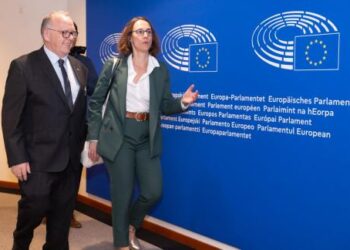

![La presidente della Commissione europea, Ursula von der Leyen, pronuncia il discorso sullo Stato dell'Unione [Strasburgo, 26 settembre 2026. Foto: Fred MARVAUX Copyright: © European Union 2026 - Source : EP]](https://www.eunews.it/wp-content/uploads/2026/09/soteu26_2-350x250.png)