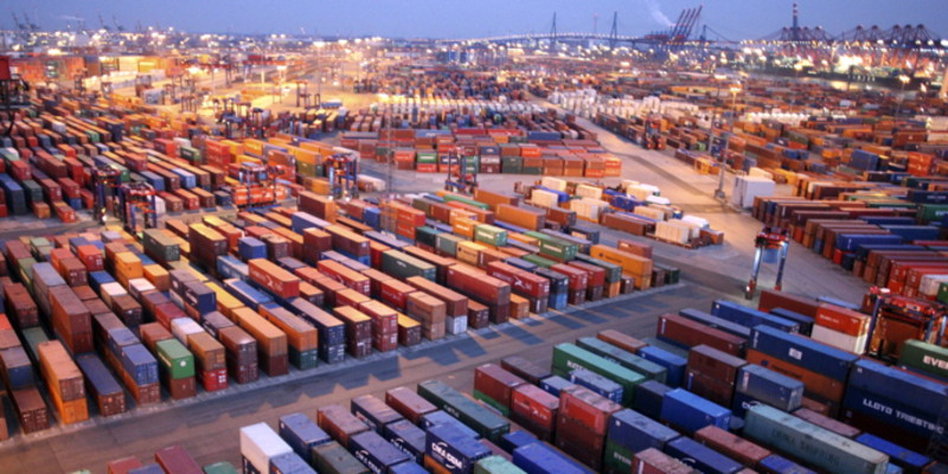

Brussels – The US tariff policy will affect the German federal states economically in very different ways, according to a study by the ifo Institute, a prestigious Munich-based think tank. “While Saarland, Lower Saxony, and Baden-Württemberg are losing the most value added, Saxony-Anhalt and the northern German states are shrinking the least,” said Marcel Thum, managing director of ifo Dresden. Robert Lehmann, ifo economic expert, adds that “Structural differences between the federal states, such as a strong presence of the automotive industry, are decisive.”
The study considered several scenarios, with three different questions: What happens if the current tariff policy is continued? What effect do product-specific tariffs have? What would the “reciprocal” tariffs of up to 50% on all imported goods threatened by US President Donald Trump mean?
Depending on the scenario, the federal states of Saarland, Lower Saxony, and Baden-Württemberg, where the automotive industry is the leading sector, would see the industrial value added shrink by between 1.7 and 3.0 percent. In all scenarios, the city-state of Hamburg would be the least affected. In the most favorable scenario, the city-state could even benefit from product-specific tariffs. “Hamburg’s industrial focus on other vehicle construction, which includes shipbuilding, could offset the negative customs effects of the other industries,” Thum said. The decisive factor will be which tariff policy the US government pursues after the 90-day break in negotiations.
English version by the Translation Service of Withub



![[foto: European Council]](https://www.eunews.it/wp-content/uploads/2026/08/eu-canada-350x250.jpg)