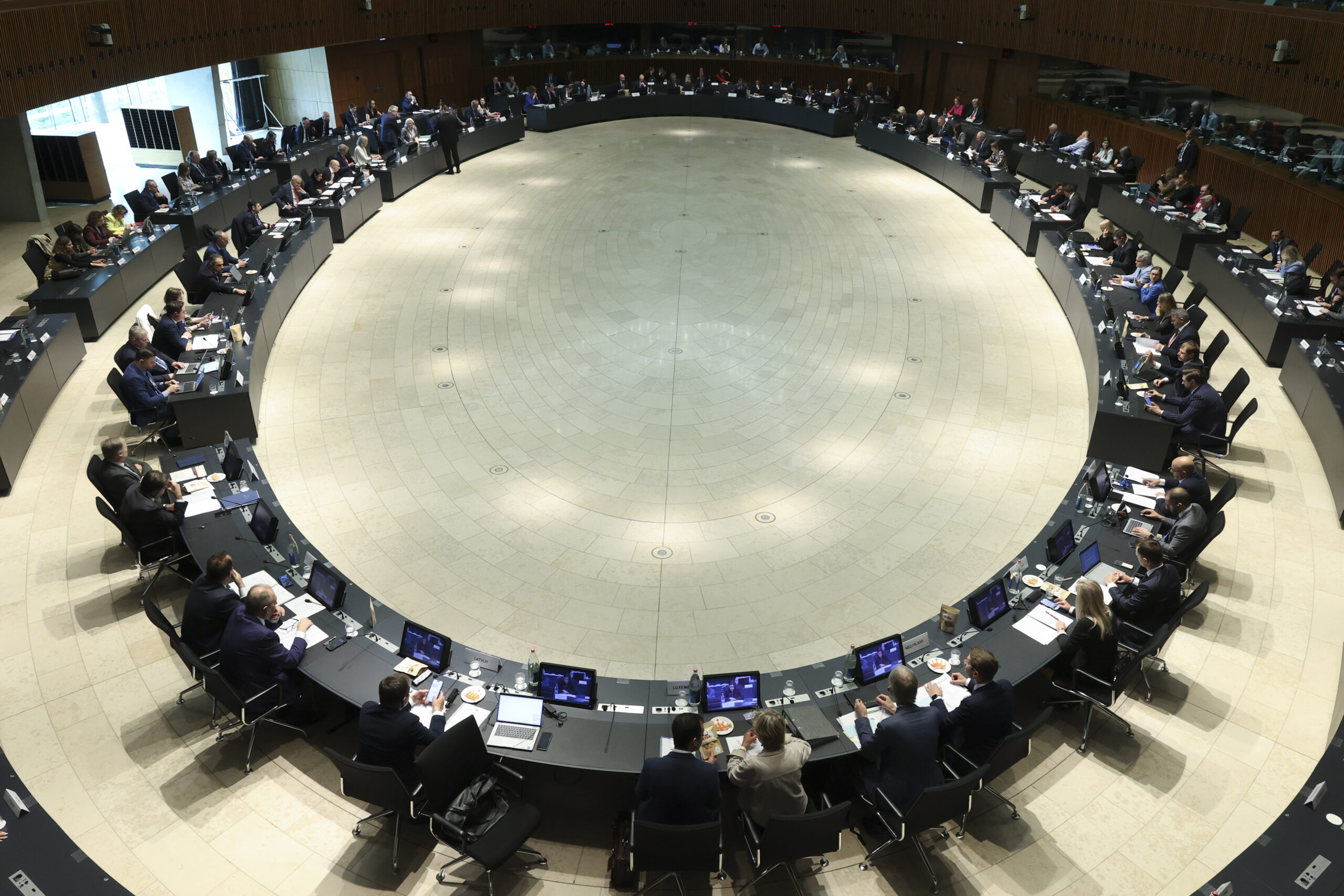
Brussels – The post-2027 Common Agricultural Policy (CAP) fails to convince Italy and Germany, who are pointing the finger at the degressivity mechanisms, the €100,000 cap on direct payments, and the single fund. The issue is at the heart of today’s (27 April) Agriculture Council meeting in Luxembourg, which is set to address a number of pressing matters, from the post-2027 CAP reform to tensions in agricultural markets and the forest fire emergency. This comes at a time of “real pressure for our citizens and, above all, for our farmers,” where “we have seen the effects of the geopolitical situation on rising production costs, fertilisers and fossil fuel prices,” emphasises Maria Panayiotou, Cypriot Minister of Agriculture, the country currently holding the six-month presidency of the Council of the European Union. “Therefore, we want to ensure our farmers have affordable access to essential inputs, particularly fertilisers,” she states.
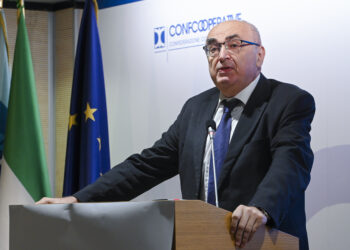
The key issue, however, remains the future of the CAP within the forthcoming Multiannual Financial Framework (MFF), which comes into force on 1 January 2028. Discussions among the EU-27 are proceeding along a complex path with the aim of finding, by the end of 2026, “the right balance between a common EU regulatory framework and sufficient flexibility for Member States,” explains the Council. Representing Italy is the Undersecretary for Agriculture, Patrizio Giacomo La Pietra, who takes a critical stance towards the Commission’s current approach. “The application of degressive mechanisms” in the next CAP “should be on a voluntary basis for Member States,” he states in the public session, emphasising that countries must be able to “set the payment ceiling taking into account the structure of their agricultural systems and with the possibility of deducting labour costs related to agricultural activity.” The risk, according to La Pietra, is clear: “that the pursuit of greater distributive equity in support will negatively impact farms’ ability to innovate, remain profitable and competitive on the global market and over time.” Hence, the call to Brussels to “avoid overly rigid common rules that do not take into account the structural diversity of European agriculture.” The undersecretary also specifies that “a fair distribution of support cannot ignore the structure of farms in different countries and must not compromise the economic and social sustainability of more structured, labour-intensive farms,” highlighting the need to ensure “adequate subsidiarity for Member States to decide how to intervene and to take into account the importance of larger farms as a source of employment in rural areas.”
The issue of degressivity had already been addressed at the Agriculture Council in November 2025. Generally speaking, even then, several delegations viewed with scepticism the idea of setting a cap on aid or reducing it progressively for larger farms. Opinions remain divided on who should receive the aid: some believe it should go primarily to farmers who rely mainly on agriculture for their livelihood, while others stress the importance of also supporting those who practise it as a secondary activity. For Italy, in particular, the issue is highly critical. “We reiterate that we absolutely do not agree,” La Pietra states, “with the severe restrictions on support for agricultural product processing companies” proposed by the European Commission for the next CAP cycle. “In this context, we see no logic in this, but we believe it undermines a strategy that has been an integral part of the CAP for over forty years and prevents the implementation of integrated supply chain policies, which are the most effective tool for enabling farmers to share in the added value generated by the processing and marketing of agricultural raw materials,” emphasises the undersecretary.
Germany is also critical. The Federal Minister for Agriculture, Alois Rainer, stresses that “the European Commission’s plans for the next CAP are still not sufficient,“ but says he is “confident” that a compromise can be found. However, Berlin’s opposition to the €100,000 cap on direct payments is clear: “I am opposed to a maximum cap of €100,000. Germany is a large country with a highly diverse agricultural sector in all its forms. We have small farms and large farms, and we must take them all into account. A €100,000 cap would hit farms hard in the west, but particularly in eastern Germany,” he explains. Furthermore, the German minister reiterates the need for the EU “to have a strong, reliable and well-structured CAP after 2027.” Therefore, “I oppose the idea of merging agricultural policy into a common fund,” he states once again. The issue of the structure of this so-called single fund has always been a thorny one for Italy too: “The governance of future national and regional plans” is “in our view too complicated,” La Pietra reiterates today.
English version by the Translation Service of Withub