Brussels – An Indian contingent is taking part, along with Russia and Belarus, in the Zapad military exercise, which is taking place on the borders of the European Union. A new development that exacerbates the already tense situation on the eastern borders of the Union, which began with Russian drone raids on Polish territory.
The spokeswoman for the Commission on Foreign Affairs, Anitta Hipper, commented: “What is happening in Belarus violates the Vienna Document, the reference text for military exercises stipulated by the OSCE.” The spokeswoman added: “We are closely monitoring our territory to prevent possible threats in the area.” There was, however, no comment on Indian participation in the exercise. What made the situation more difficult was the violation of Romanian airspace by a Russian drone, which occurred yesterday, Sunday, 14 September.
The Vienna Document
The document to which Hipper refers is the Vienna Document, concluded in 2011 at the OSCE headquarters. The purpose of this agreement is to define the rules of a military exercise. In order for these to be respected, a prior notification to neighbouring states is required, the participation of international observers and the possibility of verifying on the ground the veracity of the information communicated. Commitments that, according to the EU, were not fulfilled during the Zapad 2025 exercise. The movement of troops and armaments will continue until tomorrow, after which the Russian soldiers are expected to return to the Federation’s borders.
Zapad 2025, 13,000 soldiers and a hypersonic missile
The Zapad 2025 exercise is one of the major military tests in which Moscow participates. Operations began on 12 September and will end on Tuesday, 16. This year, between Belarus and the Russian exclave of Kaliningrad, some 13,000 Russian and Belarusian soldiers have been mobilised. In addition, an Indian contingent of about 50 troops and foreign observers, including three from the US, have been confirmed to be present. The size of the 2025 activities is smaller than in previous years: in 2021, approximately 220,000 soldiers were mobilised.
At the time, that troop movement towards the Western Front was used by Moscow to bring soldiers closer to the Ukrainian border. Given the precedents, the Zapad 2025 exercise greatly alarmed Europeans, more because of the artillery used than the size of the contingent. The big star was the long-range hypersonic missile Oreshnik (Russian for “hazel tree”). This weapon, the latest arrival in the Kremlin’s artillery, can be equipped with atomic warheads and was deployed in both Kaliningrad and Belarus.
#BreakingNews | US military officers made a visit to Belarus to observe joint Russia-Belarus “Zapad-2025” Exercise. pic.twitter.com/SAx0G5QP3C
— Mintel World (@mintelworld) September 15, 2025
Moscow’s provocations
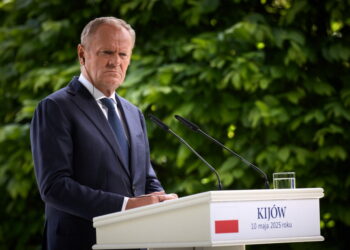
The exercise took place against a particularly tense background. It all started with the violation of Polish airspace by a fleet of Russian drones, which occurred on the night of 9-10 September. The Prime Minister Donald Tusk decided after a few hours to close the border between Poland and Belarus. NATO Secretary General, Mark Rutte, described the action as “the largest violation of a NATO airspace we have ever observed.” European countries reacted unanimously to the threat, while US President Donald Trump played down the incident: “It may have been a mistake.” A similar version came from the Kremlin.
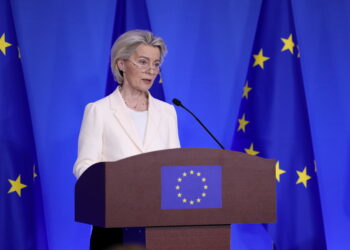
NATO’s response to the events of 10 September was the launch of Operation Eastern Sentinel, described by Rutte as an initiative that will “involve a range of allied assets, including Denmark, France, the UK, Germany and others. This effort will include elements to address the challenges associated with the use of drones.” Challenges which are already present after the latest breach yesterday, in Romania: a drone entered Bucharest-controlled airspace. Ursula von der Leyen called it “a blatant violation of EU sovereignty and a serious threat to the stability of the region.”
The escalation is occurring in an area where numerous NATO troops are present. In Poland, there are around 100,000 soldiers, with the aim of reaching 300,000 in 2026. In Romania, near Constanta, the largest Alliance base in Europe is under construction.
English version by the Translation Service of WithubNATO asserts that the Russian drone flights over Poland do not constitute an attack on the Alliance.
However, this marked the first time NATO aircraft engaged potential threats over allied territory. The response involved Polish F-16s, Dutch F-35s, Italian AWACS reconnaissance… pic.twitter.com/UL1sTmMbot
— Euromaidan Press (@EuromaidanPress) September 10, 2025