Brussels – “Democracy does not come automatically, but is achieved thanks to the support of friends”: Maia Sandu, President of the Republic of Moldova, addresses the Strasbourg hemicycle with a call to responsibility ahead of the parliamentary elections to be held in Chisinau on 28 September. The friends, for Sandu, are sitting on the Strasbourg benches, and her speech, delivered today, is a warning to them and to the whole of Europe: “Moscow is influencing our democratic process.”
The November 2016 presidential elections, in which the President was confirmed by a narrow margin of votes, according to Moldovan institutions, were allegedly influenced by Moscow. “Hybrid warfare” techniques helped the pro-Russian parties. Sandu’s victory allowed Chisinau, thanks to a referendum, to put into the constitution its will to become part of the Union. A process that, according to the Director General of DG ENEST (the European Commission’s directorate responsible for enlargement policy), Gert Jan Koopman, “is not unrealistic to assume can be completed by the end of 2027, perhaps even a little earlier.”
The European path
Moldova applied for EU membership on 3 March 2022, a few days after the start of the Russian invasion of Ukraine. Sandu, who was already president at the time, undertook a series of structural reforms, accelerating the path. That is why she reiterated this again today: “We are not asking for a shortcut, we are doing our work diligently,” but then called this path a “fight against time” to protect democracy from Moscow’s influence.
Everything, however, will depend on September’s vote. European integration could slow down in the event of a political turnaround. Non-European parties, such as the “Alternative” coalition of former prosecutor Alexandr Stoianoglo or the Patriotic Party of Igor Dodon, remain high in the polls. For Sandu, winning these elections would mean sanctioning the pro-European path once and for all. The president has called the coming round of elections “the most important” in her country’s history.
What is already happening, however, is “a hybrid war” with the intention of “bringing Moldova back into the Russian sphere of influence. The aim is to use our country as a base of operations for hybrid attacks against the European Union.” Russia has already demonstrated its ability to act in various ways: cyberattacks on institutions, using Russian money to fuel protests, and enlisting criminal groups to intimidate voters. According to some estimates, quoted by Sandu, “Russia used about the equivalent of 1 per cent of Moldovan GDP to finance campaigns to disrupt democracy.”

The gas crisis
The reappointment of PAS (Action and Solidarity Party) will not be easy, given the non-idyllic economic and social climate. A heavy energy crisis is tormenting the country. Since 1 January, the Russian company Gazprom has cut off gas supplies to Chisinau. The gas transited Ukraine and then the unrecognised pro-Russian state of Transnistria, indirectly affected by this sanction. An increase in the cost of gas bills (around 40 per cent) brought the two Moldovan entities to their knees, fueling pro-Russian populism.
From the outset, Sandu sought to differentiate its energy supply. In early 2025, it succeeded in connecting to the “vertical corridor” connecting Moldova to the Alexandropolis (Greece) terminal, opening a direct channel to the Mediterranean Sea.
NEW: Pro-Russian Moldovan breakaway region Transnistria held the Seventh Congress of Transnistrian Deputies on Feb. 28 and adopted a series of decisions that likely aim to provide the Kremlin with justifications for a wide range of possible escalatory actions against Moldova —…
pic.twitter.com/A24MkQttyu— Institute for the Study of War (@TheStudyofWar)
February 29, 2024
The presidential candidates
In this situation, the September elections arrive. Competing for the majority are three main blocs. The first is the one, pro-European and pro-NATO, of Maia Sandu (PES). The group would have around 33 per cent of the vote, according to the ” Barometrul iData, August 2025” conducted by Date Inteligente, which, however, does not account for the diaspora.
The second possibility is also the most frightening for Europe: the patriotic bloc, led by the Socialist Party of Igor Dodon. The patriots do not hide their connection to Moscow, which is very dear to part of the population nostalgic for the Soviet period. In July, coalition leaders met Russian Deputy Prime Minister Dmitry Patrushev in Moscow. Dodon considers Sandu illegitimate and proposes a break with the integration process, as well as a nationalist agenda. Polls give the coalition around 30 per cent.
More hybrid, however, is the “Alternative” group of parties, which has organised itself around Alexandr Stoianoglo, who came second in the November presidential elections. In September, he wants to make a comeback, with the intention of putting himself forward as a substitute to the ruling party. Previously, his policy towards Brussels was one of openness to possibilities, but now his line is much tougher. Polls do not give Alternativa much more than 10 per cent.
English version by the Translation Service of Withub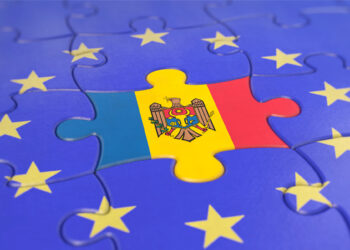


![Da sinistra: il presidente del Consiglio europeo, Antonio Costa; il presidente dell'Ucraina, Volodymir Zelensky: la presidente della Commissione europea, Ursula von der Leyen [Bruxelles, 18 giugno 2024. Foto: European Council]](https://www.eunews.it/wp-content/uploads/2026/06/euco_ua260618-120x86.jpg)
![[foto: Saverio De Giglio/imagoeconomica]](https://www.eunews.it/wp-content/uploads/2026/10/cpt-120x86.png)