Brussels – In the aftermath of the EU summit, at which the Twenty-Seven
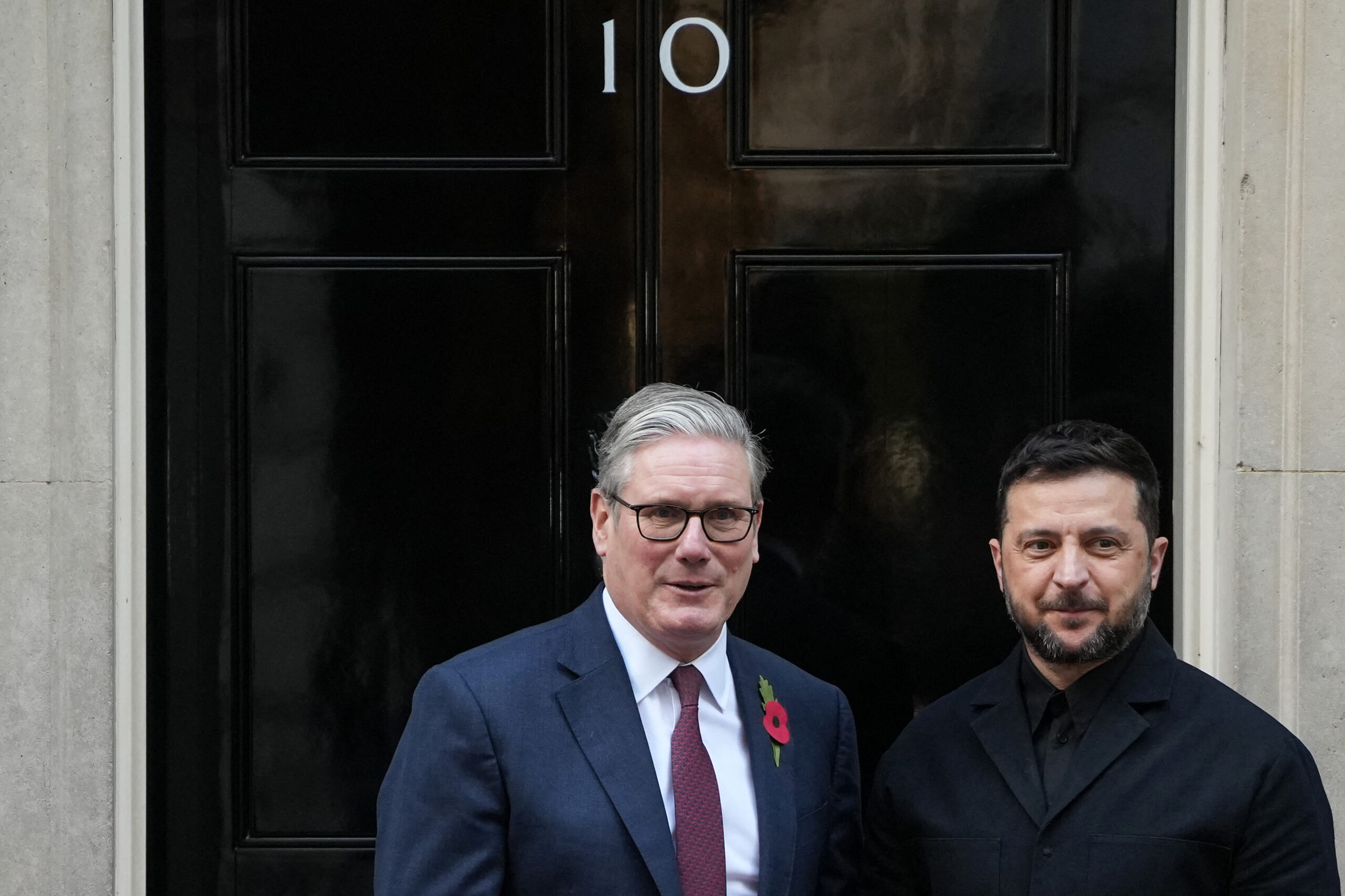
failed to find an agreement on the use of proceeds from Russian assets tied up in Europe for support to Ukraine, Volodymyr Zelensky travelled to London today (24 October) to attend yet another meeting of the coalition of the willing, chaired by British Prime Minister Keir Starmer.
The host’s message is clear: it is necessary that Kyiv’s Western allies—and especially those of the Old Continent—contribute “more” to strengthen the defence of the attacked country, especially with “long-range weapons” to strike deep into Russian territory. The reference is to the notorious US-made Tomahawk missiles, which President Donald Trump recently refused to provide to Ukraine. For Zelensky, the Kremlin’s tenant would like to “push us towards a humanitarian disaster” by bombing the energy infrastructure at the onset of winter, as he does every year.
“I think there is still a lot to be done in terms of capabilities, particularly long-range capabilities,” noted the Downing Street tenant as he welcomed his guest for the meeting in virtual mode (some leaders, including Danish PM Mette Frederiksen, the Dutch Dick Schoof and Nato Secretary General, Mark Rutte, were in attendance while others, including Italian PM Giorgia Meloni and French President Emmanuel Macron, connected remotely).

The topic of security guarantees for Ukraine has been on the table for several months. Last September, Macron announced that 26 coalition countries would be willing to provide some form of support to Kyiv, including by sending ground troops. Today, he reiterated that “we must continue to intensify our military support” to Kyiv, equipping it with “air defence capabilities, long-range capabilities, drones and anti-drone systems.”
Opening the summit proceedings, Starmer stated that the current one “is the time of maximum pressure, because it is the only way to change Putin’s mind, bring him to the table, and stop the killing.” In the coming months, he continued, the goals should be the removal of Russian oil and gas from the global market, the upgrading of Ukraine’s air defence and energy infrastructure, and precisely the supply of long-range weapons to Kyiv. And he added that it is necessary to “complete the work on Russian sovereign assets and free up billions of euros to help finance Ukrainian defence.”
In the past few hours, Europeans
have enthusiastically welcomed the decision of the US administration to sanction the two Russian oil giants (Lukoil and Rosneft). This was an unexpected move on the part of the White House, which, according to observers, signals a change of pace in the approach towards Moscow, following the
face-to-face meeting in mid-August between the tycoon and Vladimir Putin. At the same time, yesterday, the EU adopted its 19th package of restrictive measures against the Kremlin.
“We all agree that the fighting must stop and that negotiations must start from the current line of contact,” Starmer reiterated. However, international diplomacy does not seem to be playing any part in this conflict. Negotiations to reach a truce have repeatedly ended in nothingness over the past months. Also, the bilateral Trump-Putin meeting that was supposed to take place in Budapest, heralded as yet another victory for the US president and the “pacifist” Hungarian prime minister Viktor Orbán, has been postponed indefinitely precisely because of the Tsar’s opposition to accepting a ceasefire and freezing the front line.

“The Russian president continues to stall and make absurd demands on territories he has not been able to conquer by force,” the British PM said during a joint press conference at the end of the meeting, speaking from a crowded podium alongside Zelensky, Rutte, Frederiksen, and Schoof. “We must keep up the pressure” on the Kremlin, he reiterated, since “Putin is the only person who does not want to stop this war.”
The Ukrainian president emphasised that “a more meaningful approach to diplomacy needs to be promoted,” noting that the latter “functions only when it is able to bring about concrete results” and that “peace is born from pressure on the aggressor.” Rutte also insisted on these two points, arguing that “US sanctions will leave Russia without revenue” from oil sales and that “developments on the battlefield show that our support for Ukraine is working and that we must continue.”
In addition to the host, Frederiksen and Schoof also reiterated their willingness to proceed with the confiscation of frozen Russian assets, while acknowledging Belgium’s doubts and pointing out that the key issue is to find common ground on a risk-sharing mechanism for this extremely legally sensitive and politically particularly hot transaction.
English version by the Translation Service of Withub