- Europe, like you've never read before -
Wednesday, 8 July 2026
No Result
View All Result
  • it ITA
  • en ENG
Eunews
  • Politics
  • World
  • Business
  • News
  • Defence
  • Health
  • Agrifood
  • Other sections
    • Culture
    • Rights
    • Energy
    • Green Economy
    • Finance & Insurance
    • Industry & Markets
    • Media
    • Mobility & Logistics
    • Net & Tech
    • Sports
  • Newsletter
  • European 2024
    Eunews
    • Politics
    • World
    • Business
    • News
    • Defence
    • Health
    • Agrifood
    • Other sections
      • Culture
      • Rights
      • Energy
      • Green Economy
      • Finance & Insurance
      • Industry & Markets
      • Media
      • Mobility & Logistics
      • Net & Tech
      • Sports
    No Result
    View All Result
    Eunews
    No Result
    View All Result

    Home » Agrifood » Green light for the EU framework on new genomic techniques: a mix of GMOs and conventional plants

    Green light for the EU framework on new genomic techniques: a mix of GMOs and conventional plants

    EU opens to deregulation of the 'new GMOs': a large part of NGT plants will be exempted from labelling, risk assessment, and monitoring requirements. Coldiretti: 'Important step forward to valorise assisted evolution techniques'

    Simone De La Feld</a> <a class="social twitter" href="https://twitter.com/@SimoneDeLaFeld1" target="_blank">@SimoneDeLaFeld1</a> by Simone De La Feld @SimoneDeLaFeld1
    4 December 2025
    in Agrifood

    Brussels -More than two years after the European Commission’s proposal, overnight, the complex negotiations between the EU institutions on the regulatory framework for new genomic techniques have come to a close. Brussels is thus trying to put an end to the debate on the new GMOs: NGTs – or Assisted Evolution Techniques (ATEs) – will be divided into two categories. A large part will be considered equivalent to conventional plants and therefore exempt from the precautionary requirements of the legislation on modified organisms.

    NGTs refer to plants produced through precision techniques that allow genome modifications without inserting foreign DNA, using a sequence or combination of sequences from the same species or from one that is closely related. Varieties obtained through the introduction of genetic material from a non‑crossable species—transgenesis—will remain subject to existing GMO legislation.

    EU Council and European Parliament negotiators have maintained the same framework proposed by the Commission: the division into 1 NGT, plants that “could also occur in nature or through conventional breeding,” and 2 NGT, all others, which will continue to be treated as GMOs. To the distinction criterion proposed by the EU executive, namely that an NGT plant may be considered equivalent to conventional ones “when it differs from the parent plant by no more than 20 genetic modifications,” an “exclusive list of desired traits has been added, including known insecticidal effects and herbicide tolerance, which are not permitted in NGT1 plants.”

    It will be up to national authorities to verify that NGT plants belong to category 1, but only once, since their progeny will not need to be rechecked. 1 NGT plants and products will not be subject to labeling requirements, except for seeds and other plant reproductive material, so that those who wish can ensure a chain of purely conventional plants.

    All plants classified as 2 NGT will remain subject to the authorisation procedures, as well as the traceability and monitoring requirements, of the 2001 GMO Act. Including mandatory labelling of products: the label must include information on “all relevant traits” that have been modified. The EU Council and the European Parliament inserted a provision into the regulation that allows member states to restrict or prohibit the cultivation of 2 NGT plants on their territory. 

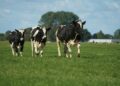
    (Photo by Marcelo MANERA / AFP)

     NGTs will not be allowed in organic production, although the “technically unavoidable” presence of 1 NGT plants will not constitute non-compliance. Then there is the issue of patents and intellectual property. The agreement between the EU co-legislators allows patents for NGTs: a patent expert group will be set up, comprising experts from all member states, the European Patent Office, and the Community Plant Variety Office, to focus on the effect of patents on plants with assisted evolution. An EU-wide code of conduct on patents will be drawn up within 18 months of the regulation’s entry into force.

    In a statement, Coldiretti called the agreement “an important step forward” that will allow “exploiting the extraordinary opportunities offered by the new assisted evolution techniques, to make them available to Italian and European farmers to combat climate change and reduce the use of chemical inputs.” This is the declared aim of Brussels: to more rapidly develop varieties that are resistant to the effects of climate change, such as drought or floods, and that require less fertiliser and pesticide use. However, hundreds of organizations across Europe warn that deregulating the sector carries risks. Lack of monitoring of impacts on health and biodiversity, and a free hand for the overwhelming power of seed multinationals, to name a few.

    English version by the Translation Service of Withub
    Tags: agriculturenew genomic techniquesngtogmtecniche di evoluzione assistitatrilogo

    Related Posts

    Agrifood

    Agriculture, more EU land goes organic, but Green Deal target is at risk

    4 November 2025
    Trump
    World politics

    Trump tough on Zelensky at White House meeting. EU on the sidelines

    20 October 2025
    Agrifood

    Harmful to health and environment: BeeLife’s warning over EU NGT proposal

    1 October 2024
    Nell'Ue l'agricoltura dà lavoro a 9,2 milioni di persone [foto: imagoeconomica]
    Director's Point of View

    GMOs, NGT, TEA, precautionary principle, food safety: how far can we go?

    8 February 2024
    ogm
    Agrifood

    Don’t call them GMOs anymore. EU Parliament to deregulate new genomic techniques

    7 February 2024
    map visualization
    La vicepresidente esecutiva responsabile per la sovranità tecnologica, Henna Virkkunen, durante il punto stampa per la presentazione del piano d'azione per i rischi e le opportunità dell'IA, 7 luglio 2026. Crediti: Commissione europea

    The EU adopts an Action Plan on AI risks and cyber threats. Virkunnen: “We must keep pace”

    by Iolanda Cuomo
    7 July 2026

    The objectives are to promote the safe and responsible use of AI, to strengthen security, and to develop Europe’s capabilities...

    GUERRA IN UCRAINA
KIEV PERIFERIA SUD ZONA ABITATIVA COLPITA DALL ATTACCO MISSILISTICO RUSSO

    The slowdown in the Russian advance in Ukraine is a confirmed fact. Here are the figures

    by Cosimo Firenzani
    7 July 2026

    According to the ISW, the causes are well known: Ukrainian ground counter-offensives, Kyiv’s medium-range missiles targeting Russian rear areas, the...

    Allevamento Amadori. Crediti: Amadori X via Imagoeconomica

    The EU Commission is trying to save livestock farms. Hansen: “Europe’s success story is in crisis”

    by Iolanda Cuomo
    7 July 2026

    The text aims to strengthen European food security and support rural communities, particularly in regions at risk of depopulation

    Salvatore De Meo (Immagine: Parlamento Ue)

    AI and cybersecurity: De Meo (FI-EPP): “Europe must steer development with vision and responsibility”

    by Redazione eunewsit
    7 July 2026

    The Forza Italia MEP spoke in the plenary session in Strasbourg on the European Action Plan on Cybersecurity and Artificial...

    • Director’s Point of View
    • Opinions
    • About us
    • Contacts
    • Privacy Policy
    • Cookie policy

    Eunews is a registered newspaper
    Press Register of the Court of Turin n° 27


    Copyright © 2025 - WITHUB S.p.a., Via Rubens 19 - 20148 Milan
    VAT number: 10067080969 - ROC registration number n.30628
    Fully paid-up share capital 50.000,00€


    No Result
    View All Result
    • it ITA
    • en ENG
    • Politics
    • Newsletter
    • World politics
    • Business
    • General News
    • Defence & Security
    • Health
    • Agrifood
    • Altre sezioni
      • Culture
      • Rights
      • Energy
      • Green Economy
      • Gallery
      • Finance & Insurance
      • Industry & Markets
      • Media
      • Mobility & Logistics
      • Net & Tech
      • News
      • Opinions
      • Sports
    • Director’s Point of View
    • Draghi Report
    • Eunews Newsletter

    No Result
    View All Result
    • it ITA
    • en ENG
    • Politics
    • Newsletter
    • World politics
    • Business
    • General News
    • Defence & Security
    • Health
    • Agrifood
    • Altre sezioni
      • Culture
      • Rights
      • Energy
      • Green Economy
      • Gallery
      • Finance & Insurance
      • Industry & Markets
      • Media
      • Mobility & Logistics
      • Net & Tech
      • News
      • Opinions
      • Sports
    • Director’s Point of View
    • Draghi Report
    • Eunews Newsletter

    Attention