Brussels – Don’t call them “new GMOs” anymore. Or at least not all of them: Today (Feb. 7) the European Parliament gave the green light to the New Genomic Techniques (NGT) Regulation and decided to exempt all plants obtained within a limit of genetic modification from most GMO safety requirements.
NGT—or Assisted Evolution Techniques (AET)—means plants produced through precision procedures, which allow genome modifications without the insertion of foreign DNA, with a sequence or combination of sequences from the same or otherwise closely related species. While varieties obtained by the introduction of genetic material from a non-crossable species, i.e., transgenesis, will remain subject to existing GMO legislation.
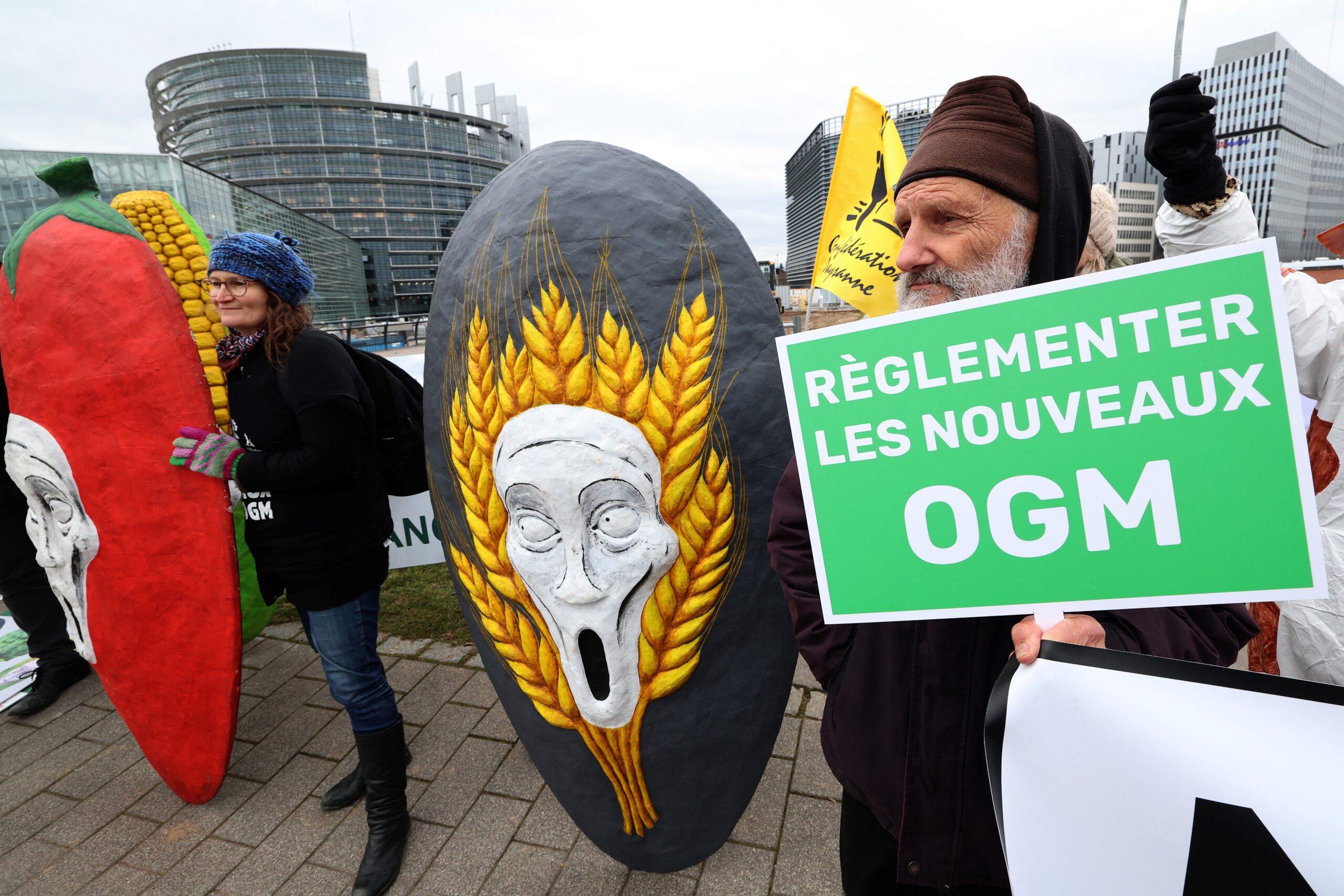
After voting on the more than 300 amendments tabled, with 307 votes in favour, 263 against, and 41 abstentions, the Strasbourg hemicycle adopted its negotiating mandate, maintaining the two-category structure of the European Commission’s proposal. One category, Ngt1, whose varieties would be “considered equivalent to conventional plants” and whose production would be de facto deregulated, and one category that would instead remain under the umbrella of European GMO legislation, among the strictest in the world. This second category would then require a risk assessment and authorization procedure before it could be placed on the market. An amendment, passed by a handful of votes, made labelling mandatory for seeds in both categories and derived products.
In the commission proposal, an Ngt plant can be considered equivalent to conventional plants “when it differs from the parent plant by no more than 20 genetic modifications.” In the text adopted instead by the parliament, it reads that “MEPs want to amend the extent and number of genetic modifications required” to fall into the first category. In essence, the parliament aims not so much to revise the threshold of 20 genetic modifications (understood as the replacement or insertion of no more than 20 nucleotides), but to limit to no more than three genetic modifications per DNA sequence that encodes a protein, and to exclude DNA modifications that create a “chimeric protein not present in the species in the gene pool for reproduction,” which would then have an effect similar to that of transgenesis.
The ball is in the member states’ court
It is mainly on these numbers that the game will be played in the negotiations between the European Parliament and the EU Council, where, however, the agriculture ministers of the 27 countries haven’t yet managed to reach a common position. Among the contentious elements is the coexistence of organic farming with NGT plants. According to MEPs, “all NGT plants should continue to be banned in organic production.” The European Parliament also skipped an amendment that captured the demands of several member countries, to allow national governments to ban the cultivation of any variety of NGTplants on their territory.
In the Strasbourg hemicycle, the principle of an outright ban on patenting NGT plants (of both categories, plant material, genetic information and the characteristics of the processes contained therein) passed. A principle adopted to avert legal uncertainty, increased costs, and new dependencies for farmers and breeders on agribusiness giants.
The right is united in favour of the NGT. The PD splits, the 5 Stars oppose
At the test of the vote, the Socialists and Democrats (S&D) group split in two, as did, from an Italian perspective, the Democratic Party delegation. Compact in favour of the regulation was the Meloni government coalition, in line with the relevant European groups, while the 5 Star Movement MEPs followed the Greens’ position, opposing the text under consideration.
Reached by Eunews, Paolo De Castro, a member of the Eurocamera Agriculture Committee and of that part of the PD party that supported the regulation, shifted his focus to the “hope that the Belgian presidency of the EU Council will now give a push” to member countries. And he pointed a finger at the extremism of the Greens, who “keep talking about new GMOs.” According to De Castro, “if there are no foreign genes in the plant being improved, they cannot be called genetically modified organisms”. It is true, however, that Italian-language dictionaries and the Ministry of Health define GMOs as “any organism, other than a human being, in which the genetic material has been modified in a way that differs from what occurs in nature, by mating and natural genetic recombination.”
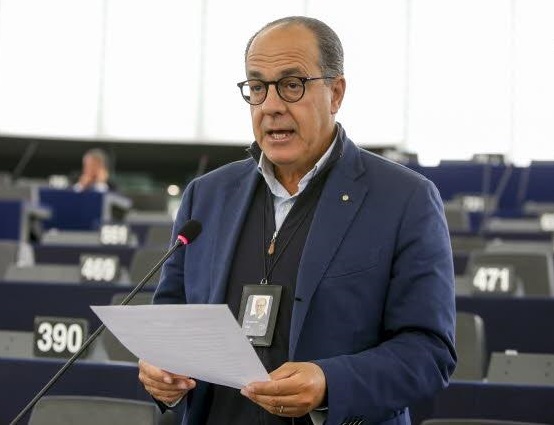
PD MEP Paolo De Castro
The Democratic MEP also stressed that from an environmental point of view, the spread of assisted evolution techniques is “one of the few ways to reduce the use of pesticides and plant protection products.” Coldiretti President Ettore Prandini also rejoiced, saying that “the green light for the new No GMO green genetics will allow the selection of new plant varieties, with greater environmental sustainability, less use of chemical inputs, but also resilience and adaptation of climate change.”
At the opposite end of the spectrum was the denunciation of Rosa D’Amato, a Green MEP, who, during yesterday’s (Feb. 6) parliamentary debate, had lashed out at the EU Commissioner for Equality, Helena Dalli, who was present in the chamber: “The proposal does not respect the precautionary principle,” said D’Amato, “because it exempts most of these techniques from the risk assessment procedure. It violates the principle of transparency and therefore the right of citizens to know what they find on their plates.” Immediately refuted by Dalli: “We fully recognize the precautionary principle,” said the EU commissioner, according to whom “the proposal is based on current scientific knowledge and a proportional approach based on the different risk profiles arising from the diversity of NGTs.
English version by the Translation Service of Withub



![Manifestazione di agricoltori, allevatori, ambientalisti e cittadini, che nella mattinata di ieri, si sono riuniti di fronte all’emiciclo di Strasburgo per chiedere il respingimento il provvedimento. [Foto: Eunews]](https://www.eunews.it/wp-content/uploads/2026/06/WhatsApp-Image-2026-06-17-at-18.06.50-350x250.jpeg)

![Da sinistra: il presidente del Consiglio europeo, Antonio Costa; il presidente dell'Ucraina, Volodymir Zelensky: la presidente della Commissione europea, Ursula von der Leyen [Bruxelles, 18 giugno 2024. Foto: European Council]](https://www.eunews.it/wp-content/uploads/2026/06/euco_ua260618-120x86.jpg)
![[foto: Saverio De Giglio/imagoeconomica]](https://www.eunews.it/wp-content/uploads/2026/10/cpt-120x86.png)