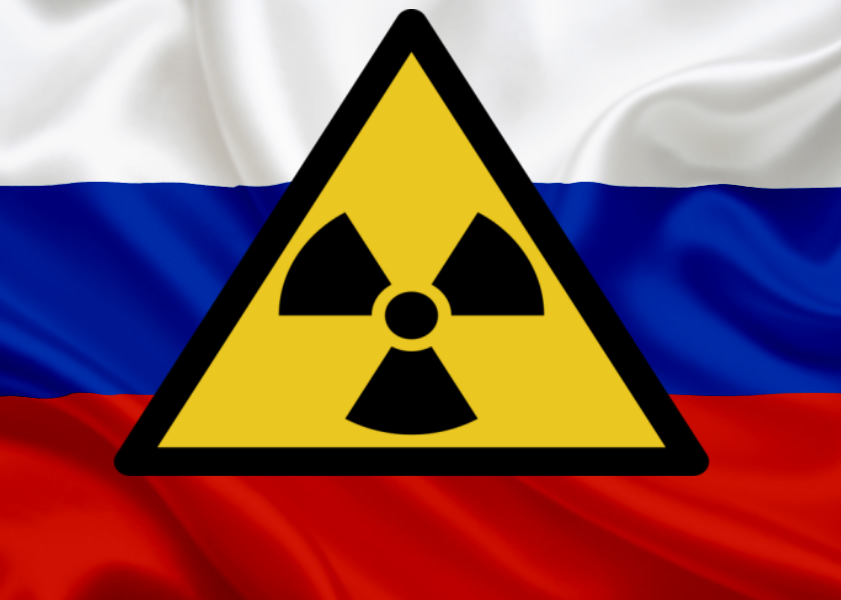
from the Strasbourg correspondent – Once and for all, Russian gas has been banned, and Russian nuclear energy is now in the crosshairs. The European Parliament completes the legislative process for the proposal put on the table in June, for which an inter-institutional agreement was reached earlier this month. By a large majority (500 votes in favour, 120 votes against, and 32 abstentions), MEPs finally approved the EU’s anti-Putin measure. “It is a strong majority, the European Parliament can be proud,” stressed Ville Niinistö (Greens), member of the Industry Commission and co-rapporteur of the text. “This is an unprecedented decision,” marking “a great success for the EU.”
Now “we expect that the European Commission will come up with the proposal also to ban nuclear energy,” points out Inese Vaidere (EPP), rapporteur for the International Trade Committee. This is not just wishful thinking: even though 12 out of 27 EU Member States still make extensive use of nuclear energy, “I know that the Commission will present the proposal,” Valdere assured Eunews in response to a question.
It will be a matter of understanding how and to what extent the EU executive will want to target energy derived from nuclear power. Niinistö hypothesises that a partial block is possible, acknowledging that eliminating nuclear power “is more difficult than having to change gas suppliers.” The Green Party representative points out that there is a difference between nuclear fuel and nuclear technology, emphasising that there are various ways to target Russia, including services for the sector.
In short, Russian nuclear power is in the crosshairs. “I believe that member states must prepare themselves,” Niinistö argues. Prepare not so much for alternatives to power plants, but for new international tensions. Currently, Russia is the second-largest supplier of uranium to EU countries after Niger. EU relations with the African country have become complicated in the wake of political instability following the 2023 coup. Thus, stopping purchases in Russia would mean turning to Kazakhstan, third-largest uranrium supplier and a country historically and traditionally within the Russian sphere of influence and interest. Increasing the European presence in Central Asia risks fuelling new tensions.
Meanwhile, the gas blockade runs its course, with the European Parliament also securing stricter conditions for the temporary suspension of the import ban in emergency situations relating to the EU’s energy security. To close any loopholes and prevent circumvention, operators will have to provide customs authorities with more details on the country of production of the gas before they can import or store it.
English version by the Translation Service of Withub
![Modello della centrale nucleare di Akkuyu, in Turchia [foto: By Akkuyu Nükleer A.Ş. (VOA), Wikimedia Commons]](https://www.eunews.it/wp-content/uploads/2024/08/Akkuyu_Nuclear_Power_Plant-350x250.jpg)

![Da sinistra: il presidente del Consiglio europeo, Antonio Costa; il presidente dell'Ucraina, Volodymir Zelensky: la presidente della Commissione europea, Ursula von der Leyen [Bruxelles, 18 giugno 2024. Foto: European Council]](https://www.eunews.it/wp-content/uploads/2026/06/euco_ua260618-120x86.jpg)
![[foto: Saverio De Giglio/imagoeconomica]](https://www.eunews.it/wp-content/uploads/2026/10/cpt-120x86.png)