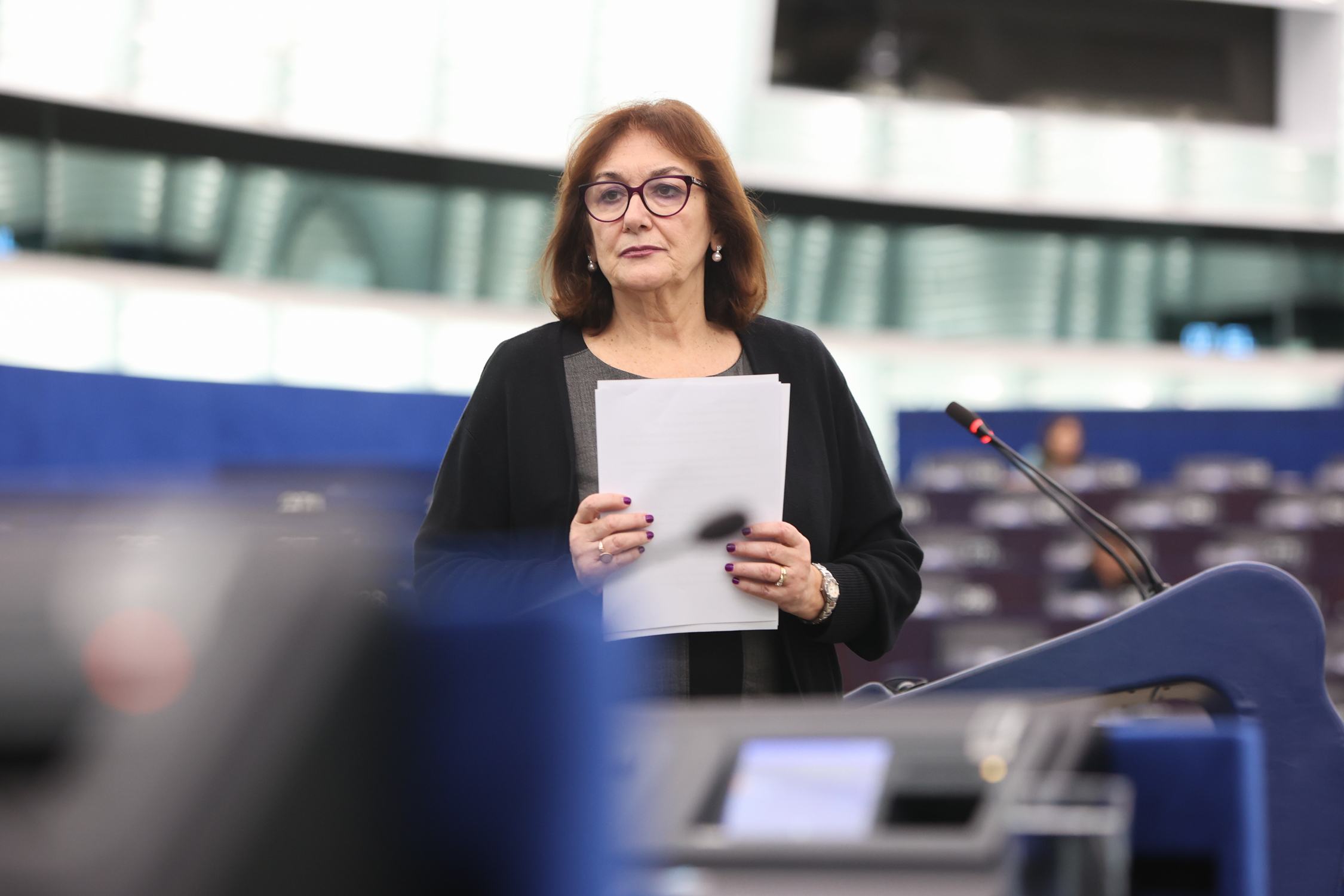
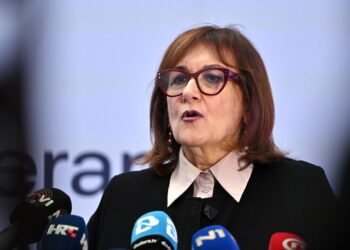
Brussels – Almost a week after Donald Trump’s Board of Peace first session, Dubravka Šuica—the European Commissioner who attended the meeting as an “observer”—gave her initial report to MEPs on the Foreign Affairs Committee (AFET) today (25 February). Without any mandate from the Member States, she explained that she had travelled to Washington “at the request of Ursula von der Leyen and as her substitute.” She emphasised the importance of this: “We must be part of this conversation; we cannot close the only channels that exist.”
Šuica explained that “two-thirds of the meeting” was devoted to Gaza and only one-third to establishing internal rules and procedures for the organisation. “My participation was limited to the segment of the meeting specifically dedicated to Gaza,” she insisted. The Commissioner for the Mediterranean rejected criticism from several EU capitals, arguing that “it is within the remit of the European Commission, as the external representative of the Union, to accept invitations of this kind as a form of international courtesy“. Šuica also pointed out that 14 EU countries were represented in Washington: Hungary and Bulgaria as members of the Board, while Cyprus, Italy, the Czech Republic, Croatia, Slovakia, Austria, Germany, Finland, Greece, the Netherlands, Poland, and Romania were observers.
But there is more at stake than a potential procedural flaw within the Union. There is a risk, also highlighted by members of the AFET committee, that the presence of the EU executive in Trump’s peace council will legitimise its existence and aims. That Brussels will, with this choice, end up contributing to the erosion of the international order and the role of the United Nations.
A calculated risk, it would seem, because according to Šuica (and von der Leyen, who sent her) the priority is “not to close the only channels that exist at the moment.” While clarifying once again that “the European Union is not a member of the Board of Peace,” Šuica stressed that, to support the implementation of the UN Security Council resolution on peace in Gaza, “we must be part of this conversation.” Resolution 2803, voted on last November, essentially assigns the Board of Peace the task of overseeing the temporary administration of the Strip.
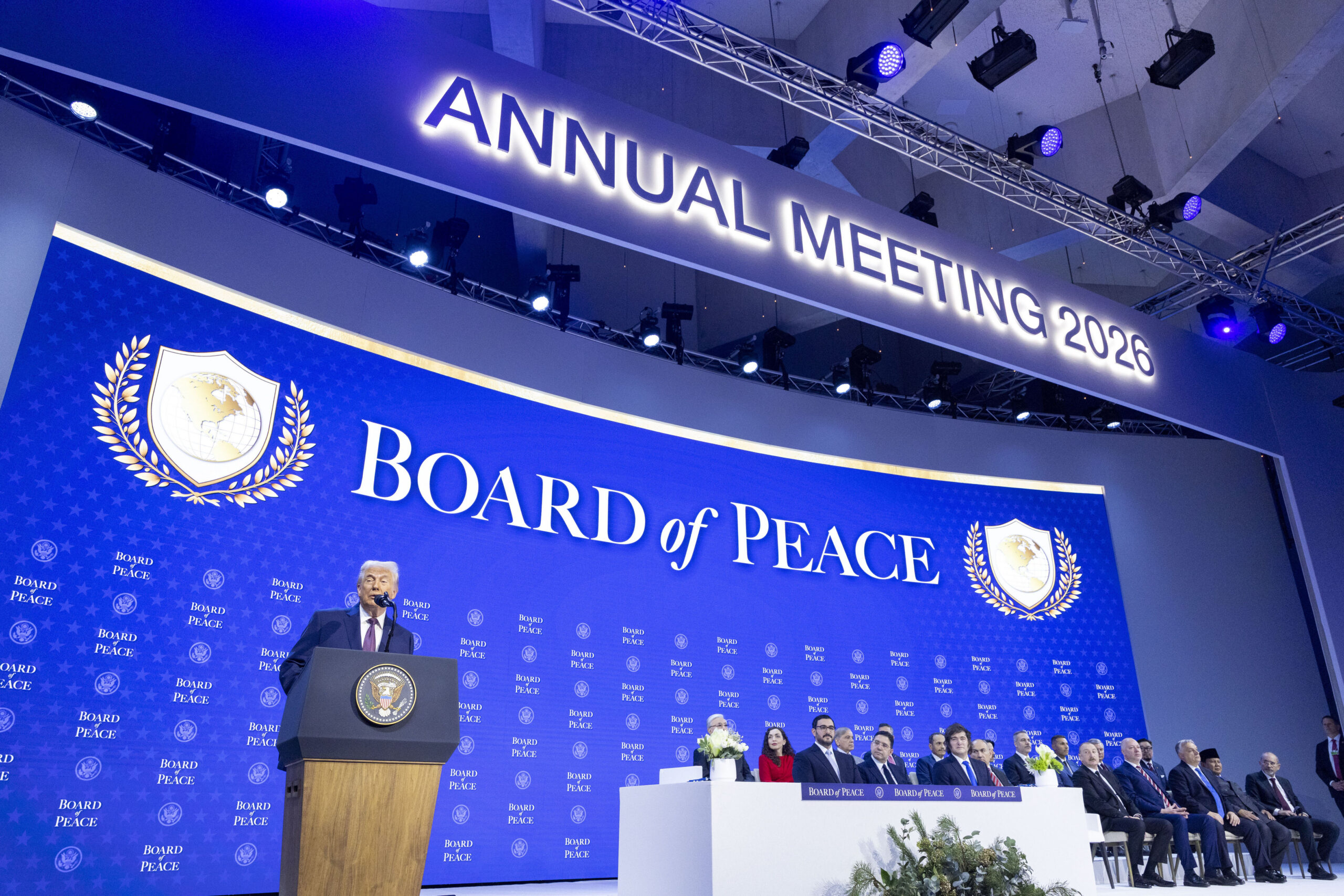
In the meantime, however, Trump has expanded its mandate to make it a sort of parallel organisation to the UN tasked with resolving all conflicts. He has proclaimed himself president (without term limits), has personally chosen whom to invite and whom not to invite, and set the fee (one billion euros) for permanent membership. But Šuica’s presence “cannot be interpreted as implicit support for the Board of Peace on the part of the Commission, let alone the Union,” the commissioner absolves herself.
“I participated as an observer and therefore did not take part in the conference deliberations. There was no speaking time allocated for non-members, so I used that time on the sidelines to talk to the partner countries present,” she continued. Šuica finally added: “We could somehow extend the scope of the Donor Group for Palestine and make it our Board of Peace.” The United States and Israel did not participate in last November’s meeting of the platform that coordinates humanitarian and financial aid for the Palestinian territories.
English version by the Translation Service of Withub


![Da sinistra: il presidente del Consiglio europeo, Antonio Costa; il presidente dell'Ucraina, Volodymir Zelensky: la presidente della Commissione europea, Ursula von der Leyen [Bruxelles, 18 giugno 2024. Foto: European Council]](https://www.eunews.it/wp-content/uploads/2026/06/euco_ua260618-120x86.jpg)
![[foto: Saverio De Giglio/imagoeconomica]](https://www.eunews.it/wp-content/uploads/2026/10/cpt-120x86.png)