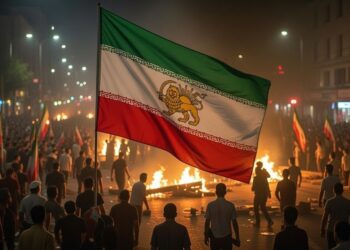

Brussels – “Iran’s attacks and violation of the sovereignty of a number of countries in the region are inexcusable.” This is how the European Union’s foreign ministers interpret the chaos in the Middle East. No mention of the operation, which triggered the furious and indiscriminate response of the Islamic Republic, the killing of Supreme Leader Ali Khamenei by Israel and the United States. Two days after Tel Aviv launched its offensive, the EU, once again caught off guard by its allies, is struggling to compose a unified and coherent response.
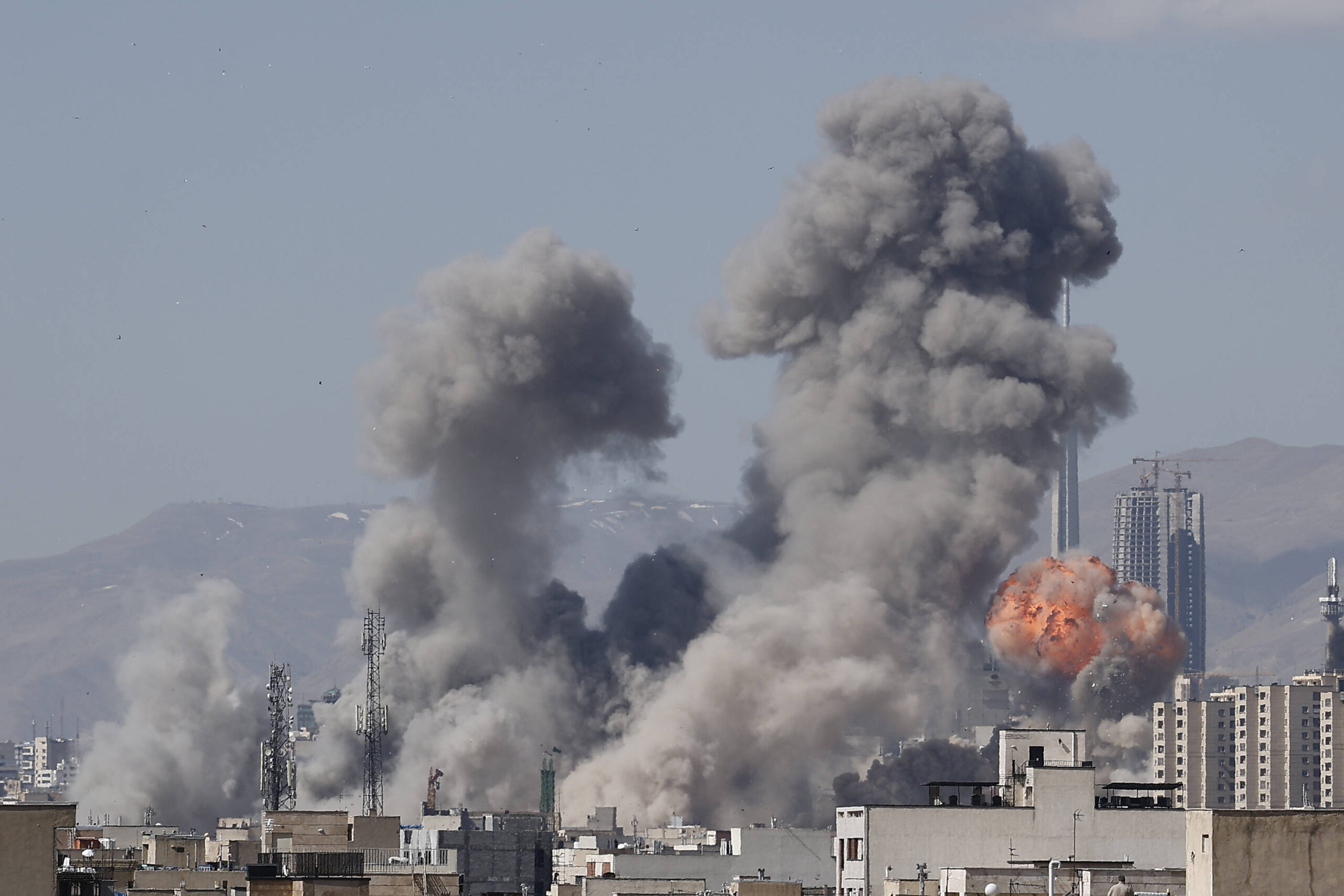
On the one hand, the Ayatollah regime continues to launch drones and missiles on Dubai, Abu Dhabi, Doha, and even Jerusalem. On the other hand, Israel has bombed Lebanon and its capital, Beirut, once again (with at least 30 victims), prompting Hezbollah to join Iran’s retaliation by launching rockets towards the Jewish state. Meanwhile, this morning, the NGO Iranian Red Crescent Society estimated 555 casualties in Israeli-American attacks on 131 cities in the country. According to Iranian state media, more than 160 people were killed in an Israeli missile attack on a girls’ school in southern Iran.
In the early hours of the morning, a spokesperson for the Cyprus Presidency of the EU Council confirmed that a drone struck the British base at Akrotiri, Cyprus, “causing limited damage.” The alleged attack came just hours after the UK allowed the US to strike Iranian missile sites from British bases on the Mediterranean island. European Commission President Ursula von der Leyen commented on X: “Although the Republic of Cyprus was not the target, we stand collectively, firmly, and unequivocally alongside our Member States in the face of any threat.”

From Washington, Donald Trump reiterated yesterday that military operations in Iran will continue “until all our objectives are achieved” and urged “once again the Revolutionary Guard, the Iranian military police, to lay down their arms and obtain full immunity or face certain death”. In an interview with Fox News, Trump said that US and Israeli raids had killed 48 leaders of the Iranian regime. The United States Central Command (CENTCOM) said that three American soldiers were killed in the attacks.
Meanwhile, oil prices skyrocketed, and stock markets opened the week in free fall due to fears of significant global economic disruption (20 per cent of the world’s oil supply passes through the Strait of Hormuz, which is controlled by Tehran). This morning, hundreds more flights were cancelled across the region, leaving thousands of passengers stranded.
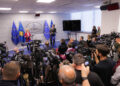
The European Union, a spectator to the ongoing escalation, has responded sporadically through its leaders. Already over the weekend, von der Leyen expressed her support for regime change in Iran and accused the Islamic Republic of a “clear violation of international law” with its attacks on countries in the region. “There is renewed hope for the oppressed people of Iran, and we strongly support their right to determine their own future,” she reiterated this morning during a press briefing. Over the weekend, she also spoke on the phone with several leaders, including the Emir of Qatar, Tamim bin Hamad Al Thani, and Turkish President Recep Tayyip Erdoğan. “The developments are deeply worrying. Over the weekend, I was in contact with nine leaders in the Middle East and several European leaders,” von der Leyen confirmed. The EU leader also convened a meeting of the European Commission’s Security College today to discuss the situation in the Middle East, “because from energy to nuclear, from transport to migration to security, we must be prepared for the repercussions of these recent events.”
As in a script seen before, the activism of the European Commission President highlights the unresolved issues in the Union’s foreign policy, and ultimately leaves her sidelined. It would be up to Antonio Costa, President of the European Council, and Kaja Kallas, High Representative for Foreign Affairs, to set out Brussels’ position. Costa has been more cautious: “These bombings represent a dangerous escalation of the military situation in the Middle East,” he said, insisting that the priority should be “to work to restore peace and stability in the region.” Kallas, who yesterday convened a videoconference of the 27 foreign ministers, issued a statement calling for “maximum restraint, protection of civilians and full respect of international law, including the principles of the United Nations Charter, and international humanitarian law.”
What is missing from the reactions of EU leaders is criticism of the blatant violation of Tehran’s sovereignty by Trump and Benjamin Netanyahu, the real trigger that sparked the hostilities. The United States and Israel have decided to attack Iran unilaterally, thereby endangering all their Western allies. According to international law, it is not enough for a regime to be bloodthirsty to bomb its capital and eliminate its authorities. According to a Reuters report, the Pentagon itself admitted that there was no intelligence information suggesting that Iran intended to attack US forces first.
France, Germany, and the United Kingdom issued another joint statement in which they said they were “appalled by the indiscriminate and disproportionate missile attacks launched by Iran against countries in the region, including those who were not involved in initial US and Israeli military operations.” Only Spanish Prime Minister Pedro Sanchez has unequivocally condemned the attack on Tehran: “We reject the unilateral military action by the United States and Israel, which represents an escalation and contributes to a more uncertain and hostile international order.”