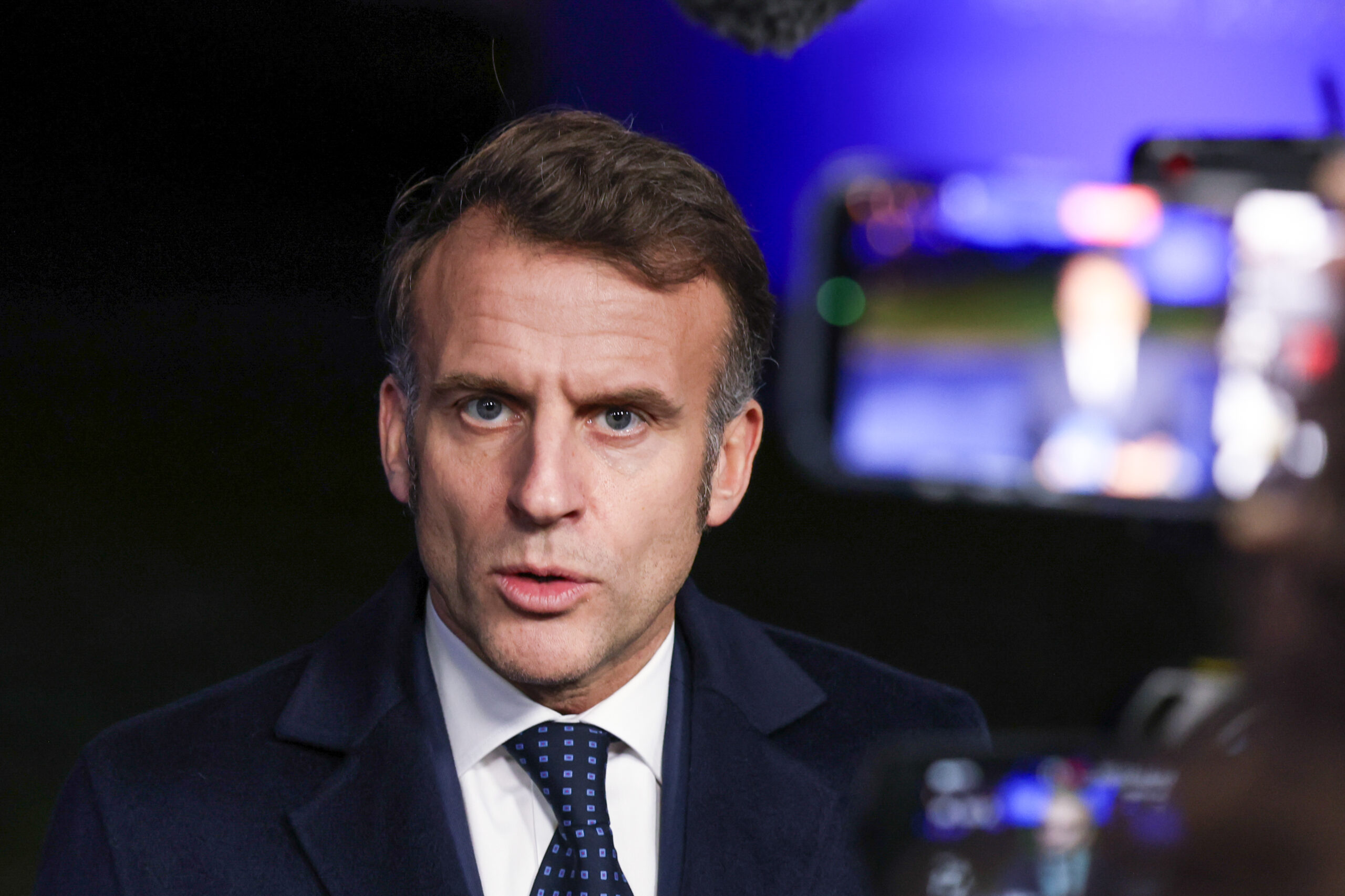

Brussels -It was at the “cathedral of French sovereignty”, the Île Longue submarine base in Brest, Brittany, that Emmanuel Macron outlined the implementation of an “advanced nuclear deterrence,” with a “progressive approach,” to tackle current challenges. A plan that eight countries — Germany, the United Kingdom, Poland, the Netherlands, Belgium, Greece, Sweden, and Denmark — have agreed to join, and which will allow them to host French “strategic air forces,” thus enabling them to “spread across the entire European continent.” The goal is “to complicate our adversaries’ calculations,” the French president said. Moreover, the plan could also include “the conventional participation of allied forces in our nuclear activities,” such as the recent military exercises in which British forces took part, Macron added. But the French leader’s plan remains deeply national in scope and anchored in the French Constitution. “I want to be clear from the start. There will be no sharing of the final decision, its planning, or its implementation. Under our Constitution, this responsibility lies exclusively with the President of the Republic, who is accountable to the French people,” Macron explained. “Therefore, there will be no sharing of the definition of vital interests, which will remain a matter of sovereign judgment for our country,” he added.
In effect, the French president outlined an update to Paris’s doctrine of dissuasion nucléaire avancée—that is, advanced nuclear deterrence—and highlighted the indispensable role of atomic weapons in France’s national security strategy and in the broader framework of European defense. There, where four nuclear submarines of the so‑called force de frappe are stationed, the French leader announced that he had ordered “an increase in the number of nuclear warheads in our arsenal,” over which Paris will retain full ownership.
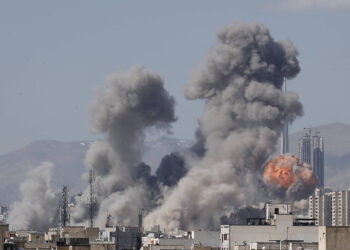
Nuclear weapons are a hot topic at a time when they are at the centre of several conflicts, from Russia’s war against Ukraine to the war waged by Israel and the United States against the Iranian regime. Therefore, following the Joint statement both Saturday (28 February) and today (2 March) of the European diplomatic trio (E3) comprising France, Germany, and the United Kingdom, condemning Tehran’s attacks against countries in the region, and the bilateral meeting between France and Merz’s Germany for “closer cooperation in the field of deterrence” in response to the threat landscape, Paris moved alone, and autonomously,-to take swift and effective action. “To be free, you must be feared, and to be feared, you must be powerful,” Macron said during this afternoon’s press conference at the French military base in front of France’s military and political leaders. “We must strengthen our nuclear deterrence in the face of the combination of threats, and we must consider our deterrence strategy in the depths of the European continent, with full respect for our sovereignty, through the gradual implementation of what I would call advanced deterrence,” the French president said. “We are living in a period of geopolitical upheaval fraught with risks, and our fellow citizens are fully aware of this. This period justifies a strengthening of our model,” Macron explained. From Île Longue, Macron also announced the name of the French Navy’s future nuclear submarine, L’invincible, which will be operational in 2036. “Few nations in our world are capable of manufacturing such nuclear submarines, discreet and high-performance technological marvels capable of striking our potential aggressors at any point,” said the French leader.
The speech follows in the footsteps of the one Macron delivered on 7 February 2020, when the French leader proposed to his European partners a “strategic dialogue” on “the role of French nuclear deterrence” in European collective security and joint exercises. This dialogue focused on four areas: promoting effective multilateralism, developing strategic partnerships, European self-determination, and national sovereignty.
What role will the EU play in this new geopolitical development? For now, the Union does not seem to be moving in a unified manner, at least not yet. But Paris’s goal does not seem to be to exclude Europe; on the contrary, the involvement of the eight European countries in the “advanced” nuclear deterrence plan proposed by Paris confirms this. France is the only country in the European Union — and the only European nation besides the United Kingdom — to own nuclear weapons. German Chancellor Friedrich Merz announced on X that he had established “a nuclear coordination group” with the French President, Emmanuel Macron. “We are coordinating on deterrence issues. Again this year, we intend to take concrete steps, including German conventional participation in French nuclear exercises,” the German leader added.
English version by the Translation Service of Withub