Brussels – “We are in a new world.” At the inauguration of the annual conference of European Union ambassadors (9 March), the High Representative for Foreign Affairs and Security Policy, Kaja Kallas, warned about the “Sign of the Times,” the sign of the times that Europe and the world are experiencing. A period in which “the premises that have guided global relations for decades can no longer be taken for granted,” marked by continuous geopolitical developments. The five-day meeting is missing European representatives from the Gulf and Middle East countries, who were unable to travel to attend the conference in Brussels. However, Kallas herself, the President of the European Parliament, Roberta Metsola, and the President of the European Commission, Ursula von der Leyen, participated. They all agreed on one point: “We are in a new world,” and “the world order we knew will never return.”
It was Kallas herself who opened the conference, which brings together more than 145 European delegations from around the world. The High Representative emphasised the value of the European diplomatic network, recalling how ambassadors are a central component of the Union’s presence on the international stage: “This conference is of great importance, because you represent Europe in the world, but also what Europe can be tomorrow. And at a time when the growth of Europe’s geopolitical power has never been as important as it is now, you are truly our greatest resource.”
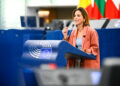
Before leaving for the plenary session in Strasbourg, Metsola thanked those present and drew attention to the delicate phase the European Union is going through. “We must not underestimate the seriousness of the situation, how crucial our next steps will be, or what role Europe will have to play.” The European Union “cannot be caught unprepared.” In the new geopolitical context, she added, European decision-making must also adapt to an increasingly fast-paced and unstable international reality: “In this new world, we can no longer afford the luxury of time to make decisions the way we have always made them and expect the world to understand; we must begin to see the world as it is, not as we would like it to be.” Hence, the call to strengthen Europe’s capacity to react, taking “decisions more quickly” when circumstances require it and taking “decisive action” where the situation makes it necessary.