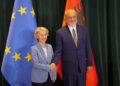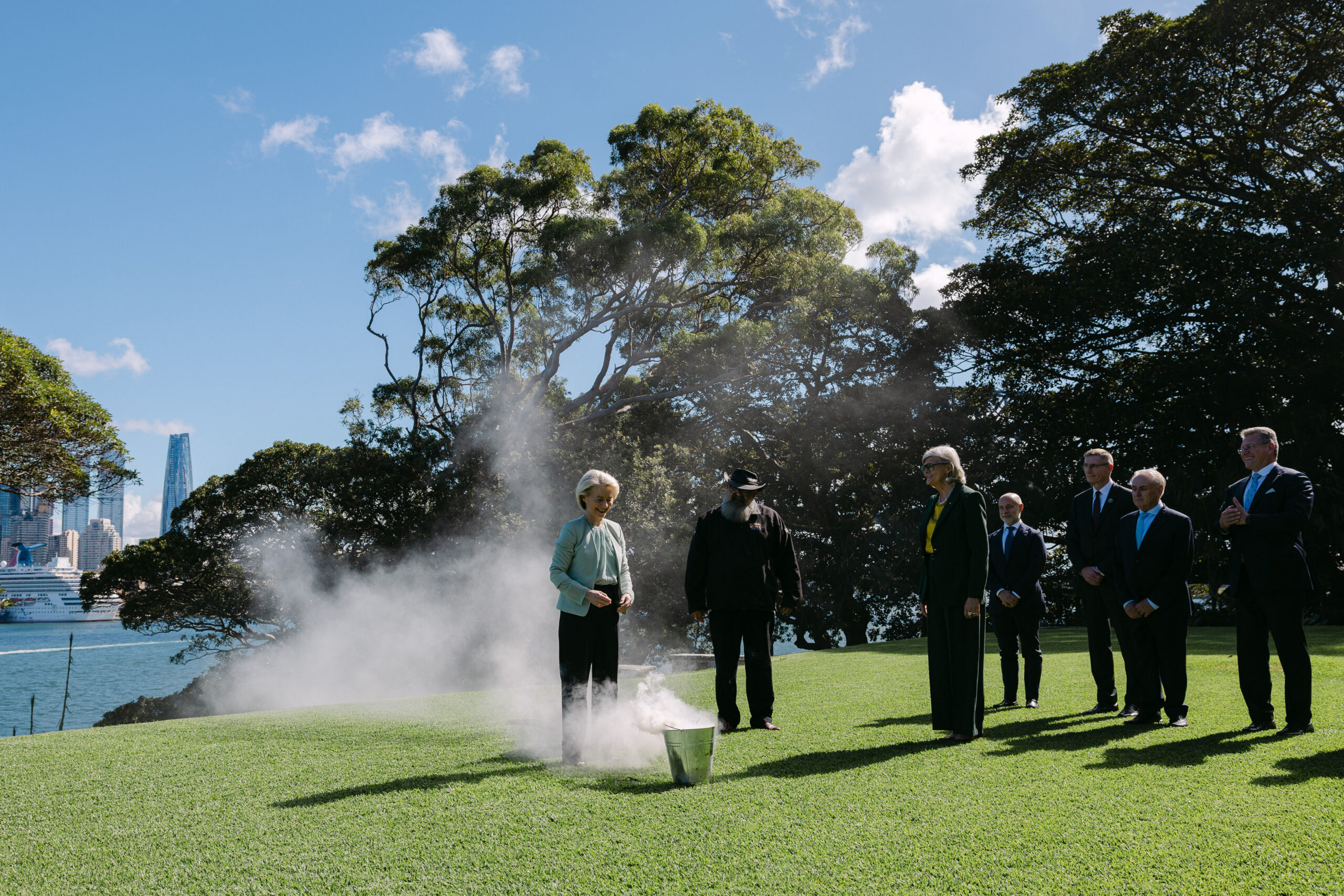

Scrolling through the posts Ursula von der Leyen shared on X over the past two weeks – roughly since the 19 March European Council meeting – there are several photos of her visiting Australia, shaking hands, touring institutions, laying wreaths, and signing the major free trade agreement with Prime Minister Anthony Albanese – a major free-trade agreement she had the merit of championing.
From this perspective, with the decision to provisionally apply the trade-related provisions of the agreement with Mercosur and the European Parliament’s conditional approval of the trade agreement with the United States, the EU’s trade policy record is undoubtedly positive.
Under normal circumstances, no one would have been particularly surprised if Ursula von der Leyen had devoted all her energy and media attention to these positive results, not least because she is well known for her tendency to oversee every major activity of the European Commission.
However, these are no ordinary times, with two wars looming on our doorstep, a dramatic crisis in energy supplies and across many supply chains, the destabilisation of the entire Middle East, a resurgence of the conflict in Ukraine while Hungarian ministers are found to be whispering to the Kremlin and taking orders from Moscow, and, above all, growing tension between European countries and the United States, whose president is threatening nothing less than to withdraw the US from the North Atlantic Treaty Organisation.
Well, the fact that the President of the European Commission has not spoken out personally for days on end is certainly telling, and it is significant that it is Energy Commissioner Dan Jorsensen who is communicating the EU executive’s intentions on the most pressing issue of the moment, namely the surge in gas and oil prices.
Today, just as I finished writing this piece, she did, however, give a signal: a post on X was published under her name, but as for public appearances, she hasn’t been seen since she left Australia.
Something has happened. Barring personal issues, could this stem from her previous excessive media exposure, even on matters not strictly within the European Commission’s remit, as has been noted in recent weeks in certain circles of the EU Council? Perhaps, but since the start of her term these criticisms have been recurrent, even giving rise to unpleasant incidents such as the famous “Sofagate” in Turkey, but they have never really dented Ursula von der Leyen’s determination – right or wrong as it may be – to give the European Union a face and, perhaps, even provide it with that famous “telephone number” that Henry Kissinger felt the need for when he said he wanted to speak to the EU.
This week — one of the most critical Europe has ever faced, squeezed between Trump‑era threats, the need to respond swiftly to an energy crisis that risks crippling households and businesses with countless “side effects,” and Israel’s decision to reinstate the death penalty, though only for Palestinians, despite von der Leyen’s long‑held view that the Association Agreement binding the country to the EU should be maintained — the absence of any public stance is deafening.
Even in Bucha — in that Ukraine where she has often embodied Europe’s voice and support against Russian aggression — on the anniversary of the massacre the foreign ministers of many member states and High Representative Kaja Kallas were present, but she was not, as if the war had suddenly fallen outside the European Commission’s remit. Why?
English version by the Translation Service of Withub