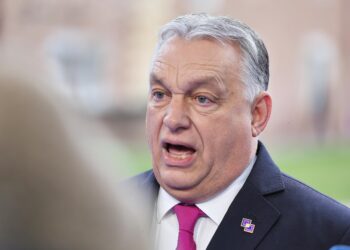
Brussels – The Vice-President of the United States, JD Vance, left this morning (7 April) for Budapest, where he will remain until tomorrow to offer Washington’s support to the Hungarian Prime Minister, Viktor Orbán, ahead of Sunday’s parliamentary elections (12 April). It has been since 2006 – the year of the state visit by then-President George W. Bush – that the Hungarian capital has hosted such a high-ranking US government representative: a fact that underscores the international significance the elections in Hungary have taken on in these final weeks of the campaign.
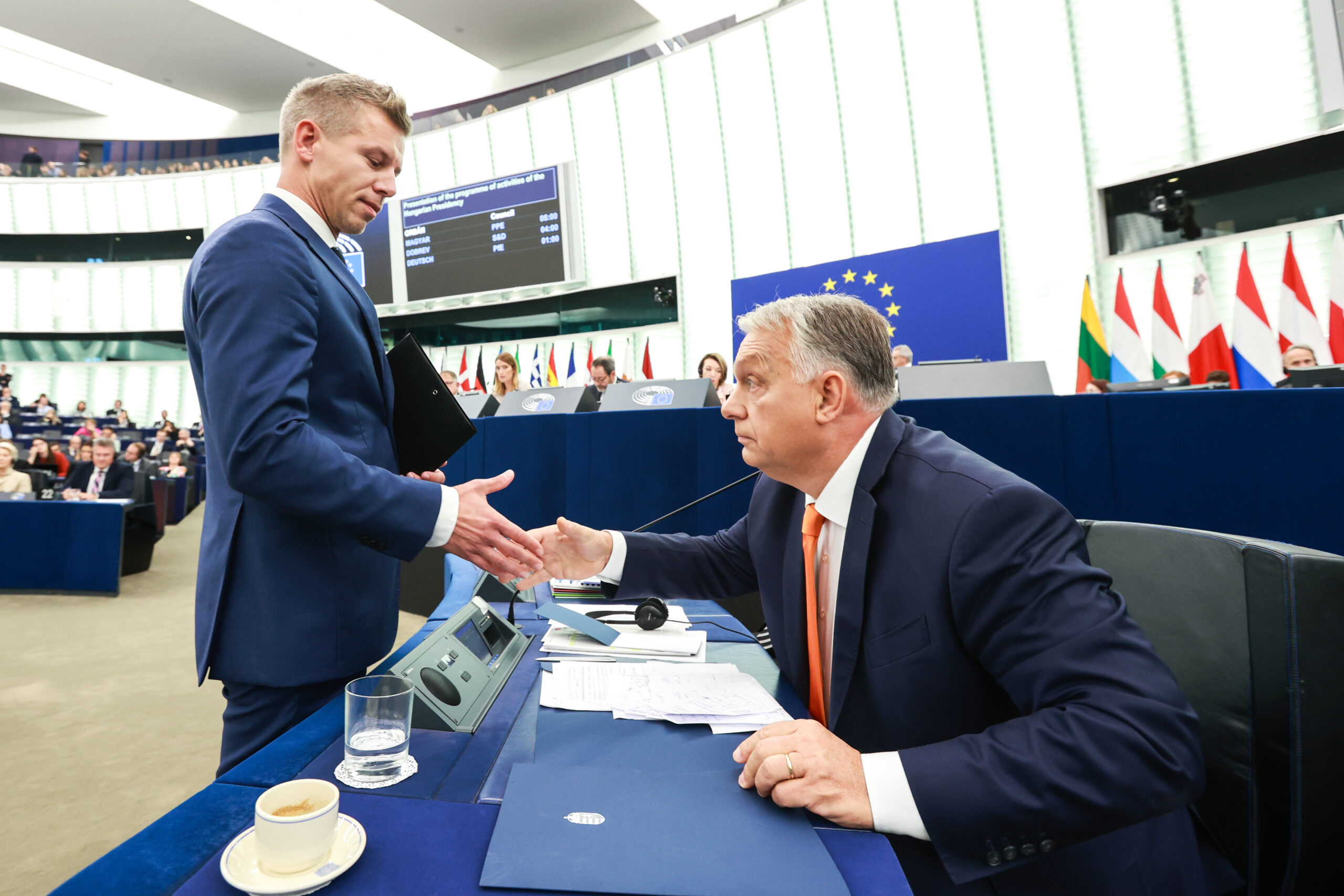
The reason for this attention is simple: after sixteen years of uninterrupted political dominance (Orbán has been in power since 2010), the current prime minister is standing for election for the first time as the underdog. This is confirmed by the latest average of leading Hungarian polls, according to which Fidesz – the party founded by Orbán himself in 1988 – is expected to garner 39 percent of the vote, thus trailing by a full ten percentage points TISZA, the center-right political creation of Orbán’s former ally and now his main domestic opponent, Péter Magyar.
If these predictions come true, the EU country that has most strongly opposed the line dictated by Brussels on several issues over the last ten years (from immigration to energy policy; from the Covid crisis to the war in Ukraine) and which is Vladimir Putin’s closest ally in the Union, could be on the brink of a historic turning point, both in terms of foreign policy and relations with the EU, and from the perspective of domestic policy.
Domestic politics: Magyar’s challenge to ‘illiberal democracy’ and corruption
On the domestic front, Péter Magyar’s challenge focuses primarily on two pillars that have characterized Orbán’s long rule: the construction of what the Prime Minister himself has described as an “illeberal democracy” and the systemic spread of corruption. In recent years, as highlighted by various international reports – including those by Freedom House and a resolution from the European Parliament – the government has progressively consolidated its control over the media, the judiciary, and independent institutions, making genuine political alternation more difficult. It is precisely against this structure that Magyar has built his campaign, presenting himself as the man who will break with this system.
At the same time, corruption has become one of the main areas of contention. Several journalistic investigations – such as the Financial Times’ investigation into the so-called “Orbán System” – have highlighted the link between political power and economic elites close to the government, who are accused of benefiting disproportionately from public funds and European resources. Magyar has also made this criticism a cornerstone of his message.
Foreign policy: the war in Ukraine at the heart of the election campaign
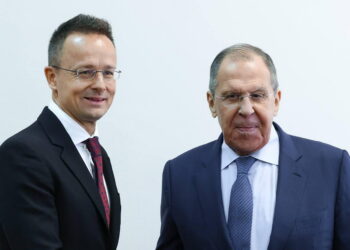
The Russian-Ukrainian conflict has been a key issue in this election campaign. The main focus has been on the two candidates’ stance towards Kyiv. In a constant exchange of mutual accusations, Magyar has frequently pointed to several signs of a particularly close relationship between the Hungarian government and Russian President Vladimir Putin. On 23 March, when the Washington Post revealed the frequent contacts between the Hungarian and Russian foreign ministers on the sidelines of EU Council meetings, the young opposition candidate immediately accused Minister Szijjártó and the entire government of “treason”. Conversely, Orbán has always responded to Magyar’s accusations in kind, claiming that – if elected – he would lead Hungary into war against Russia, forcing the country to spend vast economic resources to support the army in Kyiv.
It is precisely on the issue of military and economic support for Ukraine that Orbán – determined to stake everything on the contrast between “war” and “peace” to regain ground – has played one of his key cards in this election campaign. After giving his green light to the 90 billion euro EU loan package for Kyiv during the European Council last December, the Hungarian leader suddenly backtracked. In early February, ahead of the summit, he announced – alongside Robert Fico’s Slovakia – his intention to block the money transfer, setting as a necessary precondition for lifting his veto the restoration of Russian oil flows to Budapest via the Druzhba pipeline. The energy infrastructure was hit by a Russian drone in January, but according to Orbán, repairing the damage should be the responsibility of the Ukrainian government, which is reportedly refusing to do so.
The case of the “Minister whispering to the Kremlin” and Hungary’s veto on the aid package are just two of the many issues linked to the war in Ukraine that have dominated the final weeks of the election campaign (among others, the accusations of Russian espionage aganist TISZA and seizure by Budapest of a the convoy transporting money and gold from an Austrian bank to a credit institution in Kyiv) and which explain the reason for the increasingly active role that Europe and the other major powers are playing in these elections: Hungary’s future international standing seems to hinge entirely on the outcome of 12 April.
The Magyar unknown for the EU: between hopes and doubts
Reading the election manifesto of TISZA, Magyar appears to be the guarantee of a return to a more pro-European Hungary: the party claims to “choose Europe” and proposes to “rebuild the relationship of trust with the EU and NATO and to join the Eurozone by 2030.” Magyar has also identified the restoration of the rule of law as the only possible way to unblock the 18 billion euros in EU funds currently frozen, precisely because of systematic violations in this area.
At the same time, however, as the European Policy Centre (EPC) think tank explains, there is one issue on which the EU should not assume that it is dealing with a new prime minister who is fully cooperative and in synch with Brussels’ political priorities. And that issue is none other than Ukraine. “With regard to Kyiv, TISZA’s manifesto is particularly sparse”, the EPC notes, “and Magyar already on several occasions has opposed the launch of the fast-track procedure for Ukraine’s accession to the EU,” just as Orbán has done all these years. TISZA and Fidesz also share the same position on the issue of the 90 billion earmarked for Kyiv: Magyar’s MEP voted against, just as Orbán’s loyalists did.
In light of this, “EU leaders should not assume that a change of government would bring about a clean break from Orbán’s positions.” It is certainly possible to hope that this will be the case, but it is not certain.
English version by the Translation Service of Withub